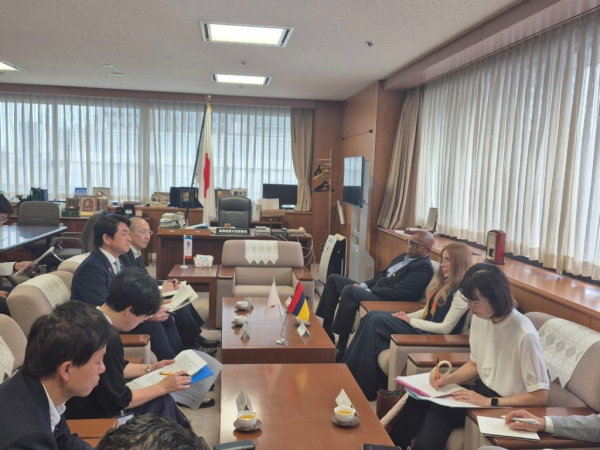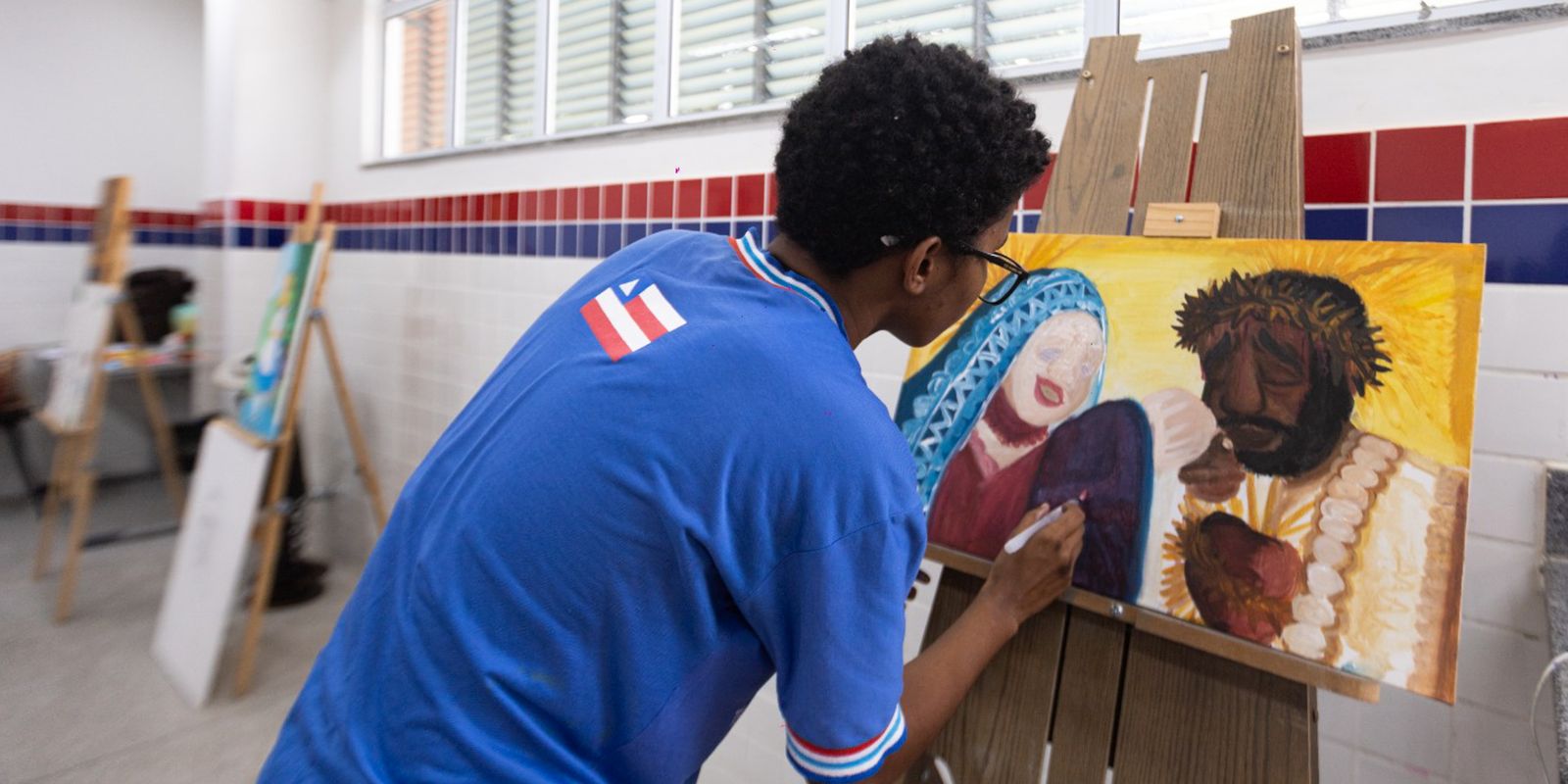
The Ministry of Education (MEC) and the Ministry of Culture (MINC), signed on Monday (8), in Brasilia, a partnership to bring art and culture projects to students of full-time public schools, in all units of the Federation.
During the launch event From the federal initiative, the Minister of Education, Camilo Santana, defended the universalization of integral education at all levels in basic education in Brazil with “students spending the day at school”, which can, according to him, reduce the rates of violence in the country and school dropout.
“Full -time school looks at the student’s life project as a whole, which needs to have culture, sports, language course and need to have a pedagogical coordination that looks at each student’s life project. Therefore, this is the most important model of school of basic education in that country,” he said.
By signing the Interministerial Ordinance (6/2025) that regulates the action in full -time schools, the Minister of Culture, Margareth Menezes, said that art and culture are linked by a strong bond to education. “They are sisters.”
The minister understands that public funding in these areas are investments in the future of the nation and that they serve Brazil to be a fairer and more egalitarian country.
“We will work together with passion, with love, with determination that the right to art and culture is a reality for each Brazilian and Brazilian, given the challenges that present themselves,” projects the minister.
The rector of the University of Brasilia (UnB) and host of the meeting, Rozana Reigota Naves, points to culture and art as great expressions of diversity and citizenship of a people. “[Cultura e arte] They are an important mechanism for reaffirming the sovereignty of a people. ”
>> Get to know a model in full -time school Bahia
State adhesions
According to Camilo Santana, soon, MEC and MINC will launch a public call notice that will open the period of voluntary adhesion from the State Departments of Education and Culture interested in receiving federal funding for artistic-cultural projects included in full-time education school curricula.
“The school community defines her curriculum and says what are the skills that this community wants: if in the area of culture, sports, technology, arts, cinema. Finally, this notice will allow us to stimulate them,” he said.
The minister explained that, initially, even failing to embrace all schools full time, the federal government will fund actions in all states of the federation. “So that we can start this important partnership of the Ministry of Culture with the Ministry of Education, in the assurance that Brazilian children and young people can be entitled to a complete and full school for their daily education,” said Camilo.
Representing the National Council of Secretaries of Education, the Secretary of Education of Rio Grande do Sul, Professor Raquel Figueiredo, celebrated the federal measure. “The Ministry of Education and the Ministry of Culture are telling us that the body and soul of the Brazilian nation need to go through these two ministries and that induce and finance public policies is the only way out to actually change the quality [do ensino]. Full -time schools provide this opportunity. ”
Benefits
The full -time journey in schools should be seven hours or above 35 hours per week agreement with resolution of the National Education Council (CNE).
MEC Basic Education Secretary Kátia Schweickardt said the strategy for expanding enrollment in integral education since 2023 needs to be accompanied by tools that contribute to the integral development of students, such as art, culture and sport, in this additional time that students remain in schools. Therefore, the federal government will financially and technically support projects that bring culture into full -time schools in Brazil.
“We now want to induce a more significant process that really has a connection with curricula [escolares]. For us only interest what leads to real education, with quality. All of these initiatives will be articulated to what we have been trying to foster to [aumentar] The Quality of Basic Education in Brazil. ”
For MinC’s Secretary of Training, Book and Reading, Fabiano Piuba, full -time education contributes to the development of critical thinking and creativity.
However, in his view, there are no robust investments throughout history by governments in programs aimed at the formation of artistic and cultural repertoires in teaching-learning processes. “A school that does not have an arts teaching and the experience of artistic and cultural formation, in its environment, in its teaching-learning structure, is a limited and oppressive school. Especially in a country where not all people have access to cultural goods and services,” he says.
“A purely functional and instrumental banking education that leads our young people to the best universities is no reason, in itself, of celebration. For example, that it is good to celebrate hundreds of thousands of young people coming to medical schools and, for the absence of critical, creative and citizen formation, to be another fascist doctor, negationist, of the chlorine doctor?” Fabiano Piuba.