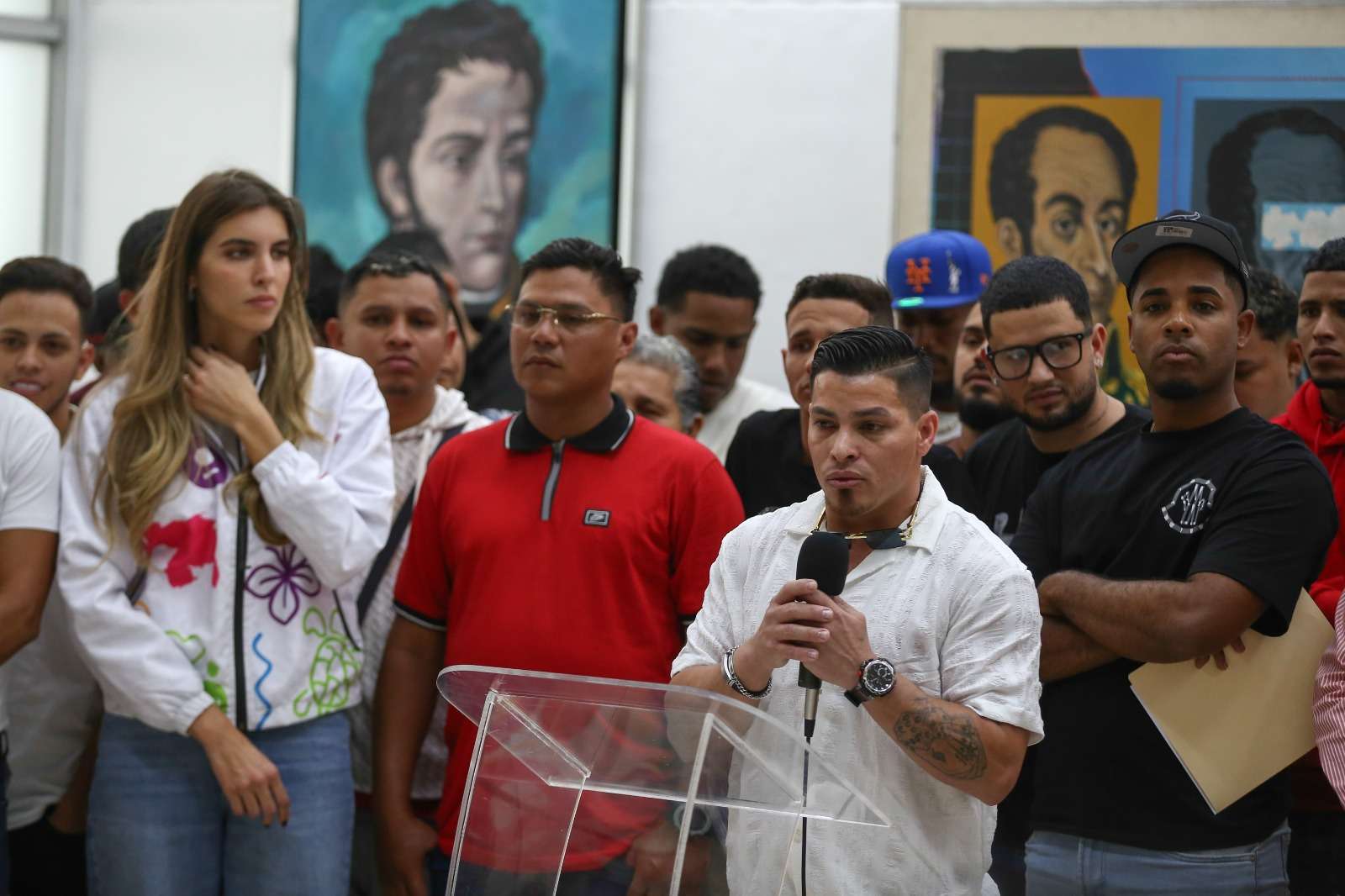
The Venezuelan migrants who were kidnapped in the Terrorist Confinement Center (Cecot) in El Salvador, after being deported by the United States, denounced the systematic torture, sexual abuse and forced disappearance that they suffered during the time they were detained, and that left them with physical and emotional consequences.
Through a letter, the group of migrants who were repatriated to the country on July 18 after four months of torture and mistreatment during their stay in the Terrorism Confinement Center (CECOT) in El Salvador, demanded that the US authorities really create the conditions that allow them to participate in the hearing “without putting our integrity and our lives at risk again,” according to the letter.
Likewise, the compatriots demanded justice and the support of international organizations so that these events do not go unpunished.
The group also asked for guarantees to attend a hearing ordered by a federal judge in the North American nation. They reiterated that migration should not be criminalized.
Norberto Aguilar, one of the migrants deported to El Salvador last March, recounted during the press conference having been beaten at the CECOT.
For his part, Arturo Suárez maintained that the Government of Nicolás Maduro has provided help with psychological therapies but that it has not been easy to reintegrate into society because, he said, “physical blows heal but mental ones do not.”
“So we are struggling with a lot of anxiety, problems sleeping, eating problems,” he added.
On Monday, a federal judge ruled that the Trump administration denied due process to nearly 200 Venezuelans it deported to a high-security prison in El Salvador and ordered that they be given the opportunity to have a hearing.
Judge James Boasberg gave until January 5 for the US Executive to present a plan to allow immigrants to return to the United States or be allowed to plead their case in front of a judge.
The judge also certified a class action lawsuit, paving the way for all migrants sent to CECOT last March to challenge their designation as foreign enemies of the United States.
Last September, Venezuelan migrants who were rescued from the Terrorism Confinement Center (Cecot) in El Salvador held a private audience at the Wilson Palace in Geneva, Switzerland, with Matías Peña, head of the subdivision for America, Europe and Central Asia of the Office of the United Nations High Commissioner for Human Rights.
At the meeting, they recounted the prison conditions and denounced violations of their human rights suffered in both El Salvador and the United States.
During the hearing, Arturo Suárez, one of the Venezuelan migrants rescued from Cecot, offered his testimony about the conditions experienced in the detention center. “We were locked up without knowing why, without access to lawyers, without communication with our families. They treated us like criminals without having committed any crime,” said Suárez.
The young man said that he was detained in El Salvador after having crossed several countries in search of opportunities. “They put us in Cecot without explanations. We slept on the floor, without light, without enough food. Many of us got sick and did not receive medical attention,” he added.