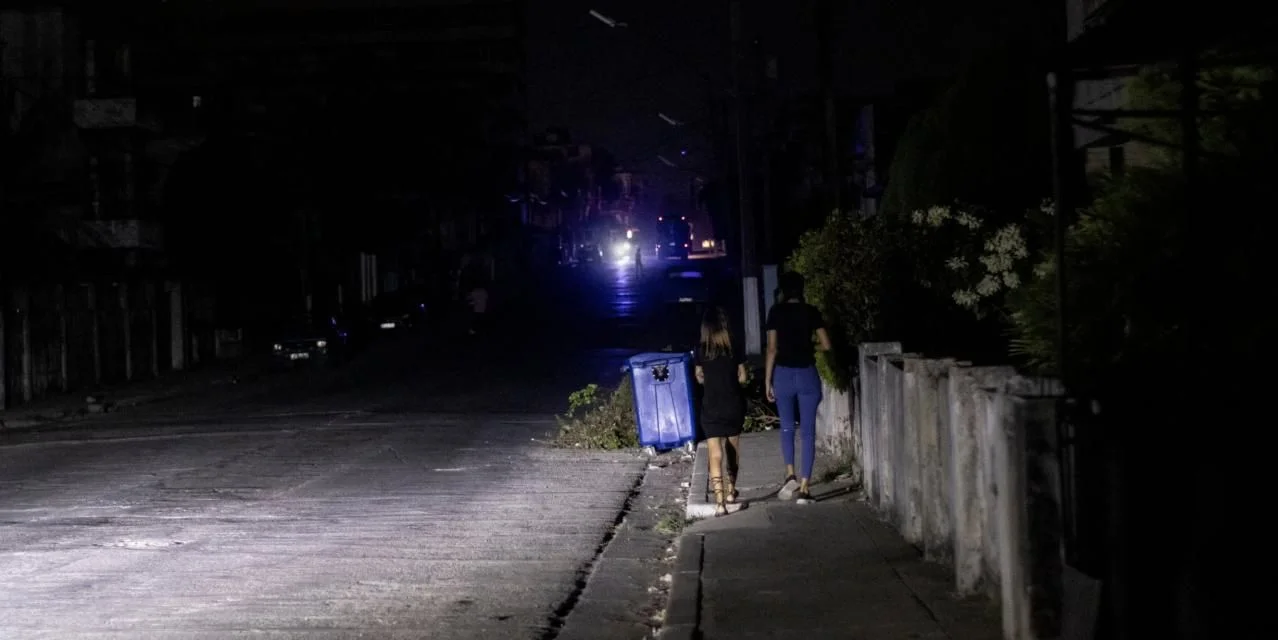
Miami, United States. – More than 50% of the Cuban territory will be in a blackout during peak time on Wednesday, according to the Electric Union (UNE) in Your most recent official part.
“Yesterday [martes 15 de abril] The 24 -hour service was affected and it was affected throughout the morning of today, ”indicates the official information. The maximum registered affectation was 1,623 megawatts (MW) at 8:20 pm, a time that coincided with the night demand peak.
For this Wednesday, the figures do not show improvement. At 7:00 am, the availability of the National Electrical System (SEN) was 1,731 MW, compared to a demand of 2,494 MW. The forecasts for noon anticipate an even greater affectation, of 916 MW. In the evening peak schedule, the estimate is alarming: a maximum demand of 3,350 MW, with a constant availability of 1,731 MW, which translates into an estimated real affectation of 1,689 MW.
UNE explained that the system operates under critical conditions, due to breakdowns, programmed maintenance, technical limitations and fuel shortage. Several key units are currently out of service:
- Unit 2 of CTE Felton (by breakdown).
- Unit 2 of the Santa Cruz CTE, Units 3 and 4 of the CIENFUEGOS, and Units 5 and 6 of the CTE Renté (by maintenance).
- 358 MW of thermal capacity remain unavailable by technical limitations.
In addition, 90 distributed generation plants (603 MW) and engines A fuel oil In MOA (120 MW) they are paralyzed due to lack of fuel. Another 18 MW are inactive due to the absence of lubricants.
The prolonged and generalized blackouts have caused the paralysis of industries and a growing citizen discomfort. In February of this year the highest electrical deficit rate was recorded in at least two years, with 57% of the country disconnected simultaneously. In March, the fourth national blackout occurred in less than six months, which left a large part of the island without electricity throughout a weekend.
The Cuban government attributes the crisis to the recurring breaks in thermoelectric plants, Many with more than 30 years of exploitationand the sustained fuel deficit. However, independent experts point out that the root of the problem is in the structural infinance of the electrical system, completely centralized since 1959. Some calculations estimate that between 8,000 and 10,000 million dollars would be needed to modernize the national electricity network.
The energy crisis exacerbates the already delicate economic situation of the island, which closed 2023 with a contraction of 1.9 % of GDP and without growth in 2024. According to official projections, Cuba will not recover the levels prior to 2019 at least until 2026, although the regime provides for this year a modest growth of 1 %.