In 45 of 113 municipalities of the entity governed by Alfredo Bedolla, from Morena, The operation of the 24 criminal organizations that produce and traffic drugs, extort, kidnap, murder, illicitly sell and buy weapons and dabble in illegal mining has been identified.
Facundo Rosas, public security expert and director of the consulting firm BlackIND, explains that the neglect that Michoacán has had for years and the permissiveness of authorities caused criminal organizations to grow in the state.
“There are three elements: the abandonment derived from the political dispute of who governs what, in this confrontation at the political level between parties, between rulers, control is lost, vision is lost; the second has to do with illicit markets because they are a source of profits for criminal groups, including extortion of agricultural activity, mining activity, and three that Michoacán is a territory for the production and passage of some illicit substances,” he explains in an interview.
The dispute between criminal organizations plunged Michoacán into a crisis of cyclical violence. According to figures from the Executive Secretariat of the National Public Security System (SESNSP), since 2016 the state has remained above 1,000 homicides per year, but in years like 2021 and 2022 it was around 2,000 events.
Armando Vargas, Security coordinator at the México Evalúa organization, explains that the co-optation of authorities also contributes to the proliferation of organizations.
“For criminal organizations to proliferate, they need some measure of protection from the State. Protection can be built through corruption, but also violence. It seems to me that on the political side there has been collaboration, at least by omission, on the part of the three levels of government against organized crime,” he details.
When there are more organizations in a territory, criminal and political violence is accentuated by the dispute over markets and geography.
“With the beheading policy carried out by former President Felipe Calderón, criminal organizations increased their number and this increased violence because there are players who tried to compete in the different illicit markets,” adds Vargas.
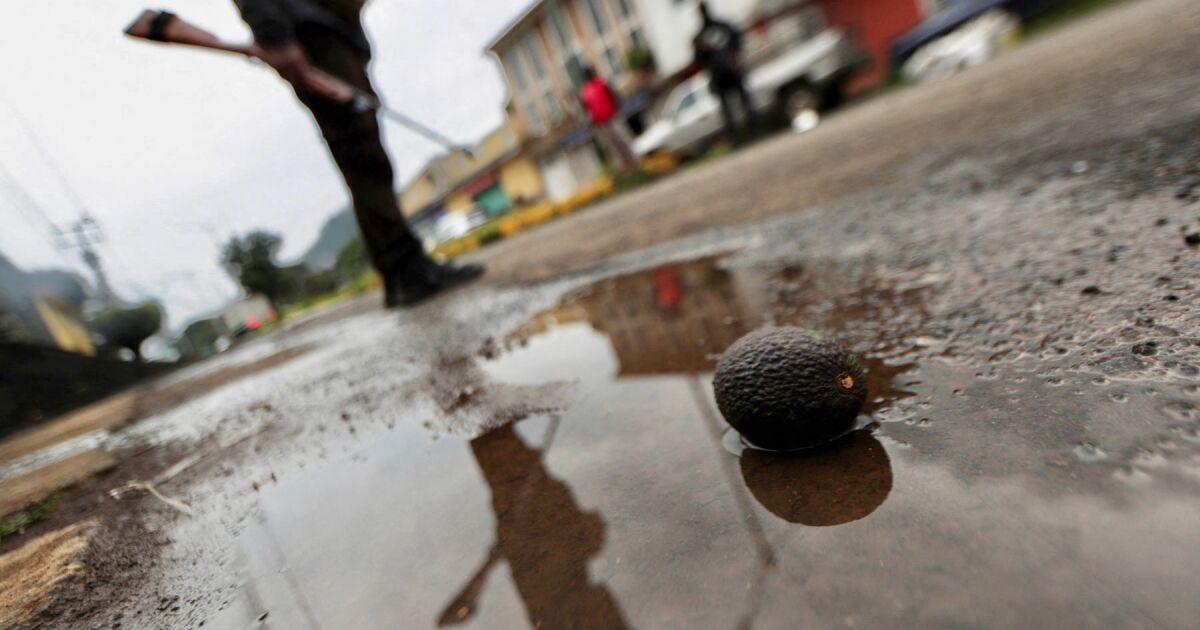
Michoacán also has an incentive for criminals in its fertile land, where businessmen and producers have become victims of criminal groups that extort them, set product prices and control the roads through which goods pass.
The entity is the national leader in the production of lemon, strawberry, blackberry, lentil, peach and plum, according to state data, but without a doubt, avocado is the star product: annually produces more than 2 million tons of the fruit and about 3.5 billion dollarsmostly to the US market.
Marketing to that country is so important that although the cultivation of avocado of Michoacán is largely in the hands of Mexican producersmarketing, packaging and international distribution does involve the participation of transnational companiesmany of them American, so this market becomes a priority for the interests of Donald Trump’s government.
From cartels to terrorists
Last February, the United States government declared six Mexican organizations as Foreign Terrorist Organizations (FTOs) and Specially Designated Global Terrorists (SDGs) considering that they constitute a threat to national security “that goes beyond that posed by traditional organized crime.”
The designated cartels were the Sinaloa, Jalisco New Generation Cartel (CJNG), Northeast Cartel (CDN), The New Michoacan Family (LNFM), Gulf Cartel (CDG) and United Cartels). Of them, three have a strong presence in Michoacán.
United Cartels
Led by Juan José Álvarez Farías, “El Abuelo”, this organization has its history in 2010.
It has a presence in 12 municipalities, including Buenavista, Aguililla, Apatzingán and Tepaltepec, which are among the main lemon producers. These locations produce 600,000 of the 670,000 tons of citrus generated annually by the entity.
When the US government designated it, it described it as a violent transnational organization that engages in “violent activities that have caused numerous civilian, military, and police casualties.”
Among the criminal activities they carry out are drug trafficking, kidnapping, homicide, arms trafficking and extortion.
According to Armando Vargas, Michoacán is highly attractive due to the different legal and illicit economies in which they can obtain economic resources.
“It is an appropriate territory for the establishment of criminal structures due to the high potential for exploitation of income, whether through legal or illegal means,” indicates the security expert.
Michoacán is a fertile land for the proliferation of a multiplicity of formal and informal economies, particularly these economies that are key not only to local, regional, but also national development such as avocado and lemon.
Armando Vargas, from Mexico Evalúa.
Jalisco New Generation Cartel
In Aguililla, Michoacán, are the origins of the CJNG, since Nemesio Oseguera Cervantes, “El Mencho”, was born in the town of Naranjo de Chila.
The CJNG has a presence practically throughout Mexico and due to the internal dispute in the Sinaloa Cartel, that organization has expanded and strengthened.
This cartel is not only dedicated to fentanyl trafficking, but also extortion, migrant smuggling, oil and mineral theft, and arms trafficking.
The US government classifies it as an extremely violent organization with contacts throughout the American continent, as well as European and Asian lands.
“The CJNG has perpetrated intimidating acts of violence, including attacks against Mexican military and police with military weapons, the use of drones to launch explosives against Mexican law enforcement, and assassinations or attempted assassinations of Mexican officials,” notes the United States Department of Justice.
(Photo: Cuartoscuro/Special)
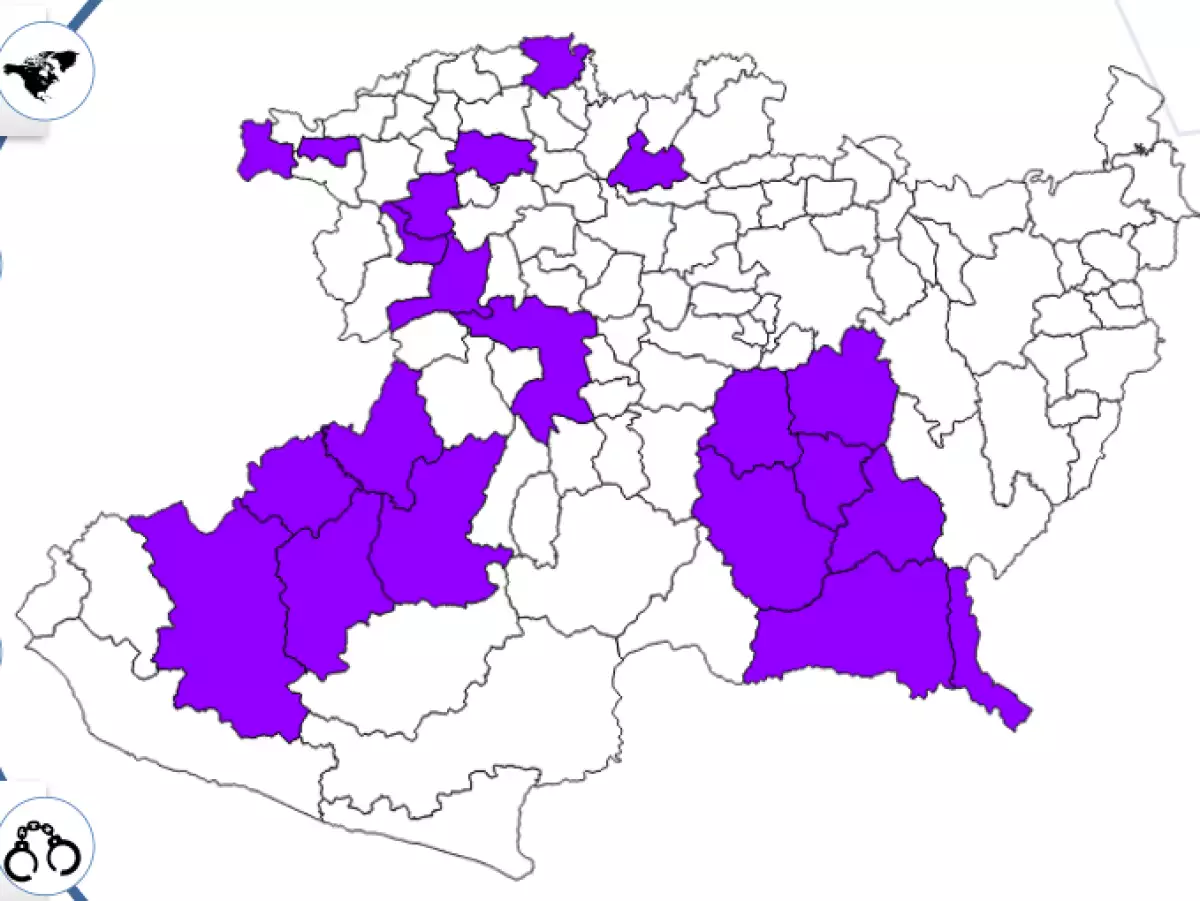
According to him Crime map of Michoacán by AC Consultores, The CJNG has a presence in 21 of the state’s 113 municipalities.
This organization whose regional leaders are Miguel Angél Gallegos “Migueladas” has the history of its operation in 2001 and is dedicated to drug trafficking and extortion.
Among the municipalities that have activities are La Piedad, Zamora, Sahuayo, Los Reyes, Uruapán, Buenavista, Tepaltepec, Aguililla, Apatzingán, Tacámbaro and Madero.
(Photo: Screenshot.)