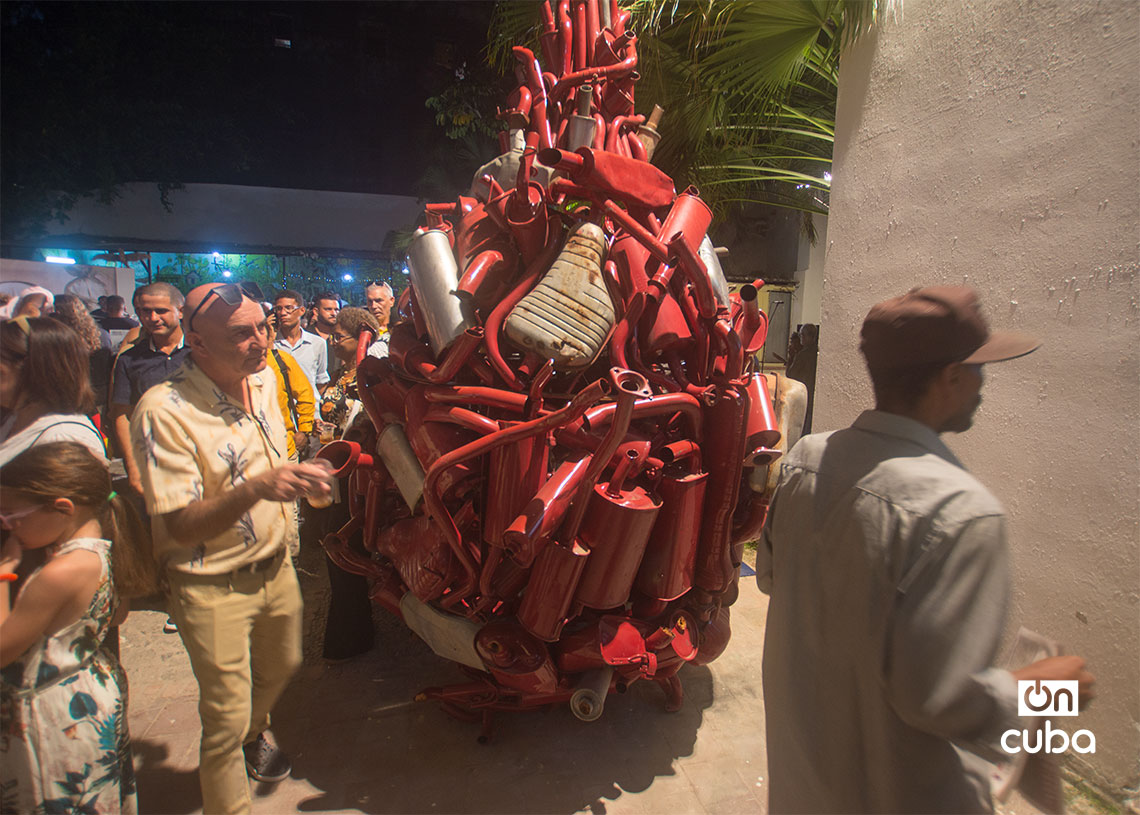
The Cuban visual artist Michel Mirabal inaugurated this November 8 his first personal exhibition in Cuba after 15 years. In the last decade and a half, the creator has been present in the cultural dynamics of the country in many ways, but never with a sample that is totally his own.
That is the primary reason for the title of what is exhibited at the Provincial Center of Plastic Arts and Design of Havana, located at the intersection of Luz and Oficios streets in Old Havana.
Mirabal says to OnCuba that both he and the public needed this exhibition and what it contains, since on the island he is well known basically for his flag series, while this other part of his work defines him in the world, but not at home.
you don’t know me It is then a more than clear title. Michel Mirabal is wanting to present himself again to the Cubans, give a new “mucho gusto” and receive it back from those who may come across the pieces he has gathered for this visual tour, in which he not only proposes a look at those other techniques or styles that we Cubans had not enjoyed in his art.
This opportunity to get to know the artist can also be felt, once you encounter his works, as a suggestion to get to know his feelings better.
“These images populate and organize your mind, your emotions, as you walk in search of meaning in your life and that of others,” Nelson Herrera Ysla best summarizes it in the text “Granny, and that big exhibition?” asked Little Red Riding Hood. To know him better, the Wolf answered.
“It is not only, or not only, a more or less well-thought-out display of artifacts. It is, by far, an act of justice for those who have exhibited—in this same way—all over the world except on their island,” writes Andrés Isaac Santana, who co-curates this exhibition with Herrera Ysla.
Indeed, Mirabal explains to us that he has created some pieces specifically for this exhibition, but that around 60% of the works exhibited have previously been in galleries in various countries, especially European ones.
The artist has a lot to say, but he wants us to feel it, and in that feeling is that power that contemporary visual arts have that each piece can have many speeches.
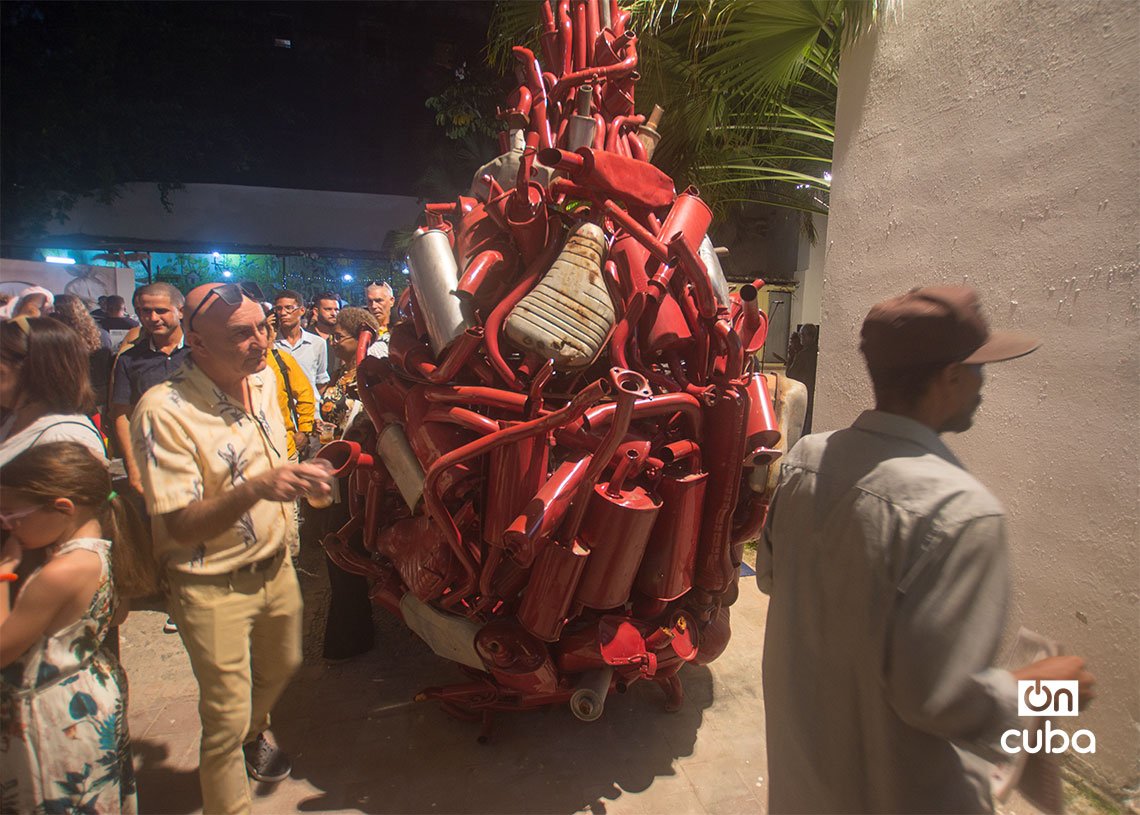
Some more obvious than others, but in most cases allusions to feelings, pain, concerns that each one can place in their own emotional zone, there in what hurts you the most, moves you or excites you.
However, Mirabal tells us that his greatest message is in the Cuba we live in today, in everything that hurts us in the daily life of the complex context in which we live, but also in the one we come from, which has never been an easy terrain, and in the very discouraging or uncertain future that we often glimpse.
To decipher, feel and show us lights on you don’t know me and the work of Michel Mirabal, the curators Herrera Ysla and Isaac Santana have brought together their pens with those of other important names in Cuban literature and visual arts such as Leonardo Padura, Rafael Acosta, Carlos Rafael Fuentes Tamayo, and Isabel María Pérez Pérez, Lázara Menéndez, among others, to form a catalog that will be presented as part of the actions while the exhibition is on display until January 15, 2026.
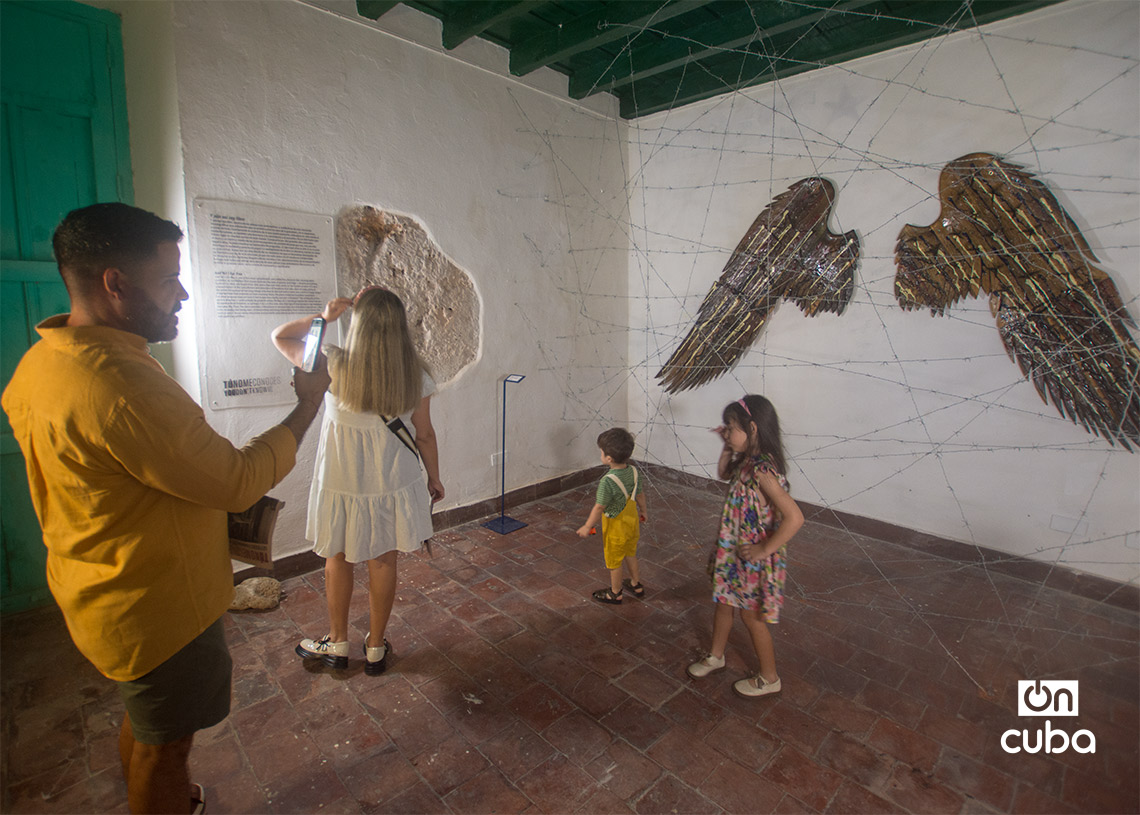
Through the installations of various dimensions, photographs and sketches that make up this exhibition, we also get to know much of the journey of an artist who has already been working for three decades, and whose language is also that of an artistic generation.
“Michel Mirabal is not an isolated phenomenon in contemporary Cuban art, he belongs to a very pregnant, vital and rich cultural and artistic tradition. It is a tradition traversed by three thick lines, namely: an area of a sociological-critical nature, another vernacular-kistch and a third, of an anthropological-religious nature,” explains Rafael Acosta in the text “You don’t know me, a turning point.”
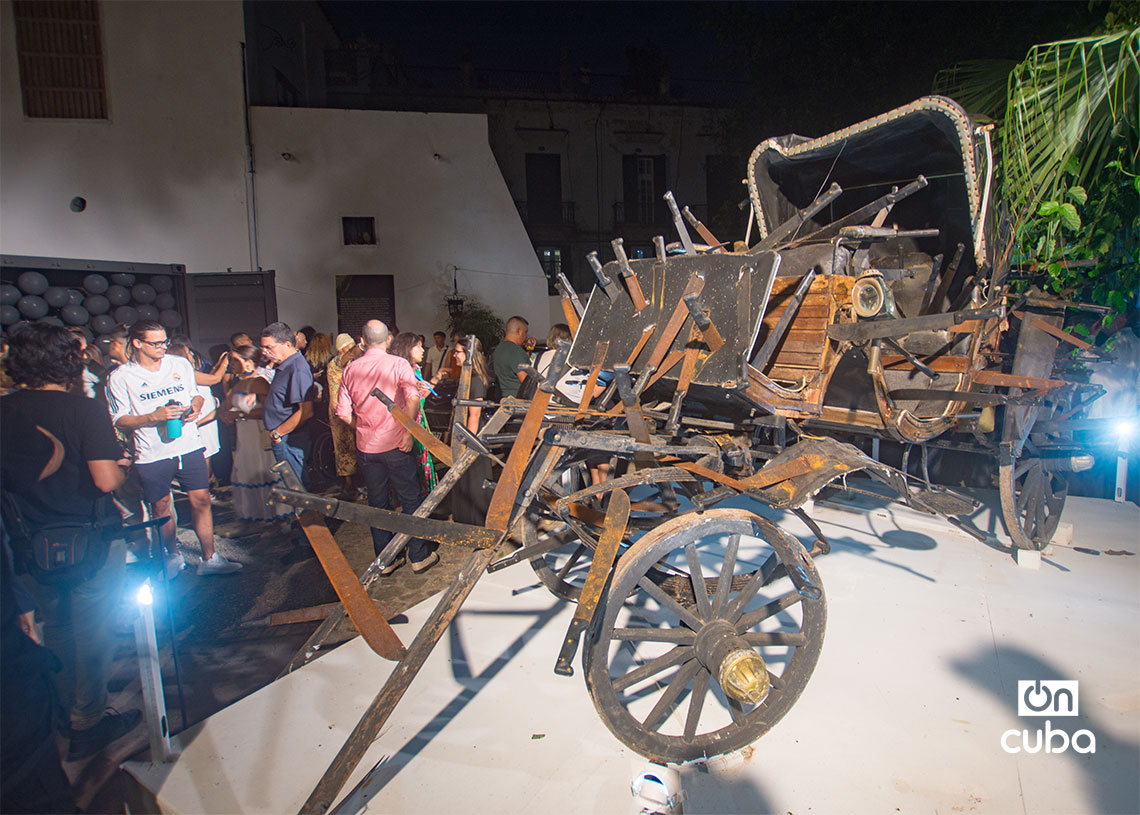
Being able to attend this personal exhibition of the artist in Havana, for many the first time they can do so, is being many things at the same time: a letter of introduction at times, a reunion at other times, taking the photos, thinking in front of a mirror that asks you how you see yourself, seeing or deciphering the symbols.
In the end, you don’t know me by Michel Mirabal is a true invitation to let ourselves be carried away by art, and allow ourselves to find in it what we are, what we feel, where we come from, and why not, ask ourselves where we want to go.