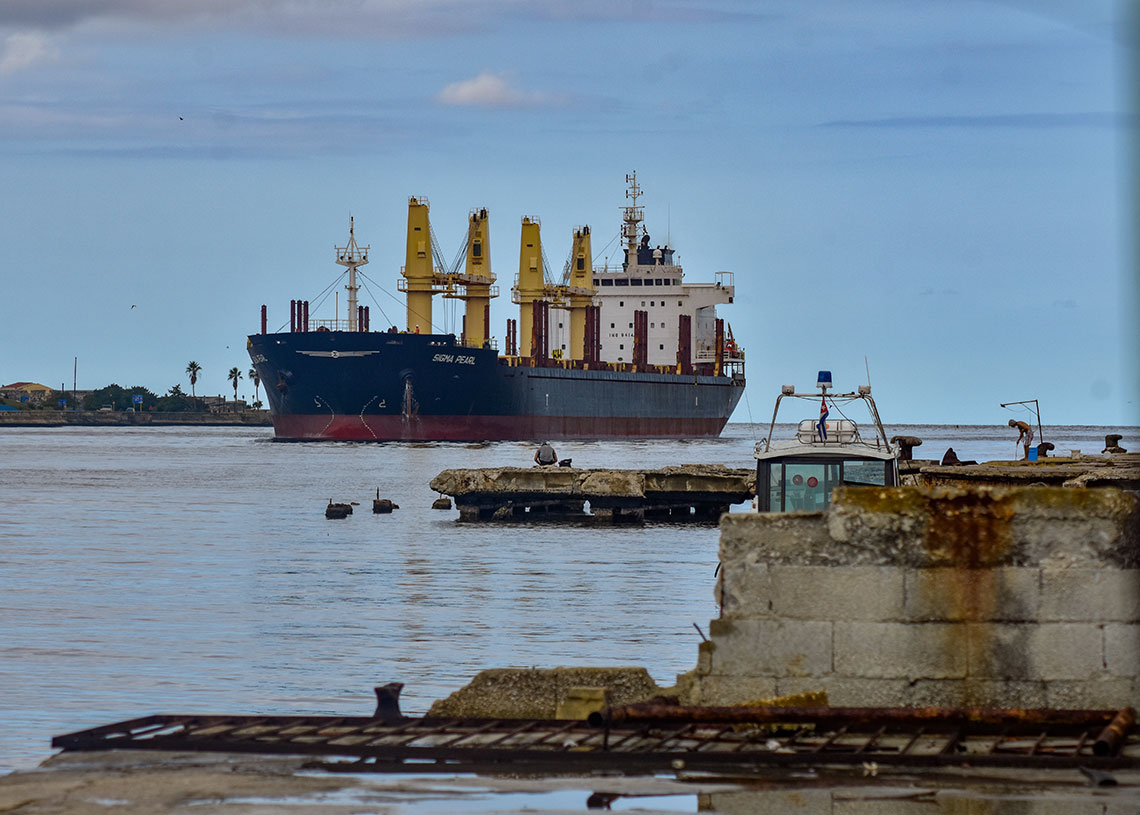
Two ships from Mexico with a total of 80 thousand barrels of fuel will arrive in Cuba in days to alleviate the energy crisis that the island suffers.
The two ships will provide hydrocarbons at a critical time for the island, which suffers power outages of 20 or more hours a day in large areas of its territory and in the face of doubt that Venezueladue to US military pressure, can remain its main oil supplier, according to a report from EFE.
The ships are the Ocean Mariner and the Eugenia Gas, both flying the Liberian flag. The latter, according to the report, is circumnavigating the island of Cuba along its northern coast, heading to the port of Moa, after loading at the Pajaritos complex of the state-owned Petróleos Mexicanos (Pemex), in the south of the North American country.
The other ship, for its part, would still be loading at these same Mexican industrial facilities to then travel to Cuba, according to ship tracking data from the Energy Institute.
Total and several partial collapses
These shipments take place at a critical moment in the Cuban electrical system. The country has suffered a deep energy crisis since mid-2024 due to the frequent breakdowns of its obsolete power plants and the lack of State currency to acquire the fuel necessary for its generation units.
In just twelve months, the national electrical system has suffered five total collapses and several partial ones. With this rate of blackouts, the national economy is paralyzed and social discontent is high.
The 80 thousand barrels sent by Pemex—currently the most indebted oil company in the world—represent slightly more than the island’s one-day crude oil deficit. Cuba needs around 110 thousand barrels for its basic energy needs, of which about 40 thousand come from national production.
According to the National Office of Statistics and Information (ONEI), 60% of the fuel consumed on the island is imported and, of the total needed by the country, 65% is to feed the country’s thermoelectric plants.
Another situation: US naval deployment
According to several independent studies, about half of Cuba’s fuel needs are covered thanks to the import of crude oil from Venezuela, Mexico and, to a much lesser extent, Russia.
Judging by analysis from the Energy Institute and other similar centers, Venezuela had contributed around 50,000 barrels a day to Cuba in recent years, but since 2024 the average volume has decreased to between 10,000 and 30,000. Neither Caracas nor Havana make this data public.
However, the US naval deployment off the Venezuelan coast and the decrease in shipments from Mexico (from an average of 22,000-25,000 barrels per day to approximately 5,000) have led the island to the current extreme situation.
Venezuela defies Trump and assures to maintain oil exports “normally”
US President Donald Trump’s announcement of a naval blockade of sanctioned ghost fleet tankers threatens to aggravate the situation for Havana.
Furthermore, shipments of Mexican oil to Havana, which the Government of the North American country has framed as “humanitarian aid,” have already been a cause of friction with the United States.
Asked about this in her morning conference, the Mexican president, Claudia Sheinbaum, assured this Thursday that the relationship between Mexico and Cuba “has always been a difference” with the United States since 1959.
Almost half of the country turned off this Friday
The island will have blackouts throughout this Friday that will reach almost half of the country at the same time, during the time of greatest energy demand in the evening.
The most recent report from the Electrical Union estimates for the “peak” time of the day a generation capacity of 1,440 MW and a maximum demand of 3,380 MW. Meanwhile, the deficit will be 1940 MW and the impact will reach 1970 MW.
Currently, half of the 16 operational thermoelectric production units are out of service due to breakdowns or maintenance. This energy source should contribute 40% of the energy mix.
Likewise, 83 distributed generation plants (engines) are not operating due to lack of fuel (diesel and fuel oil) and about a dozen are stopped due to lack of lubricant. This source should account for 40% of the energy mix.
EFE/OnCuba.














