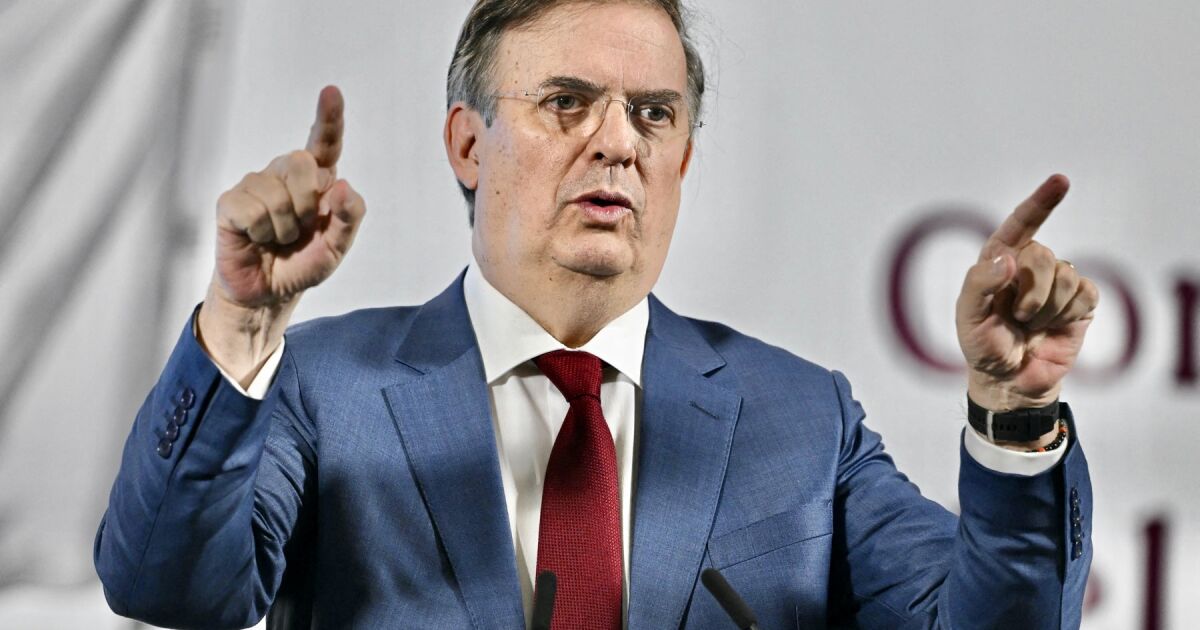
Manufacturing concentrated 37% of FDI, followed by financial services with 25%, and construction with 5%, according to preliminary figures presented by Ebrard.
The relevant data is hidden within the total figure. New investments went from 2,000 million dollars to 6,500 milliona jump that confirms that fresh capital no longer responds only to reinvestments.
Ebrard stated that this flow reveals a change in expectations and a clear reading of confidence in the administration of President Claudia Sheinbaum. Since 2018, FDI has accumulated growth of 69%.
The official stated that this trend shows that Mexico remains attractive in the face of a more uncertain global scenario, marked by trade tensions, regulatory adjustments and geopolitical pressures.
The consolidation of the country as a capital destination also advances in parallel with the drive for productive relocation in North America.
He also highlighted the country’s export position. Despite the new tariffs and changes in the commercial environment, Mexico maintains sustained growth in its sales abroad.
Exports advance year after year and preserve the dynamism that underpins the relationship with the United States and Canada. Ebrard pointed out that the estimates that anticipated a slowdown were not fulfilled and that the export rhythm remains firm.
Mexico will host the APEC forum
On the other hand, he commented that Mexico will host APEC in 2028, a bloc that concentrates 61% of the world’s GDP and brings together the United States, China, Japan, Canada, South Korea, Australia, Mexico, Peru and Chile. The appointment was approved unanimously and reinforces the country’s presence in the most influential economic sphere on the planet.
Ebrard stated that this decision recognizes Mexico’s strategic role between America and Asia. The future headquarters allows a platform for dialogue that opens space for a broader diversification of markets and for an economic agenda that transcends the relationship with North America.
The outlook, he said, combines record investment, export expansion and a more active relationship with the main economies of the Pacific. Three signs that, in his opinion, consolidate a cycle of confidence and place Mexico in a more robust position in the face of the challenges that 2025 anticipates.