Mexico at COP30
COP30 is the thirtieth edition of the Conference of the Parties to the United Nations Framework Convention on Climate Change (UNFCCC), the most important international forum to define and negotiate global actions against the climate crisis.
Held in Belém do Pará, Brazil, from last November 10 to this Friday the 21st, this summit brings together governments, scientists, international organizations, companies, civil society and indigenous peoples to agree on measures that allow limit global warming and accelerate the transition towards more sustainable development models.
COP30 is particularly relevant because it marks a critical point in the implementation of the Paris Agreement, an international treaty that since 2015 seeks to combat climate change and limit global warming to less than 2° Celsius, with the aim of keeping it below 1.5° C.
Thus, this year, countries were called to present more ambitious climate goals, strengthen their adaptation plans and advance climate financing mechanisms, technological cooperation and strategies to face losses and damages derived from extreme phenomena.
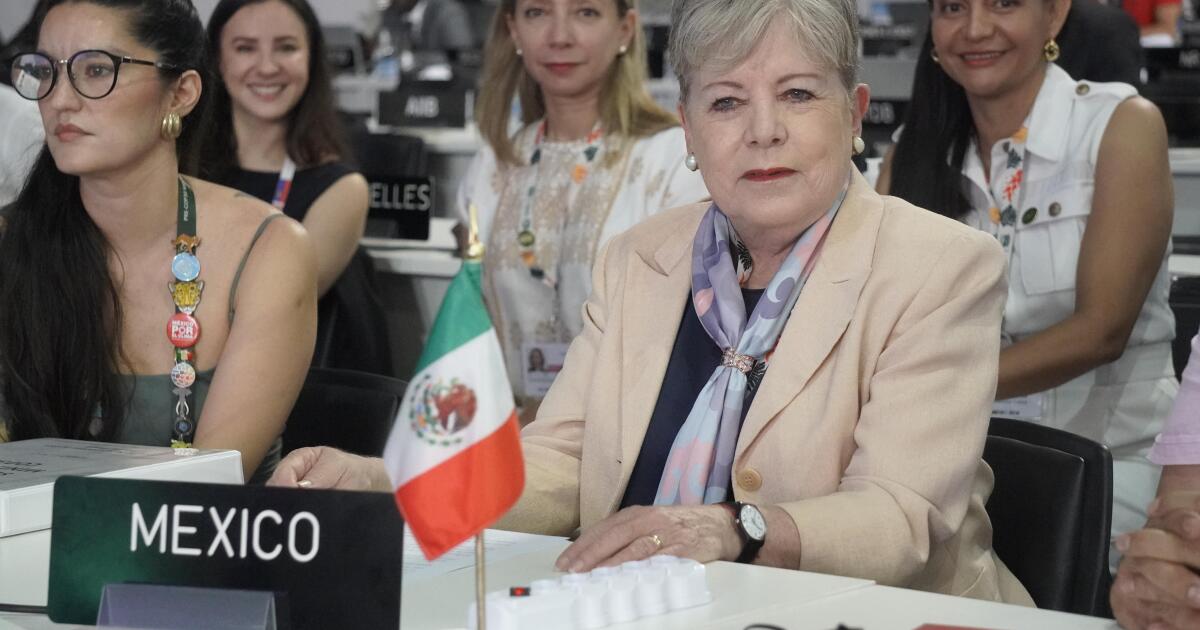
In this context, Mexico had a relevant participation by presenting its NDC 3.0an update on their climate commitment.
The Secretary of Environment and Natural Resources, Alicia Bárcena Ibarra, highlighted during her participation in this forum that the COP must be a “turning point” for global climate action and called to guarantee real financing, technical cooperation and co-responsibility between nations.
Bárcena also stated that COP30 represents “a COP of truth”, in which climate impacts – the so-called losses and damages – must be recognized as realities that affect lives, territories and economies.
He recalled that Mexico contributes only 1.5% of global emissions, but faces growing vulnerability to extreme events. For this reason, NDC 3.0 incorporates for the first time a component of Loss and Damagean expanded adaptation framework, and a new transversal social vision based on human rights, equality, youth and territorial approach.
In addition to its main intervention, Mexico participated in various multilateral dialogues on industrial transition and presented, together with Guatemala and Belize, the Initiative of the Biocultural Corridor of the Great Mayan Junglea trinational project to strengthen environmental governance and protect one of the most important biodiversity corridors on the planet.