The Aztec country exported an average of 12,284 barrels of crude oil per day to the Island last year.
MIAMI, United States. – Mexico became Cuba’s largest oil supplier in 2025, a shift that sustains part of the Island’s energy supply and, at the same time, exposes the Government of Claudia Sheinbaum to new political pressures from Washington, at a time of regional tension after the capture of Venezuelan ruler Nicolás Maduro by US forces.
Mexico exported an average of 12,284 barrels of crude oil per day to Cuba last year, equivalent to 44% of the island’s total crude oil imports, according to data from the monitoring firm Kpler cited by Financial Times.
The same source indicated that Venezuela, historically the main supplier to Havana, came in second place with 9,528 barrels per day (34% of the total). Although this volume was similar to that of 2024, it was 63% below the level of 2023.
Victoria Grabenwöger, crude oil research analyst at Kpler, summed up the change this way: “Imports of Venezuelan crude oil to Cuba have fallen and Mexico has emerged as the country’s main crude oil supplier.” The specialist added that the movements of Venezuelan ships towards Cuba identified by Kpler were “dark activity”, verified with satellite images.
The rebound in the Mexican flow coincided with a sharp deterioration in Venezuelan supply to the Island, in a context in which the Trump Administration toughened its policy towards Caracas, even with maritime interdiction actions. On December 10, the United States seized an oil tanker off Venezuela under a sanctions scheme.
After the fall of Donald Maduro, Trump attributed Havana’s fragility to the reduction in Venezuelan crude oil. However, the regime still has Mexico left.
Petróleos de México (PEMEX) reported in a statement presented in December to a US stock exchange that its Gasolina Bienestar unit sent 17,200 barrels per day of crude oil and 2,000 barrels per day of petroleum products to Cuba during the first nine months of 2025, for a value of 400 million dollars.
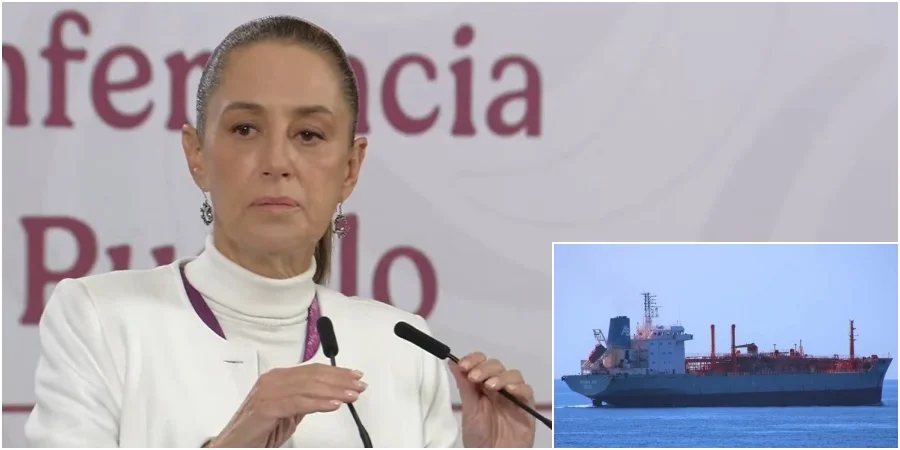
Sheinbaum publicly defended the legality of those shipments: “First, we are doing this within a legal framework as a sovereign country, and second, we are continuing a series of support measures that our country has historically provided to Cuba.”
In testimony before a House subcommittee on December 17, 2025, Katherine Dueholm, principal deputy assistant secretary for Western Hemisphere Affairs at the State Department, stated that his agency continued to pressure Mexico to play “a constructive regional role aligned with US foreign policy objectives.” and that, “unfortunately,” the current Mexican administration “has frequently acted in ways that run counter to (…) US objectives, including its support for the brutal, corrupt and economically dysfunctional Cuban regime.” Dueholm added: “We continue to urge Mexico to reconsider these positions.”
Cuban-American congressmen Carlos Giménez, Mario Díaz-Balart and María Elvira Salazar also warned of “serious consequences” for Mexico if Sheinbaum continued “undermining US policy by sending oil to the murderous dictatorship in Cuba.”