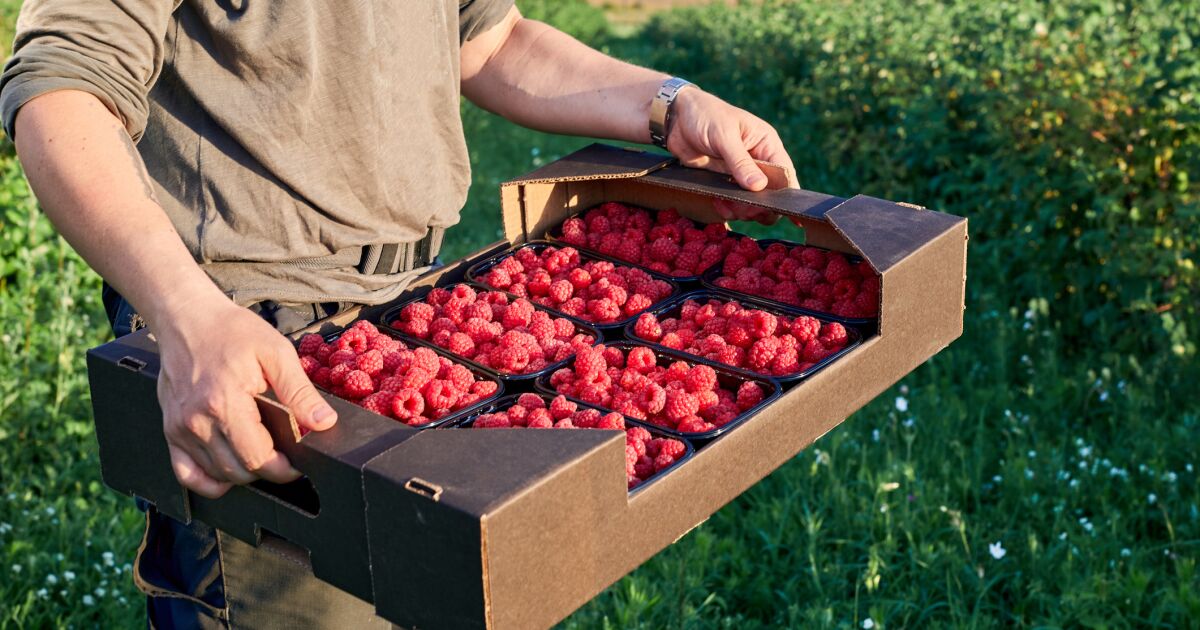
The comparison leaves little room for competition, because Washington producers sell raspberries between $2.70 and $2.80 per pound, while Mexico offers the same fruit for around $1.50 per pound, a gap of more than 40% compared to US prices.
According to the commission, this difference became a structural factor that displaces local suppliers and causes the loss of customers who previously constantly bought processed fruit in Washington.
“Mexican growers benefit from substantially lower labor costs, often a fraction of US wages, as well as reduced regulatory and environmental compliance expenses. Thanks to strong support for export infrastructure and favorable trade conditions under the USMCA, Mexican suppliers can transport large volumes of raspberries to the US market with minimal expense.”
In 2024, Mexico produced 175,539 tons of raspberries, of which about half were destined for export. Jalisco led production with 110,250 tons, followed by Michoacán with 31,435 and Baja California with 28,129.
The value of exports grew rapidly. In 2019 it totaled 1,749 million dollars and by 2024 it reached 9,394 million, but its peak was recorded in 2023, when it reached 10,118 million, according to data from the Ministry of Agriculture and Rural Development.
Mexican raspberries reach dozens of countries in America, Europe, Asia and Oceania, such as Canada, the Netherlands, Russia, Japan, Saudi Arabia, Belgium, Hong Kong, Ireland and Kuwait, although the United States concentrates most of the purchases.
Several US companies participate in this market through subsidiaries or associations with local producers in Mexico, including Reiter Affiliated Companies through BerryMex and Naturipe Farms.
The commission’s analysis highlights that this deterioration coincides with a sustained increase in costs in the United States since 2019. Labor, packaging and inputs advance without prices keeping pace, leaving farmers with no margin to cover basic expenses.
Mexican fruit, described as a byproduct of the fresh market, enters without a reference price and makes any attempt to stabilize values during the season difficult.
To measure the phenomenon, the commission returns to investigation 332 of the United States International Trade Commission carried out in 2021, which examined competition between the United States and four exporting countries. The study confirmed the weight of Mexico in the supply. In 2020, it exported 9,910 metric tons of frozen raspberries and 92,443 metric tons of fresh fruit to the US market.
The commission maintains that the trend has intensified since 2020. Mexican imports grew faster than any other origin, while Washington’s total production fell. The result is an imbalance that, in the opinion of the sector, threatens the viability of an industry.
Producers request that the review of the T-MEC incorporate corrective measures, such as tariffs, import quotas or other instruments that compensate for the difference in costs. They warn that the lack of intervention puts at risk the continuity of a sector that already operates without financial space.
“As the USTR prepares for the upcoming USMCA review, we respectfully encourage reconsideration of policy solutions to support US raspberry growers. While there is no single solution to the current trade imbalance, we are open to various strategies.”
Mexico knows this script well. This year, The United States imposed a 17% tariff to the Mexican tomato after abandoning the agreement to suspend an antidumping investigation in force since 2019. Florida tomato growers celebrated the decision. Now, Washington raspberry growers are seeking a similar outcome to protect the long-term competitiveness and viability of their industry.