So it is difficult for Mexico to be able to pay on that date a part of the 1,068 million cubic meters that was owed for the 2020-2025 five-year period, which ended on October 24.
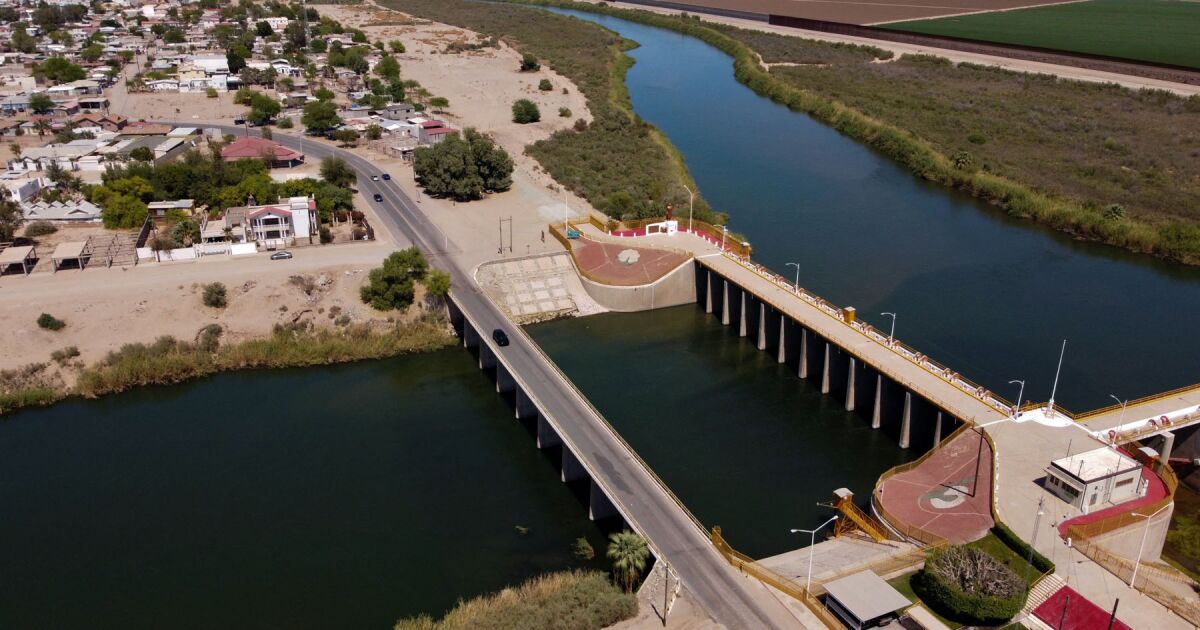
President Claudia Sheinbaum acknowledged in her morning conference this Tuesday that it is difficult to deliver the liquid immediately due to the water needs on the northern Mexican border since the Río Bravo pipeline does not have the necessary size to deliver such a quantity of water.
Their bet is to reach a new agreement with the US government at the meeting held this afternoon by authorities from both countries and thus avoid the imposition of a new 5% tariff.
“I am convinced that, as on other occasions, we will reach an agreement,” she declared.
The Water Treaty of 1944 establishes five-year terms for sharing the liquid from the dams on its borders. Every five years, the United States must deliver 1,850 million cubic meters of the Colorado River. The quota for Mexico is 2,158.6 million cubic meters of the Río Bravo.
The droughts of previous years prevented the country from paying its entire water quota (it delivered 51%).
The US government has been pressuring Mexico on this issue since April, stating that non-compliance affects Texas farmers.
But the Sheinbaum government shields itself with the bilateral agreement itself, which considers the possibility of paying water debts in the next five years, starting in 2026.
Taking water from other dams is also being discussed, such as El Cuchillo, which is supplied from the San Juan River basin, in Nuevo León and Tamaulipas and has a current storage of 82% after the heavy rains in October.
However, state governments assure that this liquid is needed for local irrigation because the area was affected by past droughts. In addition, almost all of the water in the dams was used to send it to the United States.