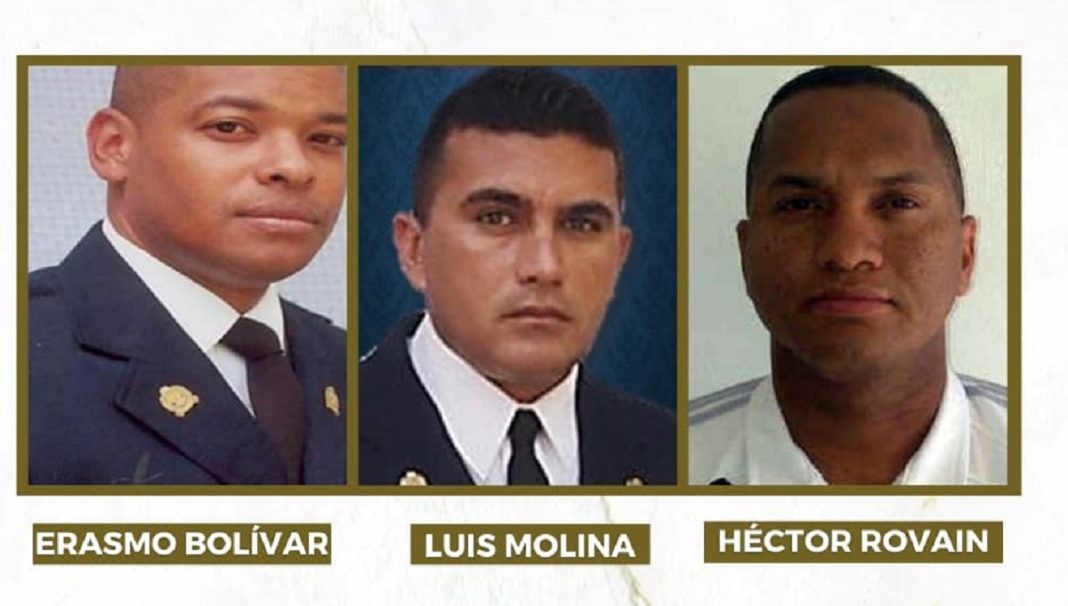

Amnesty is a benefit that eludes them. At least that’s how it has been during this government. With 23 years in prison, the metropolitan police Héctor Rovaín, Luis Molina and Erasmo Bolívar continue to be victims of the apparatus of impunity and of a political narrative that no authority wants to reverse.
The events that occurred in Caracas on April 11, 2002, known as the Puente Llaguno events, left 19 dead and more than a hundred injured in the midst of the political crisis that led to the temporary departure of Hugo Chávez from power.
From that day on it opened one of the most extensive and controversial criminal cases in Venezuelan judicial history. Four commissioners and five officials from the Metropolitan Police were charged. Among them, Héctor Rovaín, Erasmo Bolívar and Luis Molina, the last three police officers still behind bars, 23 years later.
The sentence: what the file really says
The current official narrative insists that the police officers were convicted of “intentional homicide.” The ruling handed down in 2009 by Judge Marjorie Calderón establishes otherwise.
The three officials received 30 years in prison as necessary accomplices in the crimes of frustrated qualified homicide in the degree of complicity. Also, serious and minor personal injuries and misuse of firearms.
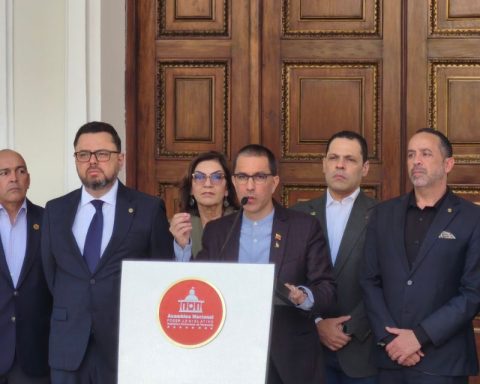
This qualification is key: it is not a case of completed or intentional homicide, as Jorge Arreza, president of the parliamentary commission in charge of executing the amnesty law, said. It is a common crime within the Penal Code that, therefore, does admit alternative formulas for serving the sentence and other benefits.
Tests, hearings and doubts about the process
The longest trial in Venezuelan history accumulated 235 hearings, 265 expert opinions, 5,700 photographs and 20 videos. In addition, almost 200 witnesses.
Even so, human rights organizations denounced a series of irregularities. He highlighted the fact that the evidence presented did not demonstrate direct responsibility of the officials in the events. Legal qualifications would also have been altered to prevent procedural benefits.
During the trial, which ended in 2009 when the officials had already been imprisoned for six years, the defense denounced alleged political pressure on the judges.
Confirmation of these allegations came shortly after. The former magistrate of the Supreme Court of Justice Eladio Aponte Aponte stated in a letter dated April 16, 2012 that he received orders from then President Hugo Chávez to condemn the metropolitan police officers and apply the maximum sentence to them. In fact, 7 of the 9 were sentenced to 30 years in prison.
The sentence was handed down by Judge Marjorie Calderón Guerrero, head of the Fourth Trial Court of the state of Aragua. Later, her career led her to occupy higher positions, such as presiding judge and president of the Criminal Judicial Circuit of the state of Aragua. Also magistrate of the Social Cassation Chamber of the Supreme Court of Justice (TSJ).
Denied procedural benefits
Since 2010, Rovaín, Bolívar and Molina have met the requirements to access alternative measures to serving the sentence, contemplated in the Organic Code of Criminal Procedure in force at the time. These are the work detachment, open regime, confinement and conditional release.
The work detail allows the inmate to go out to work and return to the detention center each night. You can receive this benefit when you have half of your sentence served. Bolívar, Molina and Rovaín, now prisoners in CP Fénix, have the right to receive it.
In the open regime, the inmate is sent to a community treatment center, where he works and spends the night from Monday to Thursday. Friday, Saturday and Sunday he sleeps at home. It is awarded after two-thirds of the sentence imposed.
Conditional release establishes periodic appearance measures before the court and is enjoyed after three quarters of the sentence. Confinement allows the inmate to live 120 kilometers from the place where the events occurred. In the last reform of the COPP, confinement was eliminated, but the PMs were tried with the previous code, therefore they preserve their rights.
Metropolitan police officers are covered by the Judicial Redemption Law of the sentence that commutes one day in prison for every two days studied or worked. The time thus redeemed will also be counted for the conditional suspension of the sentence and for the formulas for its fulfillment.
All those lapses are expired. None of these measures have been granted to them.
Amnesties that never came
In 2007, the so-called amnesty law did not benefit them. In 2026, a new amnesty excluded them again.
The expectations of the families were initially focused on the Special Amnesty Law approved in 2007. It was designed to close chapters of political conflict associated, among others, with April 11, 2002.
The text of that law established an amnesty for events that constitute acts of civil rebellion until December 2, 2007. It also provided for the extinction of criminal, judicial and military actions for political events. Its application left out the metropolitan police.
In 2026, a new amnesty once again spoke of reconciliation and closing wounds, but once again left out Rovaín, Bolívar and Molina. This reinforced the perception that, when it comes to the metropolitan police officers of April 11, there is a tacit commitment to keep them as an example of how the State punishes.
Fénix: the loneliness of three political prisoners
Until October 22, 2021, Héctor Rovaín, Erasmo Bolívar and Luis Molina remained held in the National Center for Military Prosecutions, the Ramo Verde prison. There, at least, they could receive visitors with some regularity and had the material support of their families.
That day they were transferred to the Fénix Penitentiary Center, in Barquisimeto, a prison for common criminals located in the state of Lara, far from Miranda and La Guaira, where their family units are. The distances, costs and deterioration of services broke the routine of meetings and have plunged them into an even harsher loneliness.
In Fénix, the three officials share spaces with prisoners for common crimes, despite their status as political prisoners. There they spend Christmas, their children’s birthdays turned into memories and the news of new amnesties that never name them. Visits have become scarce. Families have aged. Some parents died without saying goodbye to their imprisoned children.
April 11: an open wound, an outstanding debt
23 years after the events of April 11, 2002, the question remains the same: Why are three men still imprisoned when the law already granted them the right to freedom?
This case has been described as the “founding piece of the impunity apparatus” of the Venezuelan State. Reopening it would imply dismantling a political narrative built since 2002.
Venezuela Awareness Foundation, in February 2026, published a report titled Oblivion behind bars. There it is stated that the permanence of these officials in prison constitutes a “de facto life sentence.”
The case of the metropolitan police officers is, today, living proof of the fragility of the rule of law in Venezuela.
Héctor Rovaín, Erasmo Bolívar and Luis Molina should be free. At least, enjoying the alternative measures that the law has granted them for years. Because justice that takes 23 years is no longer justice.