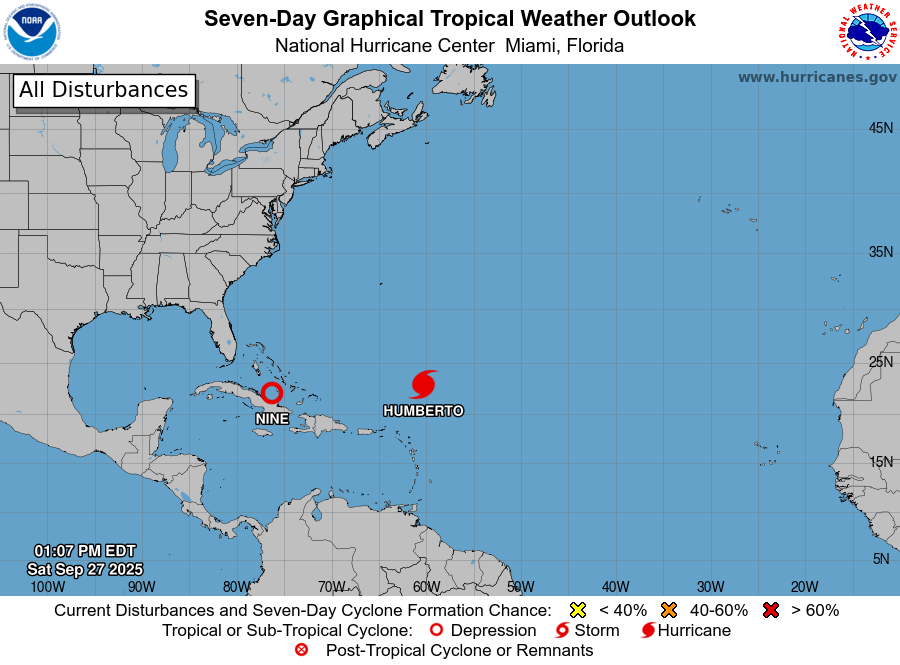
The Institute of Meteorology of Cuba (Insmet) alerted this Saturday about heavy rains, showers and thunderstorms in the East Provinces and some of the center associated with an active tropical wave and reiterated that it maintains “narrow surveillance” on this system.
A note from the INSMET forecast center released in its social networks said that in the rains they have been stronger in locations in the province of Guantanamo with higher reports “to the 200 millimeters of precipitation”.
Cuban meteorologists reported that the tropical system continues with slow movement in the geographical area, so the cloudy are maintained in “much of the east of the country, Jamaica, northern portion of the Central Caribbean Sea, the Spanish and the southeast of the Bahamas.”
The civil defense called to remain informed through the media and the official profiles of social networks, as well as “disciplinedly comply with the indications taught by local authorities.”
They propose new hurricane scale with category 6 that would include rains and swells
The Insmet reiterated that the current cyclones season in the Atlantic Ocean, the Gulf of Mexico and the Caribbean Sea 2025, in force from June 1 to November 30 will be “very active”, with the possible formation of eight hurricanes.
He also indicated that the chances of originating and intensifying at least one hurricane in the Caribbean is high (75 %), while it is 50 % for one of Atlantic origin to penetrate the Caribbean Sea and affect the island.
In the 2024 cyclonic season there were seven tropical storms and eleven hurricanes, of which five reached the category of 3 or higher, of a maximum of five on the Saffir-Simpson scale that measures its intensity. Two of these weather events strongly impacted Cuba.
On October 20, Óscar touched Cuban land as a category 1 hurricane in the Guantanamo province (east end) with winds of up to 130 km/h. Then he degraded tropical storm and left eight deaths, damage to 12,000 homes, floods that isolated communities, losses in agriculture and other ravages.
About two weeks later, Hurricane Rafael, category 3, hit the Cuban West, mostly to the Artemisa province – with sustained winds of 185 km/h—, although it also affected the neighbors La Havana and Mayabeque – and caused the total collapse of the national electrical system.