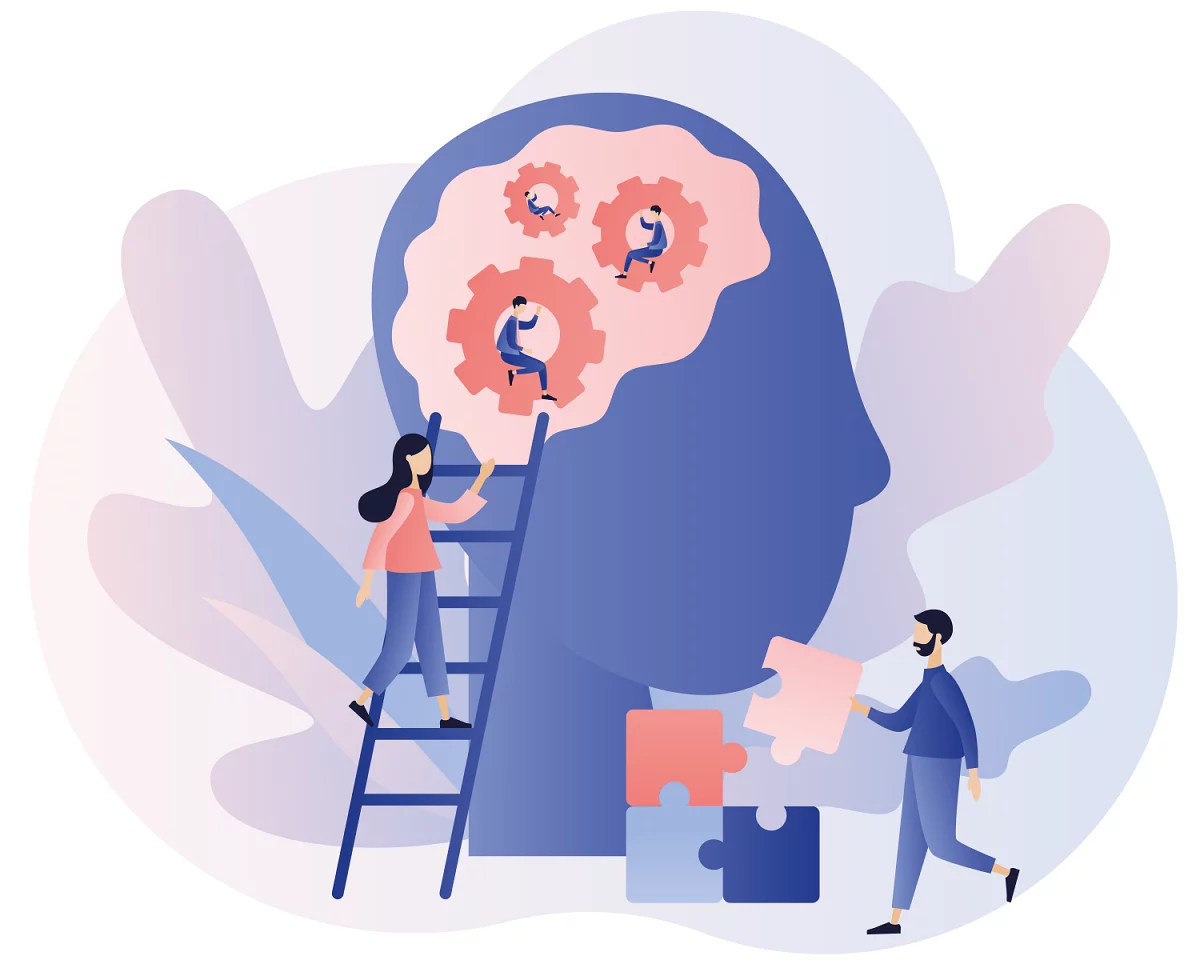
October 10 is World Mental Health Day
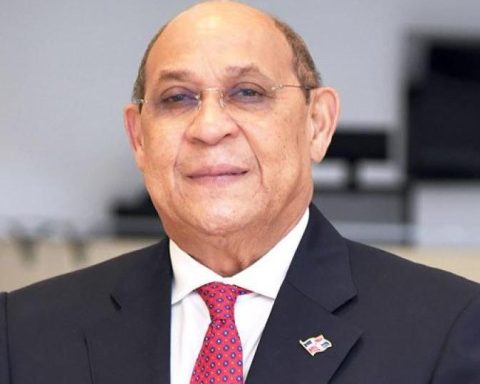
Santo Domingo.-Most of the psychiatric disorders start with sleep disturbances, a symptom that the population tends to minimize, explained the psychiatrist Francis Baez.
“He Insomnia is one of the main triggers of dementia. If we do not sleep well, neurons die faster and the brain deteriorates before its time,” he warned.
Of the depression to bipolarity, From anxiety disorders to psychoses, they all have something in common: disturbed sleep and an exhausted brain.
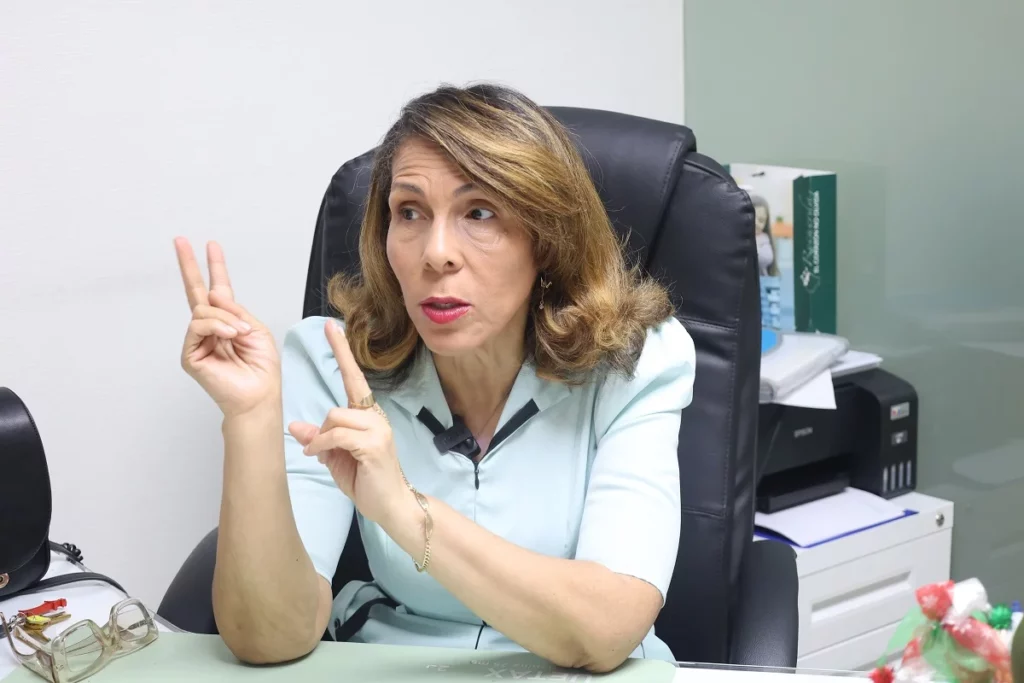
“People believe that they can control their emotions with willpower, but if the brain substances are unbalanced, the body does not obey. It is an illness, not a lack of character,” the specialist explained to El Día Newspaperregarding Mental Health Day.
The mental disorders They are not seen on x-rays, CT scans, or tests laboratory, and that is why many think that they do not exist, Báez lamented.
Also read: For fear of being called “crazy,” many people avoid going to a psychiatrist.
“But what happens in The mind is as physical as a heart attack or a thrombosis. Only, instead of the chest hurting, the thought, the behavior or the mood hurt,” added the director of the Psychosocial Rehabilitation and Human Development Center (RESIDE).

Stigma within medicine
When the doctor Francis Baez began his psychiatry residency at the Francisco Moscoso Puello hospital (formerly Gutiérrez Díaz), he understood that stigma towards mental health not only lived on the streets, but also in the hospital corridors.
“I remember that one day a very aggressive patient arrived and the entire internal medicine team refused to treat him. The oldest resident was banging on a stretcher and screaming. that ‘that crazy man didn’t go in there’. I told him: ‘Then you are the owner of the medicine’. That patient had the same right as any other, and that day I earned the respect of the hospital,” he recalls firmly.
That experience marked his career. Since then, Báez She set out to break the walls of prejudice within medicine itself, convinced that the first to eliminate the taboo are health professionals.
“We are doctors just like everyone else.”. Psychiatry belongs to medicine. The Mental illnesses are not weaknesses or whims“They are biological alterations of the brain that deserve medical attention,” he emphasizes.
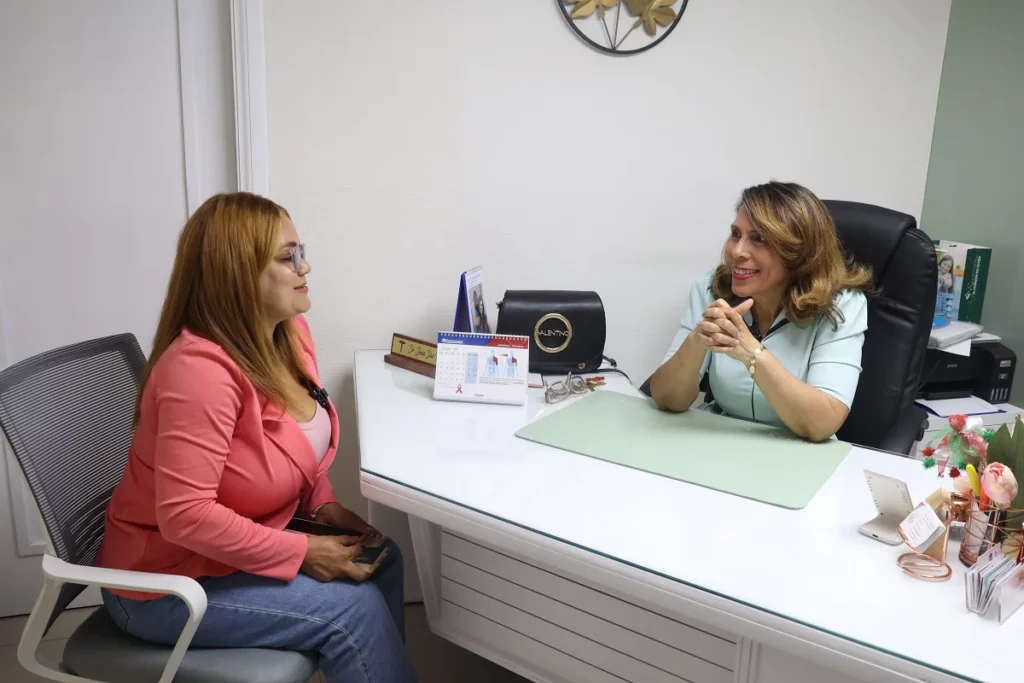
Also read: Sleep: the best ally for your mental and physical health
The weight of stigma
In the Dominican Republic, social taboo continues to be a huge barrier for those who need help.
“Many people prefer to go to a private psychiatrist so that no one sees him, or it just doesn’t work. They say that ‘they are not crazy’, when in reality they are sick and can improve with treatment,” Báez laments.
This prejudice, he adds, not only affects patients, but also their families.
“When someone suffers from depressionyours say it is ‘lazy-minded’. If you try to commit suicide, you are accused of being a coward or manipulator. And they don’t know that behind it there is a sick brain, a chemical alteration that needs medical attention.”
The stigma is so deep that even in hospitals many nurses refuse to work in psychiatric units.
“They say they don’t want to deal with crazy people. But when a patient comes into the hands of a psychiatrist, he or she is stabilized, calmed, and treated just like any other.. We are not different, we are part of the same health system,” he says.
The cost of indifference and suicide
Ignorance not only translates into discrimination, but also into tragedies.
According to Báez, every week at least ten people with suicide attempts arrive at the clinics where he works.
“And that’s just what’s reported. Globally, every 40 seconds someone attempts to take their own life.
Many do not make it, but they are all signs that the family usually ignores,” he warns.
The problem is aggravated because health insurance does not cover suicide attempts, considering them a “personal decision.”
“That is unacceptable. Nobody chooses to commit suicide. It is the result of an untreated mental illness, of altered brain substances. But the system does not see it that way,” she says indignantly.
Hospitalizations are also prohibitive: a day of hospitalization can cost more than 7,000 pesos.
“Insurance also does not cover psychiatric medications, which are expensive because their components come from abroad and must be taken for years, not for weeks like an antibiotic,” he explains.
The result is a vicious circle: patients abandon treatment due to lack of resources, relapse, deteriorate and, in the most serious cases, lose their lives.
Doctors must change too
Báez recognizes that change must begin within the medical profession itself.
“There are colleagues who prefer medicate with propranolol or mild antidepressantsrather than referring a patient to a psychiatrist, because they are embarrassed. Even among us there is prejudice,” he says.
Remember the case of a pediatrician who had been treating a cardiologist for three years for tachycardia.
“She didn’t have any heart damage. It was anxiety. But her colleague preferred to lower her blood pressure rather than send her to a psychiatrist. When she came to my office and we started anxiety therapy, she was cured. It’s that simple.”
The specialist insists that mental health must be addressed from all medical fronts, as a link medicine.
“If a patient loses a child, if a woman loses a baby, if someone faces a chronic illness or an accident, they must be referred to psychiatry. Because the mind also breaks.”
Families in denial
The psychiatrist has seen hundreds of cases in which family members deny reality. A recent one marked her: that of an 80-year-old man, an alcoholic, who developed a delusional disorder.
“He was convinced that his wife was cheating on him. He tried to kill her several times. They had been married for 50 years. His children knew he had a problem, but they never took him to a psychiatrist. Now they live in fear that one day he will kill her,” he says.
“That is the danger of taboo,” he adds. Not recognizing a mental illness can be fatal, not only for the patient, but for the entire family.”
Mental health is health
Every year, the October 10 the world commemorates World Mental Health Daya date that seeks to make visible the importance of emotional and psychological well-being.
But for Báez, it is not enough to talk about the topic once a year.
“Mental health is not a fad. It is a necessity. If the media, schools and doctors talked about it at least twice a week, we would be saving lives,” he maintains.
“Whoever does not have mental health, does not have physical health. Because the body cannot heal if the mind is sick. A diagnosis of cancer, a loss or grief is enough for the mind to be affected. We all, at some point, go through something that puts our emotional stability at risk.”
Break the silence
For Dr. Francis Báez, talking about Mental health is talking about humanity.
“To be human is to feel, and whoever feels can get sick. The important thing is to recognize it in time and seek help. There is no shame in going to a psychiatrist. The real shame is in ignoring the pain of another.”
Therefore, since RESIDE and from his private practice, he continues to defend free, quality public care for all Dominicans.
“The hospitals are equipped, the medications arrive, the specialists exist. What is missing is for people to lose their fear. The taboo must be removed, inside and outside the system,” he concludes.
“We have to talk about mental health. Not just on October 10. Every day. Because taking care of the mind is taking care of life.”