Havana/Hurricane Melissa, which has become a powerful category four cyclone on the Saffir-Simpson scale, is slowly moving westward and keeps the eastern region of Cuba on alert. At six in the morning this Sunday, the system reached maximum sustained winds of 220 kilometers per hour and a central pressure of 944 hectoPascal, according to the most recent notice of the Institute of Meteorology (Insmet).
Its center was estimated at 16.3 degrees north latitude and 76.4 degrees west longitude, which places Melissa about 180 kilometers south-southeast of Kingston, Jamaica, and 415 kilometers south of Santiago de Cuba. The hurricane is moving slowly – at only seven kilometers per hour – and everything indicates that in the next few hours it will maintain a course close to the west before turning north and northeast, approaching eastern Cuba at the beginning of the week.
The official forecast warns that Melissa could brush against Jamaica on its way and then approach dangerously close to the seas south of Cuba. The meteorological authorities warned that the external bands of the system will begin to affect the eastern region today with intense rains and storm surges on the southern coasts, especially in Granma, Santiago de Cuba and Guantánamo.
“The Forecast Center maintains close monitoring of the evolution and future trajectory of this highly intense hurricane,” indicated the Insmet report, which will publish a new update at six in the afternoon.
The discovery of the lifeless body of Luis Pérez Rodríguez, 64 years old, was reported this Saturday
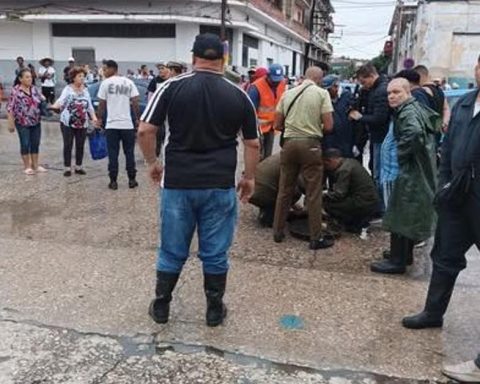
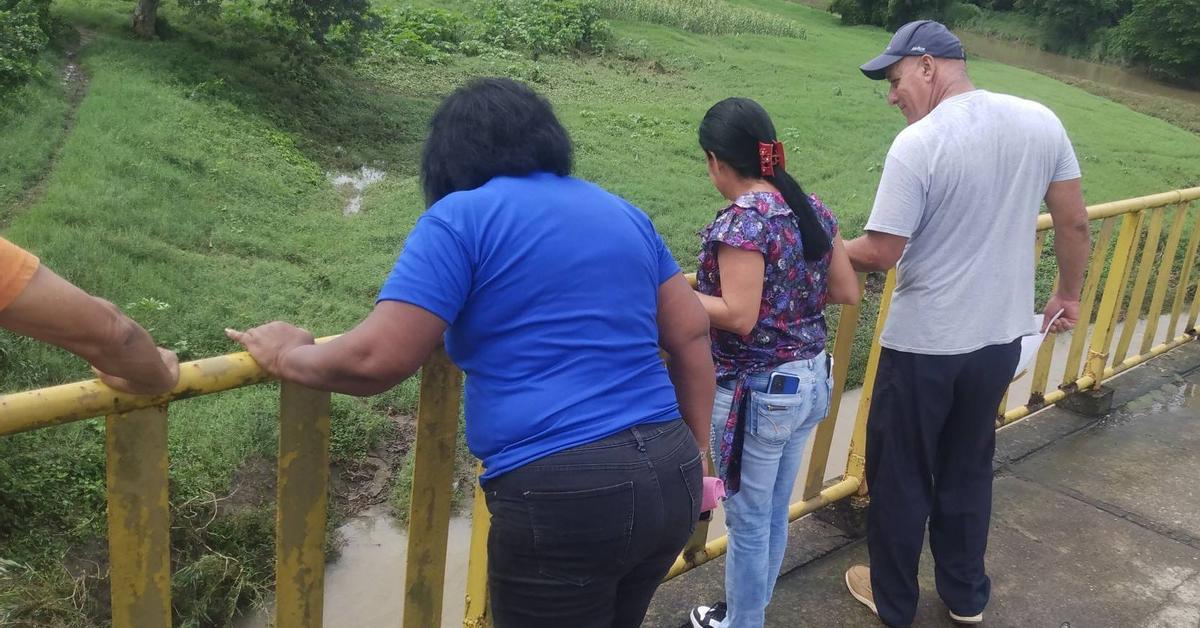
While the country prepares for the imminent arrival of Melissa, in Holguín the discovery of the lifeless body of Luis Pérez Rodríguez, 64, who remained missing since Thursday, October 23, when intense rains occurred in the mountainous area of the territory that caused the Sagua River bed to grow in a short time.
The information was confirmed by the first secretary of the Communist Party in that province, Joel Queipo Ruiz, through his Facebook page. According to the official, the body was found at 2:15 pm at the mouth of the river, after several days of searching.
The search continues active for Antonio Angulo Caballero, 74 years old, resident in the El Jobo popular council, absent from his home since last October 22. “Any information about his whereabouts could be of vital importance,” requested the note published by Cubadebate, which appealed to citizen collaboration.
The Civil Defense decreed since saturday the Alert phase for the provinces of Guantánamo, Santiago de Cuba, Granma, Holguín, Las Tunas and Camagüey, while Ciego de Ávila and Sancti Spíritus remain in the information phase. In its official note, the National General Staff insisted that the population “stay informed through official media and disciplinedly comply with the instructions of local authorities.”
The statement stressed that the cyclonic organism “has shown better organization and increased intensity,” which is why it constitutes a “potential danger for Cuban territory.”
However, in many areas of the east of the country, the population assures that the information arrives late or is insufficient. Neighbors of the city of Holguín told 14ymedio who have barely received concrete guidance on shelters or preventive measures, beyond “generic messages” broadcast by local radio stations.
They denounce a sudden increase in the prices of essential products
The last hours in eastern Cuba pass between meteorological expectation and social nervousness. In many communities, the rains associated with the first bands of Melissa are already beginning to be felt.
The shortage of food, fuel and construction materials aggravates the vulnerability of the population. In state markets, queues have multiplied since Saturday, and several residents reported difficulties in purchasing basic products such as rice, candles or drinking water. From Sancti Spíritus, several residents reported to this newspaper a sudden increase in the prices of essential products. In Holguín, neighbors consulted by 14ymedio They assure that the expectation of the possible ravages of the hurricane has increased the cost of food even more, in a context already marked by shortages and speculation.
In Contramaestre, Santiago de Cuba, the writer Arnoldo Fernández prepared this Sunday morning for the worst. “From now on, I reserve every minute of battery life to keep my eyes alert,” he posted on your Facebook account from your home. The historian’s house also suffered serious damage during Hurricane Sandy, which left a trail of destruction in the eastern part of the Island 13 years ago.
Hurricane Melissa continues to move slowly towards the western Caribbean. If it maintains its expected trajectory, it could become the greatest threat to Cuba since Hurricane Ian in 2022.