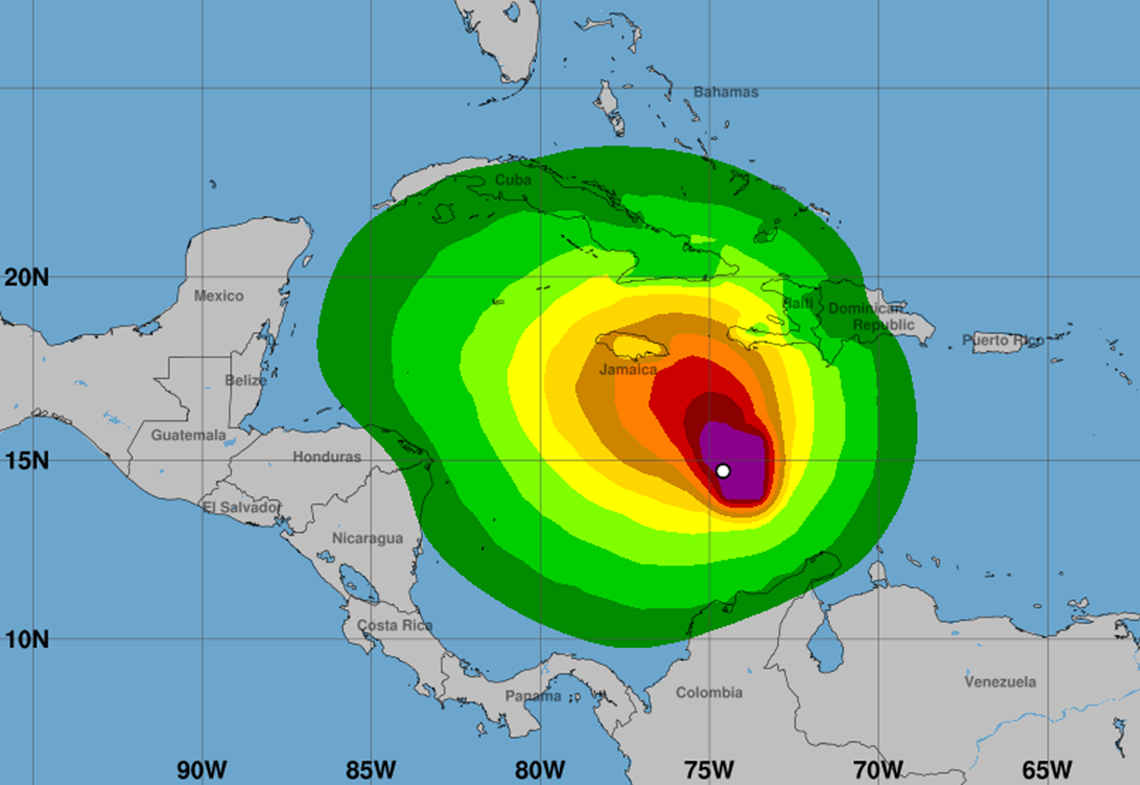
Although it is still a slow moving storm In the Caribbean Sea, Melissa is on track to become a hurricane this weekend and could become very intense, according to weather forecasts.
And although it should be moving south of Jamaica until the beginning of next week, the threat to Cuba is real, which is why the island’s meteorologists maintain a “close surveillance” of its evolution and warn of a possible scourge on Cuban territory.
This Wednesdayin the nightly television news broadcast, Dr. José Rubiera was more than explicit. Although the eminent specialist recognized the difficulty that still entails giving an accurate forecast due to the current scenario of the storm, he also warned that with the change in conditions in the coming days, it is possible that it could become a category 3 or 4 hurricane.
Rubiera explained that, due to the high caloric content of the sea, the intensity of Melissa “will explode” when its center is south of Jamaica, which in turn would cause its height to increase and it could be “captured” by a trough that would arrive from the United States.
If this happens, the movement of the hurricane next week would be towards the north or northeast, right where Cuba is.
Even though some models also show a possible trajectory towards Central America, the expert explained that this route is “lower probability” and stressed the importance of “being very attentive” and “ready to act” in the face of the “potential danger” that Melissa already represents.
“F“significant strengthening”
In line with what Rubiera said last night, the United States National Hurricane Center (NHC) warned in your notice this morning about the “f“significant strengthening” that Melissa should have towards the end of Friday and during the weekend.
The NHC estimates that the still storm — which at 8:00 AM today was 345 km southeast of Kingston, Jamaica — will move closer to that Caribbean island and the southwestern part of Haiti in the coming days, when it should become a hurricane.
Early this Thursday, Melissa had maximum sustained winds of 85 km/h with higher gusts, a central pressure of 1003 hectoPascals and was moving west-northwest at 7 km/h.
Regarding its evolution in the next 24 hours, the Cuban Institute of Meteorology (Insmet) pointed out in his most recent part that “this system will maintain a similar translational speed, gradually inclining its trajectory to the northwest and then to the north.”
“Tropical Storm Melissa will remain with little movement for the next few days over the central Caribbean Sea, south of the Greater Antilles. The oceanic and atmospheric conditions will be favorable for its gradual intensification,” adds the entity, which reiterates the “potential danger” nature of the meteorological phenomenon not only for Cuba but for the entire geographic area.
The meteorological threat comes at a particularly complex time for the island, which is suffering a severe and prolonged economic and energy crisis. Added to this is a complex epidemiological scenariocharacterized by the circulation of diseases such as dengue, chikungunya and oropouche, and a significant increase in rainfall in September and October.
Given the possible scourge of Melissa next week, the Cuban Civil Defense has already issued a first alertin which he directed the authorities to maintain “strict surveillance” over this cyclone organism, especially in the eastern and central provinces, and “transmit permanent information and guidance to the population” about the cyclone and the measures adopted.