Without medicines in state pharmacies, Cubans resort to the informal market; In Santiago, the police confiscated drugs in a crab house that had been working for years.
Madrid, Spain.- The confiscation of medicines in a housing of the cast of the crabs, in Santiago de Cuba, put a phenomenon that grows next to the health crisis on the island on the table: the proliferation of informal pharmacies to which thousands of Cubans attend in search of medicines that the state system does not guarantee.
The independent journalist Yosmany Mayeta Labrada denounced This Tuesday on Facebook that police forces carried out an operation in a house on Puerto #2A Avenue, very close to the Joaquín Castillo Duany Military Hospital. In the place there were people known in the community for selling drugs brought from the outside – Haiti includes – who for years represented a relief for dozens of families.
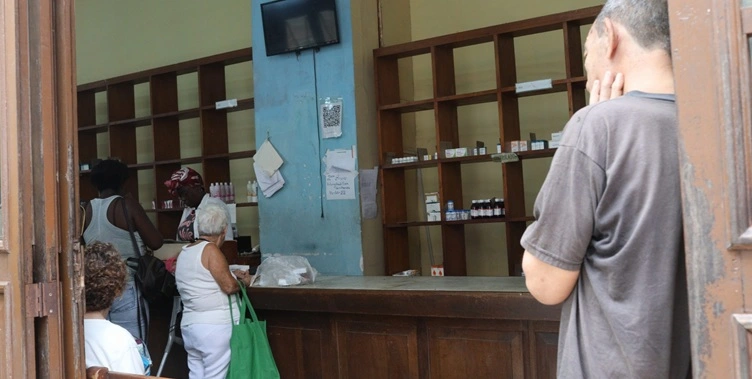
According to residents of neighbors collected in the publication, doctors in the area came to guide their patients to that point because in state pharmacies medicines “are always missing.” Another resident wrote: “I live a few meters from there, thanks to them we reach medicines, since the Cuban state does not have any.”
Although the sale of medicines outside the official channels is not regulated or certified, and entails health risks due to lack of health control, the population perceives them as a “lifeguard” before the collapse of the public system. “They do not guarantee medications to the people, but for that kind of thing they are the first,” said another user on social networks after the confiscation.
The shortage is recognized by the authorities themselves. In 2024, the Ministry of Public Health (MINSAP) admitted that more than 70 % of the basic medication picture was missing. Of the 651 products that integrate it, around 400 should occur in the country and the rest are imported, but only about 300 were available in the pharmacies network, with a coverage of less than 30 % of the demand.
Meanwhile, the criminalization of these community initiatives generates a double dilemma: on the one hand, the need to ensure that medicines are safe and regulated; on the other, the impossibility of thousands of Cubans to access vital treatments by official roads.
The case of the crabs illustrates how, in the midst of the structural health crisis, the population is forced to choose between risking in the informal market or being helpless by state scarcity.