Havana/For years, Marta Elena Feitó embodied the ideal profile of the reliable cadre of the Cuban system. She seemed disciplined, without stridency, effective in repeating her speech and carefully staying away from any gesture that could be interpreted as dissent. From the Ministry of Labor and Social Security, one of the most sensitive portfolios in a country impoverished to the limit, the head defended statistics and slogans that increasingly clashed with the real lives of Cubans. In 2025, that distance between the speech and the street made it one of the most significant faces of the year.
The breaking point came during a public intervention in which Feitó referred to the people wandering the streets as “disguised,” insinuating that it was not real poverty, but rather a staging intended to live “effortlessly” and discredit the Revolution. The phrase was a shameless synthesis of the official narrative that insists on denying the obvious. In a country where begging – officially “eradicated” for decades – has crudely flooded parks, doorways and streets, those words sounded like the height of the alienation of the ruling class.
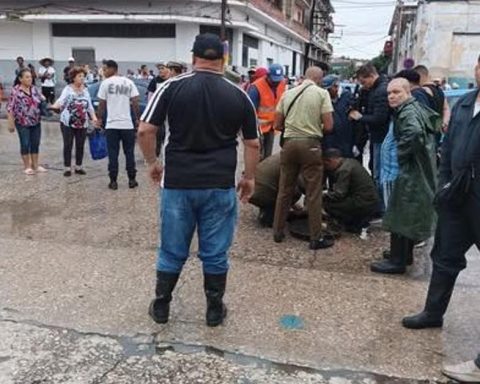
Images of elderly people rummaging through trash, people with disabilities extending their hands to ask for alms, or adults and children sleeping on the street are now an undeniable part of the urban landscape. Faced with this reality, the minister’s statement was not only insensitive, but also politically clumsy. Denying poverty from a position in charge precisely of managing it exposed, without filters, the disconnection between power and the citizens it claims to represent.
None of those present denied it, corrected it or showed objections. On the contrary, his words were received with nods and applause.
During that intervention, Marta Elena Feitó was not a lone voice within the chamber. None of those present denied it, corrected it or showed objections. On the contrary, his words were received with nods and applause. Among them, that of deputy Yusuam Palacios, a figure constantly promoted by the regime as a young intellectual, reliable heir of the revolutionary discourse and renewed face of cultural officials. Palacios not only applauded, but also signed a denial that was not foreign to him.
That immediate support made it clear that Feitó’s statements were not a personal error, but part of a political consensus. Only when popular rejection became massive – when social networks, the independent press, testimonies and public indignation turned the phrase into a symbol of institutional contempt towards the most vulnerable – did the regime decide to read the episode as a political problem.
The reaction was late and defensive. For days, indignation accumulated without any official response. Then it came the dismissalwrapped in the usual language: “the lack of objectivity and sensitivity with which he addressed issues that focus political and governmental management today, focused on addressing real phenomena that were never desired by our society.” Feitó disappeared from the media scene without his name being mentioned again in the official press.
His departure was evidently a damage control operation. The minister stopped being useful when her speech, until then functional, began to generate political costs. Poverty, converted into a collective experience, could no longer continue to be treated as a simulation.
Nothing changed afterward. Begging continues to grow, salaries continue to be insufficient and social assistance – the direct responsibility of his ministry – demonstrated its inability to respond to the magnitude of the collapse. The policies remained intact. They sacrificed a painting, but not the structure. Feitó will be remembered for a long time as the official “disguised as a minister.”