Havana/The closing of the 41st Havana International Fair (Fihav 2025) this Friday left speeches full of promises, appeals to the trust of foreign capital and a rhetoric of modernization that contrasts with the discreet results achieved by the event. Despite the expectations generated during the week, the concrete balance was reduced to three foreign direct investment agreements, a modest number for a fair that Havana presents as its main economic showcase.
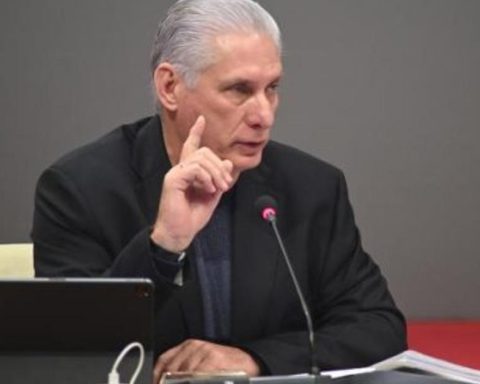
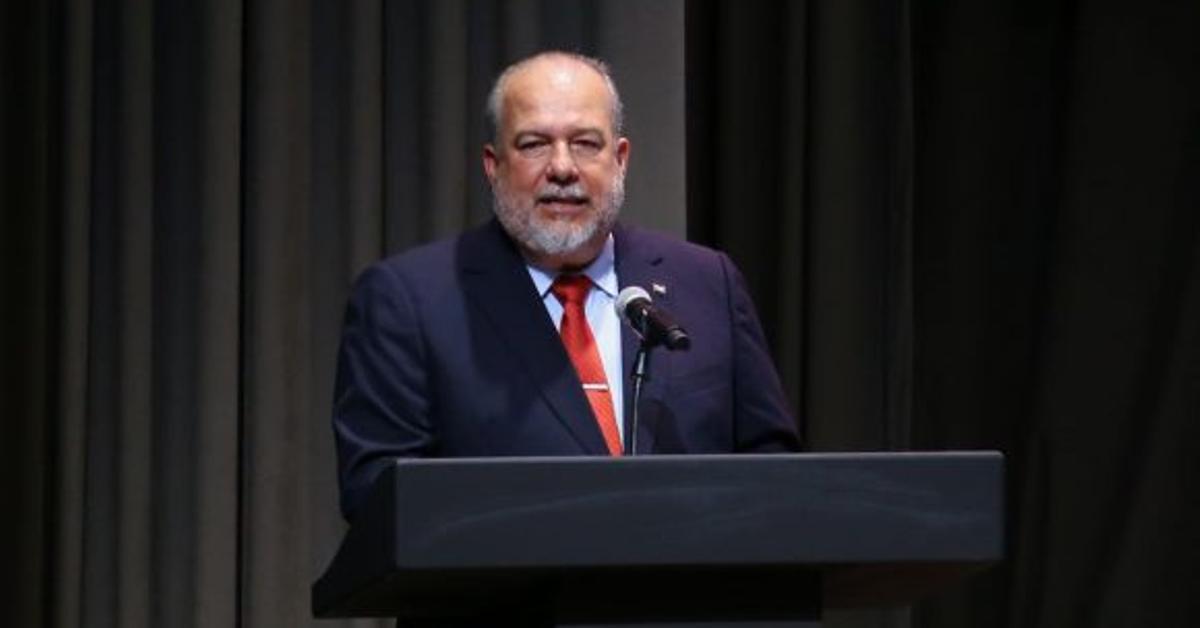
The person in charge of closing the event was Prime Minister Manuel Marrero Cruz, who once again insisted that the country “is rapidly transforming” to offer a “more competitive, attractive, modern and agile” environment to investors. The phrase, repeated several times with slight variations, sounded more like an exercise in autosuggestion than an actual diagnosis. International businessmen in Cuba face a still rigid regulatory framework, as well as chronic bureaucratic delays, a suffocated financial system and an exchange rate duality that remains unresolved.
Despite this, Marrero assured that this year’s edition was held at a “particularly favorable moment,” alluding to a group of announced economic decisions by the Government in recent days. Although he did not specify which of these measures would mark a before and after, he promised that they will open “a real horizon of opportunities”, speed up the evaluation of projects and expand “the spaces for foreign capital.” It is not the first time that Havana promises regulatory shocks that are finally diluted in unclear decrees or that arrive late to reverse the structural crisis. Each package of opening measures is closely followed by another package of countermeasures, such as what, in the 1980s, was called “rectification of errors and negative trends.”
Letters of intent still fail to translate into tangible investments year after year
During the investment forum, more than 30 meetings were held with businessmen from eight countries, interested in a dozen sectors. But, in the end, only three businesses with foreign capital were signed: two to produce food and one for lighting. In a country with a severe food crisis, energy shortages and sustained industrial decline, the number is insufficient to sustain the triumphalist narrative of the authorities.
In addition to those three projects, the Government reported on 14 letters of intent and several memoranda and commercial contracts in areas such as agriculture, medical services, communications and industry. But letters of intent – a figure that in Cuba is presented as progress, although it does not imply real commitment – still do not translate into tangible investments year after year.
The head of Government said he had ordered his ministers to update the current regulatory framework “as soon as possible” and simplify procedures, in order to create a “more agile, more transparent ecosystem with greater guarantees.” He added that “doing business in Cuba will be increasingly simpler, faster and safer,” a statement that contrasts with the recent experience of many foreign businessmen, several of whom have left the Island in recent years due to non-payments, obstacles or the impossibility of repatriate profits.
Although the prime minister promised more measures before the end of 2025 and announced that rules will be relaxed in strategic sectors – from industrial production to energy, tourism and technology – the fair closed with an abundance of announcements and few results. According to official data, the updated portfolio of opportunities totals 426 projects in 13 sectors, distributed in all the provinces of the country. However, the volume of investments actually materialized does not reflect this supposed wealth of options.
Marrero appealed to “change everything that needs to be changed,” a mantra inherited from Fidel Castro and frequently invoked when needing to appear reformist.
The Cuban Chamber of Commerce, for its part, announced the signing of three agreements with institutions from other countries, a diplomatic movement that, although relevant, is far from meaning an immediate flow of capital.
Despite the modest balance, Marrero tried to convey enthusiasm. “We are convinced that we are on the right path,” he said, drawing a country that “grows with foreign investment” and that is inserted into global production chains. Macroeconomic data tell another story: falling GDP, persistent inflation, massive migration of the workforce and a state business fabric incapable of sustaining minimum levels of efficiency.
The prime minister also called on international businessmen to look at Cuba “not only as a market, but as a long-term strategic partner.” The phrase, repeated insistently in recent years, seems to ignore that many strategic partners have seen their businesses sink into uncollected debtsdelays, lack of supplies or a tangle of bureaucratic procedures.
As a culmination, Marrero appealed to the political will to “change everything that needs to be changed,” a mantra inherited from Fidel Castro and frequently invoked when it is necessary to appear reformist without making it concrete.