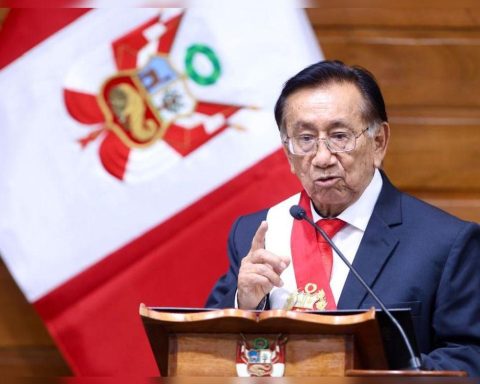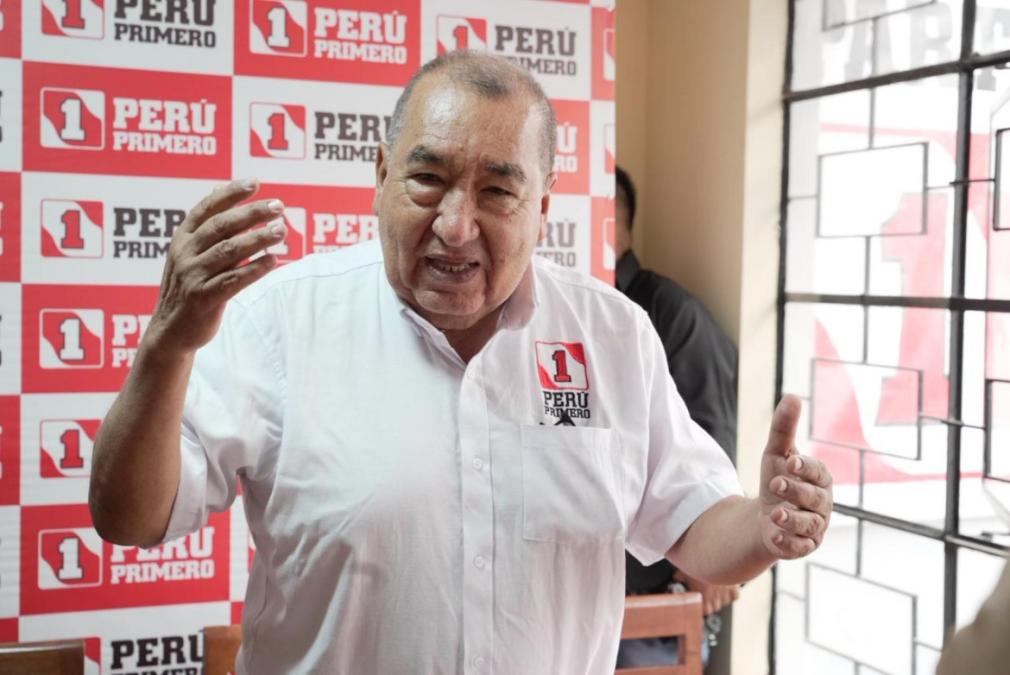
The resolution of the Plenary Session of the National Election Jury (JNE) that allowed Mario Vizcarra to continue as a presidential candidate for Peru Primero in the general elections on April 12 has revealed that the magistrates of the electoral court decided to disapply Law 30717, which prevents the nomination of those convicted of corruption, even if they are rehabilitated.
The ruling has established that people sentenced and subsequently rehabilitated will be able to apply after 10 years of completing their sentence. This, they explain, by applying the interpretative criteria developed by the Constitutional Court (TC), which prioritizes the fundamental right to political participation and the principle of resocialization of people with criminal records.
The plenary session of the electoral body specified that the authorization is conditional on there being no debt for civil reparation and that the applicant has been formally rehabilitated by the Judiciary.
The resolution that returned the brother of former president Martín Vizcarra to the electoral race had the votes in favor of four of the five members of the court, including the president of the JNE, Roberto Burneo.
In its resolution, the JNE cited Sentence No. 370/2022 of the TC, which declared the phrase “even if they had been rehabilitated” unconstitutional, considering it a disproportionate restriction on the right to choose and be elected. This precedent forced the electoral body to rethink the interpretation of literals i and j of article 107 of the Organic Law of Elections.
But, in addition, the JNE urged the Congress of the Republic to issue laws with uniform parameters in relation to the impediments linked to the criminal legal situation of the applicants, noting dissimilar situations in the cases related to this issue.
For the expert on electoral issues, José Manuel Villalobos, “it was within the foreseeable” that the JNE accepts the position that the TC has had in the amparos, although he expressed his surprise at the interpretation of the electoral court to establish the new application of the rule.
“It is not very clear to me that the jury has taken responsibility for the decision to establish that this law applies to those who have a sentence that had been served for a maximum of 10 years. He would be here becoming a positive legislator. It was not his function because not even the TC had said so, but well, that has been the interpretation he has given it,” Villalobos told Peru21.
Subscribe for free to the most prestigious Gastronomic Guide in the country. SUMMUM, the weekly newsletter. http://bit.ly/4imAPEI
RECOMMENDED VIDEO