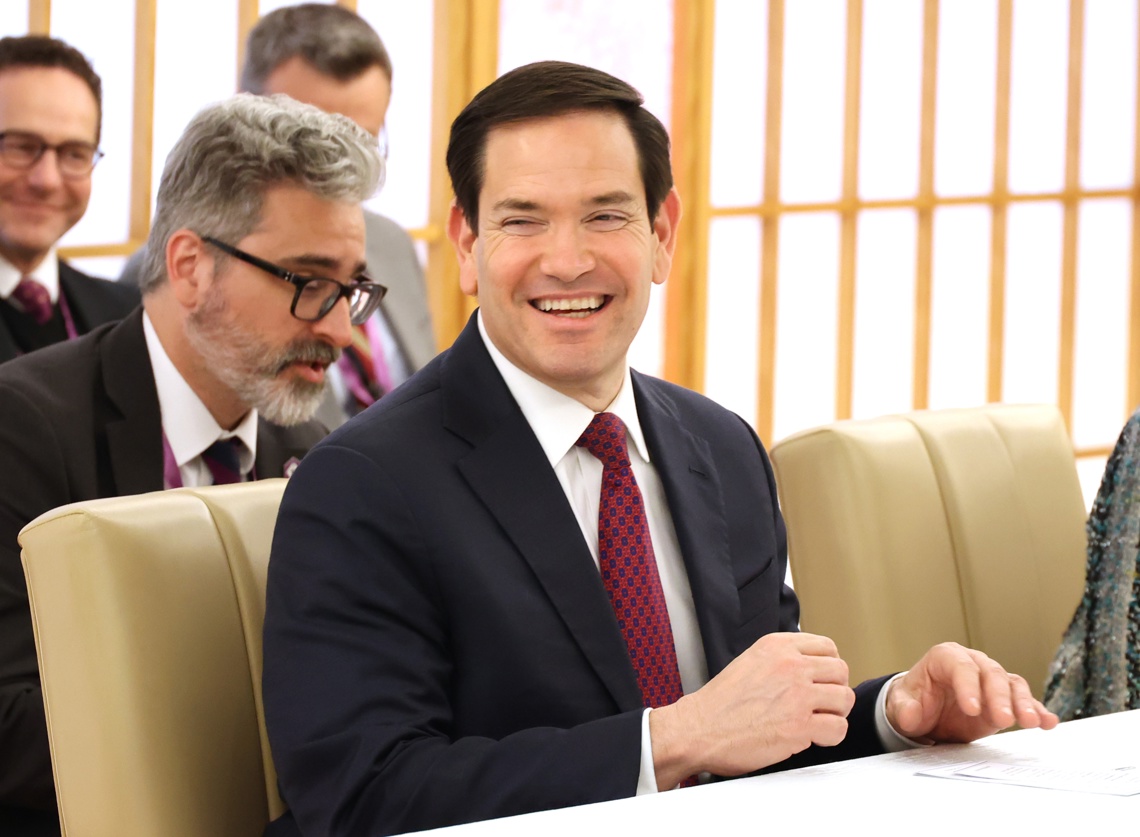
The Secretary of State, Marco Rubio, also denied this Friday that the US was preparing to bomb military installations in Venezuela at a time when its army is carrying out an unusual naval deployment in Caribbean waters.
Rubio questioned the Miami Herald for having written “a false story.” “Your ‘sources’, who claimed to have ‘knowledge of the situation’, tricked you into writing a false story,” he wrote on the social network X, alluding to the news published by the Herald.
The aforementioned media reported this Friday, together with The Wall Street Journal, a possible US attack in Venezuela citing “sources with knowledge of the situation,” according to the EFE agency.
Trump denies that he decided to attack military installations in Venezuela
But while The Wall Street Journal clarified that “the president has not made a final decision on ordering ground bombings,” the Miami newspaper maintained that attacks from the air could occur “in a matter of days or even hours.”
Donald Trump himself denied that he was considering attacking Venezuela, something he clarified when he was traveling aboard Air Force One and was consulted about the information published by these media. “No, they are not true,” he responded, without providing more details.
Largest deployment in 30 years
The US military has carried out at least fifteen lethal attacks against boats supposedly transporting drugs that have left up to 61 dead. On Thursday they deployed the missile cruiser USS Gettysburg (CG-64), joining the missile cruiser USS Lake Erie (CG-70), according to journalist Dan Lamothe of Washington Post.
Furthermore, in a few days the aircraft carrier USS Gerald Ford, the most modern and important in the US fleet, is expected to arrive in the Caribbean, joining the rest of the naval forces that are off Venezuela.
With this, the US will have eight warships, six of them destroyers, three amphibious ships and one submarine in the area, with a total of thirteen naval personnel, its largest deployment since the first Persian Gulf War (1990-1991), according to a study by the Center for Strategic and International Studies (CSIS) cited by EFE.