The draft law does not recognize the right to strike and limits the freedom of unionization to the CTC.
Miami, United States. – The Cuban government opened on Monday a non -binding process for consultation on The Draft Labor Code Lawa text that adds figures such as digital disconnection, teleworking (even from abroad, with conditions) and unemployment insurance for the non -state sector, but does not recognize the right of strike or force salaries to be “enough.”
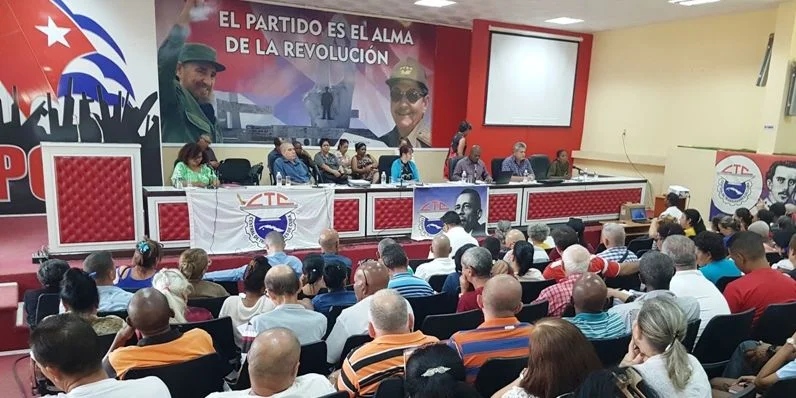
The consultation, conducted with designated speakers and mandatory presence of the Central of Workers of Cuba (CTC, the only legalized union in Cuba), will run until November 30, according to Cuban state press reports.
After this unusual consultation the text must receive the approval of the Central Committee of the PCC and then be approved by the National Assembly of Popular Power (ANPP), in 2026.
According to the CTC, “all workers” of the state and non -state sectors will participate, which includes MSMEs, non -agricultural cooperatives, accounting, local development projects and even Cuban workers abroad, with the objective of “contributing, issuing opinions and contributing to improvement” of the document.
Central news of the draft
Unemployment insurance in the private sector: For the first time, its obligation for workers in the non -state sector is established – MIPYMEs arising since 2021 included – and the employer must hire and pay it, disconnected from the public social security system. The text does not detail the level of benefits or the insurance entity.
Telecommuting: Teleworking from abroad with conditions is allowed. Contracts must specify who assumes expenses, reversibility and control mechanisms. It is planned to agree for the family reconciliation of those who have dependent people in their charge.
Digital disconnection: The right not to be contacted outside the day, rest days or holidays, also for those who are on teleworking is recognized.
Social service: It is reduced from three to two years for higher level graduates and is allowed to suspend it or fulfill it in the non -state sector.
Hiring and Training: The new proposal prohibits the contract for a certain time in permanent activities to guarantee job stability; In addition, the anticipated location and remunerated hiring of university students and medium -level technicians from the last years of the race will be regulated.
The preliminary draft expands forms of employees participation at the individual and collective level, but reinforces the centrality of the CTC in the General Assembly of affiliates and workers and in the claim procedures. In this regard, the EFE news agency recalled that the CTC is in the orbit of the PCC and that “it is not characterized by its labor cutting claims.”
As with the 2019 Constitution, the draft does not recognize the right to strike and limits the freedom of unionization to the CTC.
On the other hand, it develops the concept of “decent employment”, which includes security, protections and “sufficient remuneration to meet basic needs”, as well as equal remuneration for work of equal value; However, it appears as the guiding principle, not as a enforceable obligation. The salary is not linked to inflation or cost of living, nor is its periodic review of collective bargaining; The minimum wage is set by the Council of Ministers. “Family co -responsibility” are also introduced (expanding motherhood benefits to the father and other relatives), protection against harassment, not discrimination against women and “demonstrated capacity” to promote meritocracy.
The text also incorporates “multi -employment” and limits to 13 the number of daily hours that a person can work in total.