Civil society, officials and workers of the Regional Government of Junín, as well as the regional directorates of Labor and Education and the Provincial Municipality of Huancayo, participated in a mobilization through the streets of Huancayo during the 48-hour regional strike called to demand the continuity and budget of the New Central Highway.
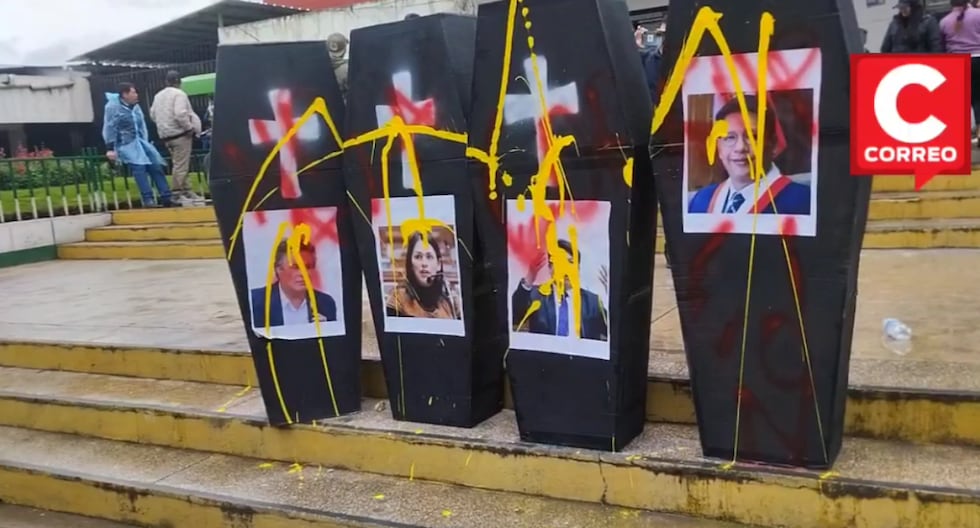
The march was led by black coffins with images of congressmen from the Junín region, as a sign of protest for what they consider to be a lack of support for the highway megaproject.
The regional manager, Roy Gonzales, maintained that the measure was forceful and had the expected support. In the midst of the national political situation, after the departure of President José Jerí, he stated that they hope that the new president and his cabinet will call for dialogue to unblock the project.
Commerce partially abides by the stoppage
In the commercial sphere, the Mercado Modelo complied with the stoppage and did not serve the public, announcing that it would resume its activities normally the next day. A member of its board of directors pointed out that the decision was made by consensus, although he acknowledged that the coordination was not uniform, since other supply centers such as the Maltería Market and establishments in El Tambo did provide care.
No arrests and 700 police deployed
For his part, the head of the Junín Police Region, PNP General César Calero Cisneros, reported that 700 troops were deployed with support from the Huancavelica and Pasco regions in strategic points such as Cruce Tarma, La Oroya, Puente Breña, Chanchas, Quebrada Honda and the Regional Government.
He indicated that no arrests or acts of violence were recorded, and that so far no presence of protesters has been reported in some critical points. Likewise, he urged the population to exercise their right to protest peacefully and prioritize dialogue. After a meeting with the leader Ariste, it was agreed that the mobilization would take place with police protection and in an orderly manner.