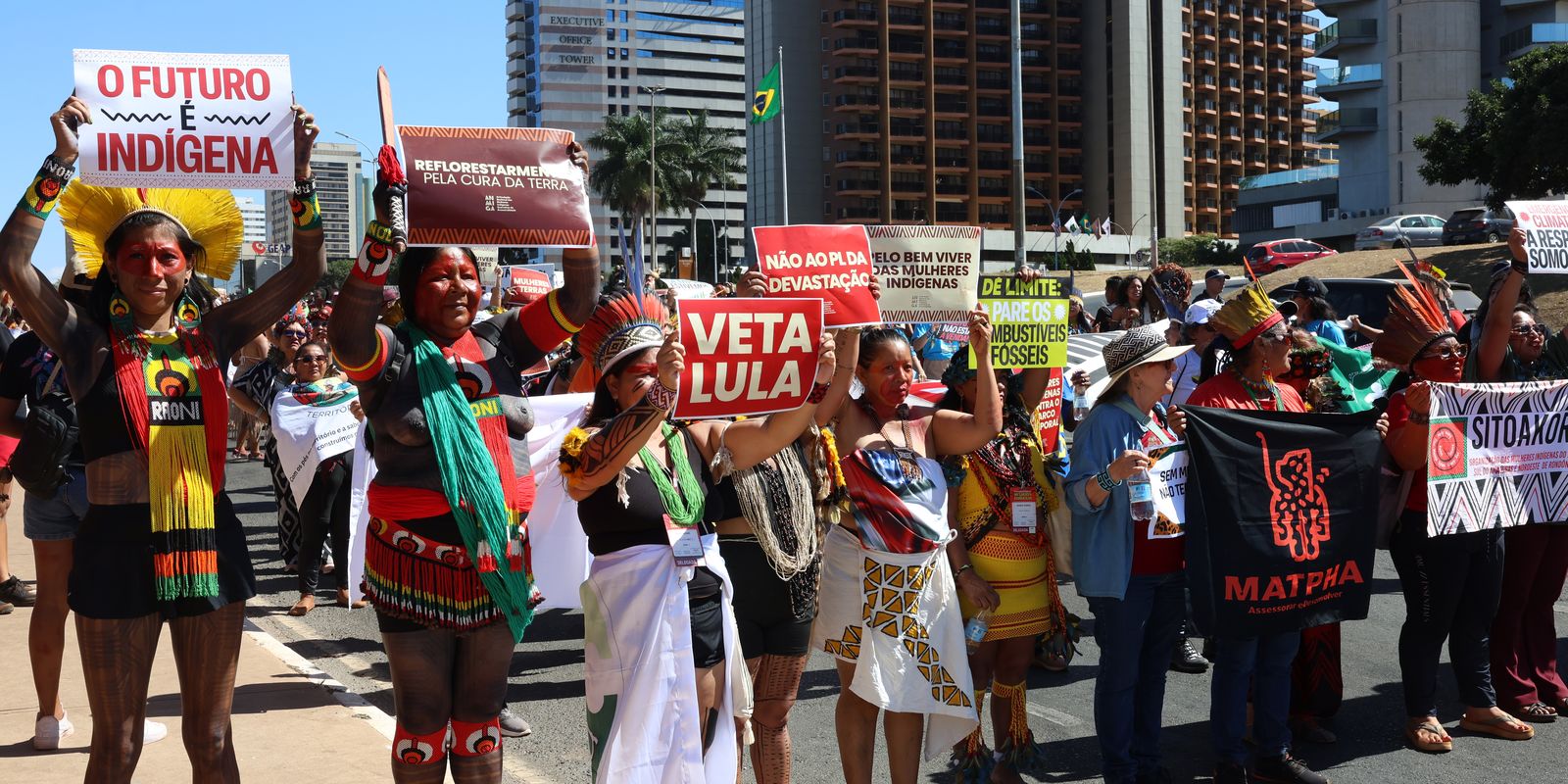
Between fighting corners of different ethnic groups and protest manifestations, the 4th Indigenous Women March traveled the Monumental Axis and the Esplanade of Ministries in Brasilia on Thursday afternoon (7). According to the organization, the event had more than seven thousand people. The theme was “our body, our territory: we are the guardians of the planet.”
Among the claims, manifestos mainly defended land demarcation, against gender violence in the territories and also in relation to the project that flexes environmental licenses (PL 2159, criticized as “PL of devastation”). Criticism of the temporal landmark law were also in words, in different languages, and in the lanes and posters in Portuguese that led on the walk.
The Minister of Indigenous Peoples, Sônia Guajajara, echoed the main guidelines of claims of women present. “We follow together for the good indigenous living,” he said. She was accompanied by actress Alessandra Negrini. They held a track with the text asking for protection from the body and indigenous territory.
“Protagonists”
Resident indigenous event in all Brazilian biomes participated in the event.
“It is time to show that we are the protagonists themselves of our history. Our struggle is for life and non -deforestation of forests,” said 36 -year -old Indigenous activist and indigenous artist, Umariaçu territory in Tabatinga, Amazonas.
Weena and other women argued that it is necessary to immediately reduce the devastation that has climate change as an immediate consequence.
Also in the demonstration, the indigenous Aline Ikpeng, who lives in the Xingu Indigenous Park in Mato Grosso, carried her baby under a year. She said she traveled to Brasilia to fight for future generations. “We are being massacred, the forest and the animals [estão] Disappearing, ”he lamented.
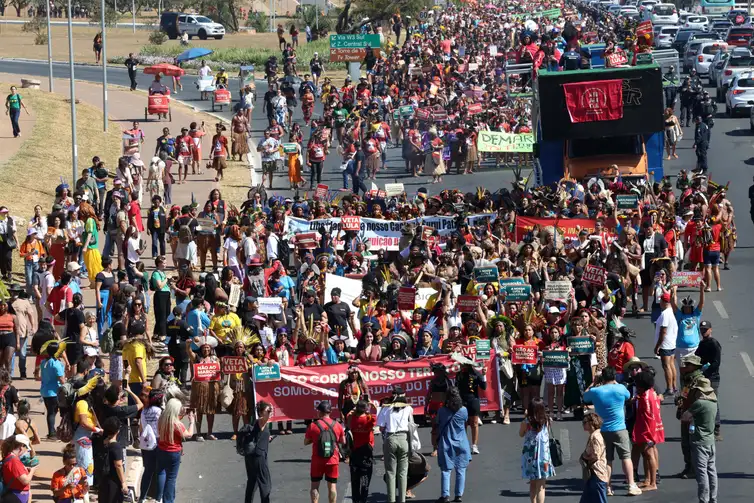
More than seven thousand people participated in the demonstration in Brasilia -Foto: ANTONIO CRUZ/AGENCY BRAZIL
Approval
During the week, President Luiz Inacio Lula da Silva signed the approval decree of three more indigenous lands.
Pitaguray, enchanted lagoon and tremembé de Queimadas indigenous lands were recognized, all in the state of Ceará. Now there are 16 indigenous territories approved in the last two years.
According to the government, the recognized territories were defined based on the advanced stage of administrative proceedings and the waiting time for the recognition of their territorial rights.