With text by: Adrian Sarria Muñoz / URPI LR and Wilder Pari / URPI-LR
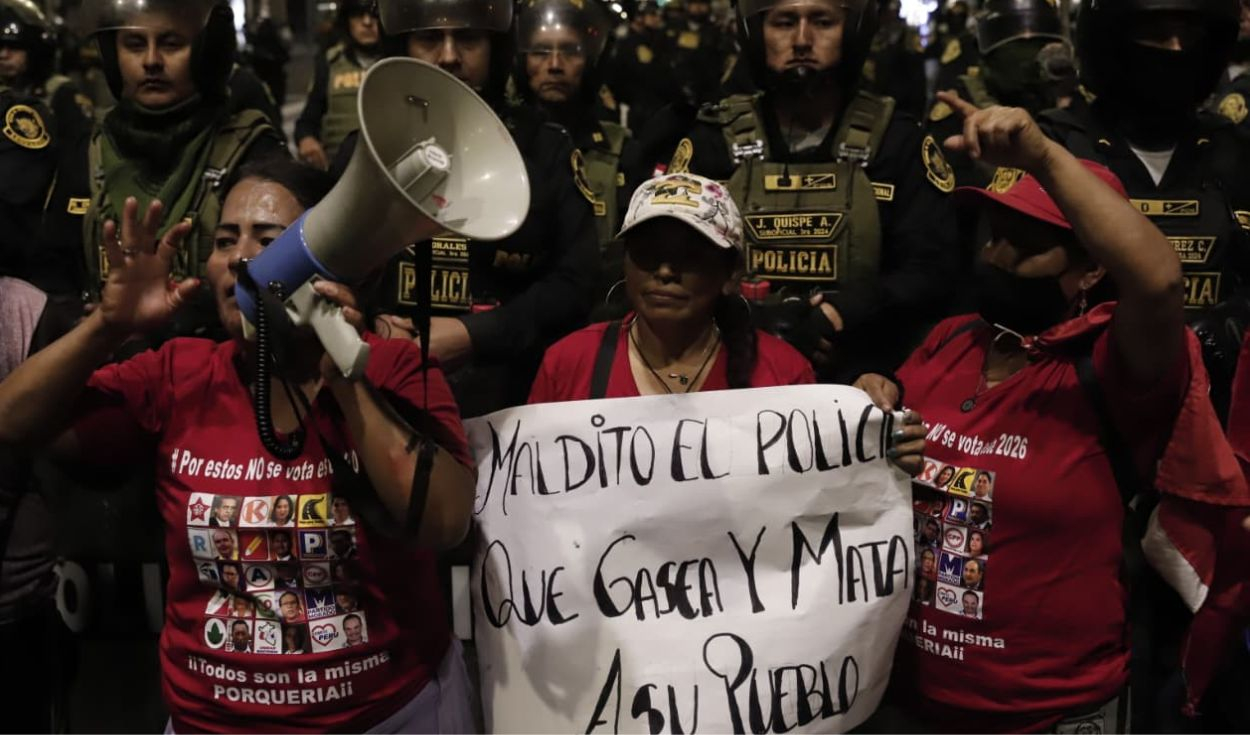
It’s been a month since José Jerí replaced Dina Boluarte in the presidential chair. Despite the change, citizen discontent persists throughout the country. For this reason, and in commemoration of the murder of Inti and Bryan – a result of police repression – different social organizations linked to the generation Zuniversity groups and worker unions took to the streets to protest against the political figures in power. In Lima, the rally took place in the Plaza 2 de Mayo, around 5:30 in the afternoon.
The slogans were clear: the citizens gathered demanded the repeal of the so-called “pro-crime laws”, a package of legislative proposals approved by the current Congress which, according to protesters, favor the proliferation of organized crime. They also demanded that police repression be stopped, remembering the murders of Inti, Bryan, Trvko and the more than 50 victims of the protests against the government of Dina Boluarte. Likewise, the request was reiterated that the main political figures resign to make way for institutional renewal.
YOU CAN SEE: A coup in the Public Ministry is frustrated: Tomás Gálvez will remain alone as interim prosecutor of the Nation
Hours before the protest, threats came from the authorities. In a video broadcast on Congress’ social networks, Fernando Rospigliosiaccompanied by two high-ranking police officers, expressed his support for any police action aimed at repressing “violent protesters.” The gesture of the Fujimori congressman and current president of Parliament was widely interpreted as a threat on social networks.
The day was marked by a strong police deployment and episodes of intimidation. After the notice of Rospigliosithe Police stationed personnel at the doors of the Pontifical Catholic University of Peru (PUCP) and the National University of San Marcos, where he was also violently detained Máximo Sebastian Quispe Yanadelegate of Culture and Sports of the university union. Sources indicated that he was intervened without reason while he was transporting costumes for dances. Hours later he was released.
The avenue Abancaya recurring scene of protests in recent years, brought together thousands of people who raised signs with the slogan #QueSeVayan todos and waved the mugiwara flag, a symbol of the anime One Piece, adopted by generation Z as an emblem of rebellion. The day, without replicating the massive call of October 15, showed that there is still a series of citizen dissatisfaction with the attitude of the political class.
“How many schools are missing in the province? How many hospitals are missing in the province? And this government does nothing, it only wants to benefit its pockets. We are the change, not them. They are ignorant when they say that the marches are politicized. Of course the marches are politicized: we are doing politics to demand hospitals, education and more. Even if they continue to beat us, we will continue to protest. That is why today all young people will unite against this corrupt government,” said one of the young people present, encouraged by other protesters.
A few meters away, the first episodes of police violence were recorded. Bad Williamyoung brigadier of the group NinaSonqowas arrested by police officers. The National Human Rights Coordinator (CNDDHH) immediately denounced what happened: “We reject these unjustified arrests against protesters and brigade members who carry out their work peacefully,” they noted on their social networks.
But these events did not frustrate the citizen request. Students from various universities—San Marcos, Católica, Villarreal, UPC, Cantuta, Agraria, among others—along with the CGTP joined the mobilization. The university block chanted: “The blood spilled will never be forgotten,” while carrying portraits of the victims of repression.
Near the end of the march, several protesters headed to Plaza Francia, where Eduardo Ruiz Sanzthe rapper known as “Trvko”, was murdered by PNP non-commissioned officer Luis Magallanes. In tribute, the citizens decided to symbolically rename the space: “Trvko Square,” they shouted in unison. Since the afternoon, the place had a floral arrangement that remembered the artist.
Hours later, the arrangement was inexplicably removed, despite police security in the area. It didn’t take long until bouquets of flowers and banners appeared again: “They can uproot us a thousand times and we will bloom a thousand times again! For Trvko and for all the people who have been taken from us in the fight for a fairer country for all,” said one of these banners. At 9 p.m. a vigil began in honor of Trvko, a few hours after the first month since his death.
The terror of extortion
The protest also included urgent demands regarding citizen insecurity. Elías Salinas, a 70-year-old driver, went out to march with tears in his eyes carrying a cross with the message “No more death,” in a gesture that evoked the remembered mother Angelica Mendoza from Ascarzafounder of ANFASEP. Salinas regretted that two colleagues and friends of his were murdered by extortionists and denounced that nothing has changed and no one is responsible for their families.
The feelings of the protesters, expressed by Julio Camposleader of the National Carrier Alliancepointed to the demand for support for the families of murdered Peruvians and orphaned children, in a context in which police intimidation seems to be the only response to social discontent.
YOU CAN SEE: Mininter’s purchasing chief resigns due to second-hand plane scandal
The march was also heard in regions
Not only Lima raised her voice. The regions also protested against crime and political injustices. From Chiclayo until Cuscocitizens sent their political demands.
In Cuscothe demonstration was made up mostly of members of the Departmental Federation of Workers of Cusco (FDTC) and Civil Construction Guild. About 600 people marched from the Túpac Amaru plaza to the Plaza Mayor, where the mobilization concluded around 6 p.m.
The march was led by Juan Castillosecretary of the FDTC. “The mobilization was coordinated with the CGTP to demand that the government eradicate organized crime. Crime continues and nothing is being done (…) they continue to murder and rob the people,” said the leader. Castillo also criticized that the government of José Jerí has not attended, until now, to the completion of works expected in the region, such as the Gasoducto del Sur, the Lorena Hospital and the Chinchero airport.
In Chiclayoabout fifty citizens belonging to civil groups marched on the afternoon of Friday, November 14 as part of the call for the generation Z to reject Jerí’s government and the actions of Congress. The striking thing about the day was the almost total absence of young people, despite the fact that the call came from them.
The protest was led mainly by union leaders with their usual demands, including a constituent assembly and freedom of expression. Pedro Castillo. The Lambayeque Regional Unitary Front, the Epsel workers’ union, feminist groups and supporters of the former president participated. The march lasted just over an hour: it started in Obrero Park, passed through the Chiclayo Cathedral and returned to its starting point.
YOU CAN SEE: Delia Espinoza was going to be arrested if she entered the Public Ministry
In Arequipanearly a hundred people joined the protest, including self-organized youth, members of the ‘Agro si, mina no’ collective and teachers from the San Agustín National University (UNSA) on indefinite strike. Citizens who traveled to Lima during the January 2023 protests also participated and were detained at San Marcos University. They reported that, to this day, some are still being prosecuted and recalled that, while they were detained, the police pointed guns at them and hurled racist insults at them. The march started from Plaza España, toured the historic center and arrived at the Plaza de Armas around 7 p.m. The final rally was held in front of the cathedral. The mobilization was peaceful, although it had a strong police presence.
In Fistthe call did not have the expected reception. The march, scheduled for 2 in the afternoon, only took shape around 3 and a half hours later. This occurred due to the late arrival of delegations from other provinces. Dozens of people—including Quechua and Aymara leaders, and teachers—marched through different streets of the city. Two representatives of the mobilized youth were also present. The day concluded with a rally in the main square.