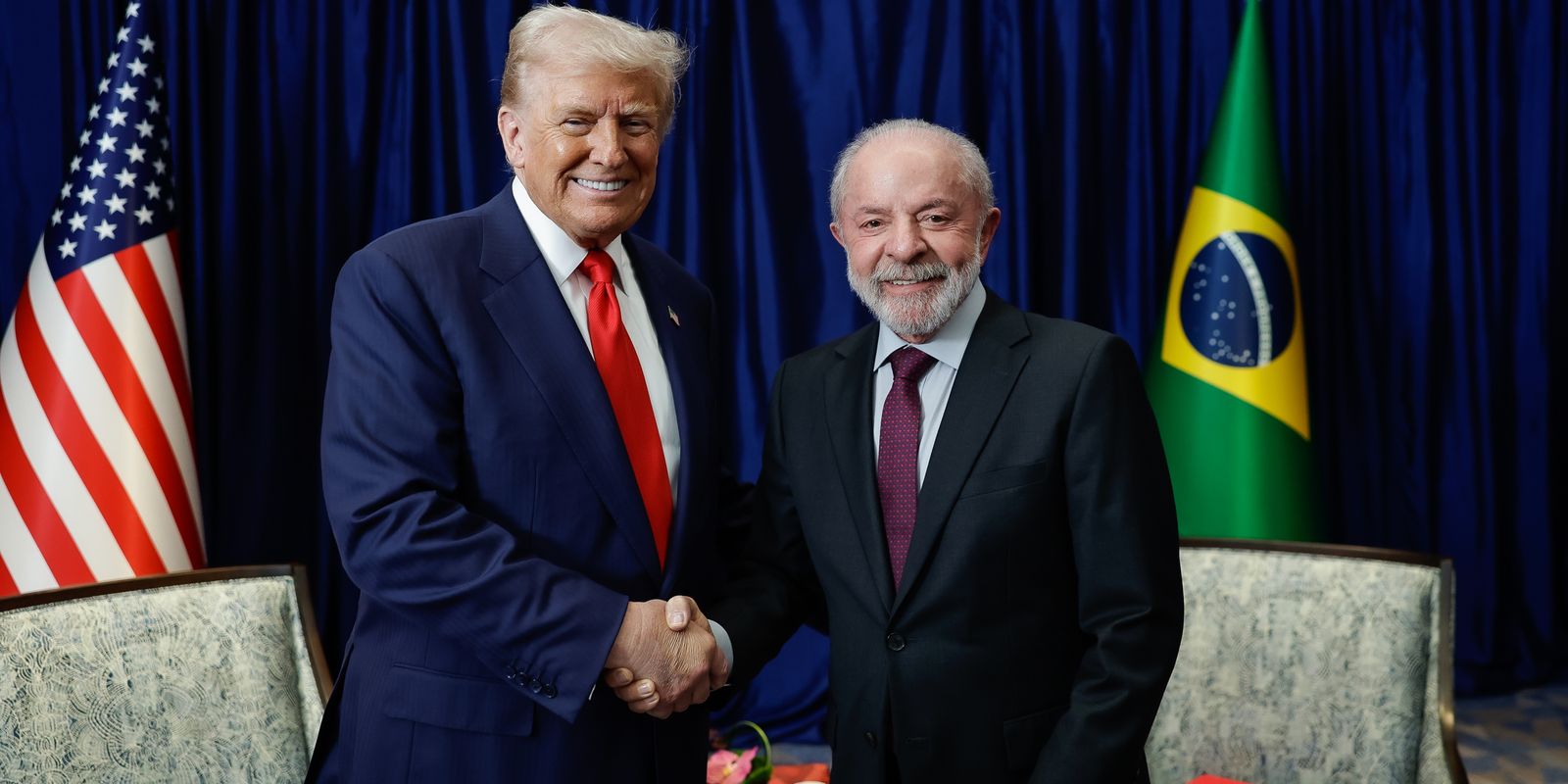
The President of the United States, Donald Trump, commented this Tuesday (2) on the phone call he had with President Luiz Inácio Lula da Silva.
To reporters at the White House, Trump said the two talked about sanctions — an apparent reference to his administration’s sanctions on the Brazilian judiciary over the criminal case against former President Jair Bolsonaro.
Trump also stated that he and Lula “had a great conversation”adding: “We talk about trade. We talk about sanctions, because as you know, I sanctioned them in relation to certain things that happened.”
In a social media post, Trump said he looked forward to seeing and speaking with Lula soon, adding that “a lot of good will come out of this newly formed partnership!”, according to information from the Reuters agency.
Lula
Earlier, the Presidency of the Republic reported that Lula, during a phone call with Trump, stated that wants to “move quickly” in negotiations to remove the 40% surcharge imposed by the North American government, which is still in force on some Brazilian products, .
Lula and Trump also talked about cooperation to combat organized crime. In a statement, Palácio do Planalto reported that the conversation between the leaders was “very productive” and lasted 40 minutes.
On November 20, the White House announced the removal of 238 products from the tariff list, including coffee, tea, tropical fruits and fruit juices, cocoa and spices, bananas, oranges, tomatoes and beef.
According to the government, 22% of Brazilian exports to the United States still remain subject to surcharges. At the beginning of the imposition of tariffs, 36% of Brazilian sales to the North American market were subject to additional rates.
In the conversation with Trump, Lula indicated that the US government’s decision was very positive, but highlighted that “there are still other tariffed products that need to be discussed between the two countries and that Brazil wants to move quickly in these negotiations”.
Tariff
The tariff imposed on Brazil is part of the new White House policy, inaugurated by President Donald Trump, of increasing tariffs against trading partners in an attempt to reverse the relative loss of competitiveness of the United States economy to China in recent decades.
On April 2, Trump imposed customs barriers on countries according to the size of the deficit that the United States has with each nation. As the USA has a surplus with Brazil, at the time, the lowest rate of 10% was imposed. But, on November 14, the North American country also exempted certain Brazilian agricultural products from these reciprocal tariffs.
On August 6, an additional 40% tariff against Brazil came into force in retaliation for decisions that, according to Trump, would harm American big tech and in response to the trial of former president Jair Bolsonaro, convicted of leading an attempted coup d’état.
The US decisions to revoke part of the tariffs were influenced by the recent dialogue between Trump and President Lula, during a meeting in Malaysia in October, and other telephone contacts that were followed by negotiations between teams from both countries.
Negotiations
Brazil seeks to advance negotiations to remove new products from the list of tariffed items. After some relief for agribusiness, the government assesses that industrial products remain a focus of concern. Some of these segments, especially goods with higher added value or manufactured to order, have more difficulty redirecting exports to other markets.
Non-tariff topics are also on the discussion agenda, including areas such as rare earths, big tech, renewable energy and the Special Taxation Regime for Data Center Services (Redata).
* With information from Reuters