Sculptures should be installed in cities and towns. Not only the solemn statues of marble heroes, but also figures of everyday life: people who made others happy with their work; characters who, without intending to, become popular icons. They should be there, on the sidewalks, in the doorways, in the parks, as if they still walked among us. In this way, the places would preserve, in a tangible way, the memory of those who truly gave them soul.
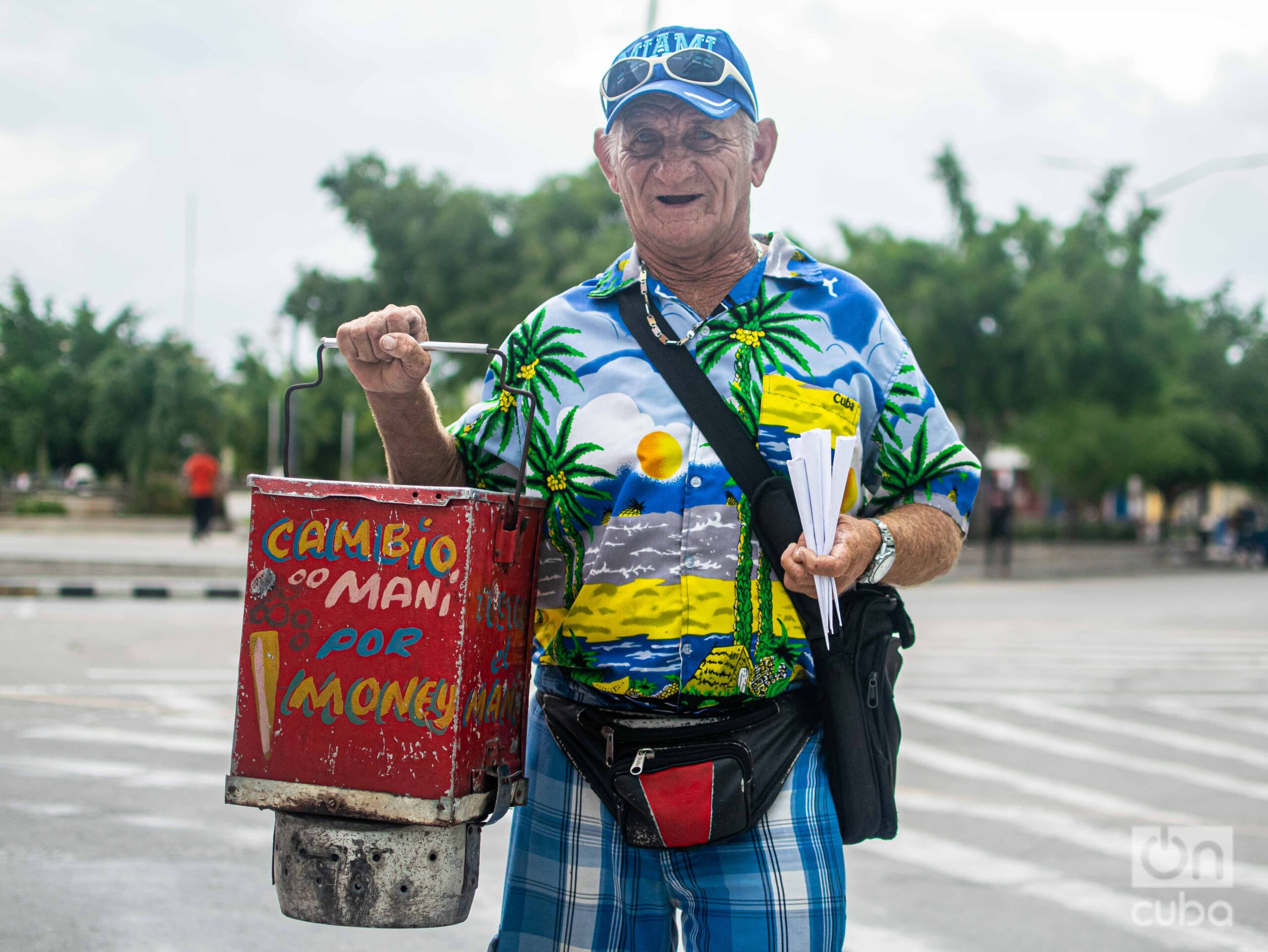
That idea came back to me when I saw on networks the news of the death of Eleuterio Estrada Valdésthe peanut farmer from Holguín. But not just any manisero: “he” manisero The man who, with his wide smile, his penetrating blue eyes and his unmistakable proclamations —“I trade peanuts for money“, “Without money there is no peanut”, “Pretty women don’t pay, but they don’t eat either”—, became an inseparable part of the soundscape of the city of parks.
The last time I came across it was a couple of years ago. I was walking through Calixto García Park when I heard, behind me, that proclamation that was impossible to confuse. More than seeing it, I heard it.
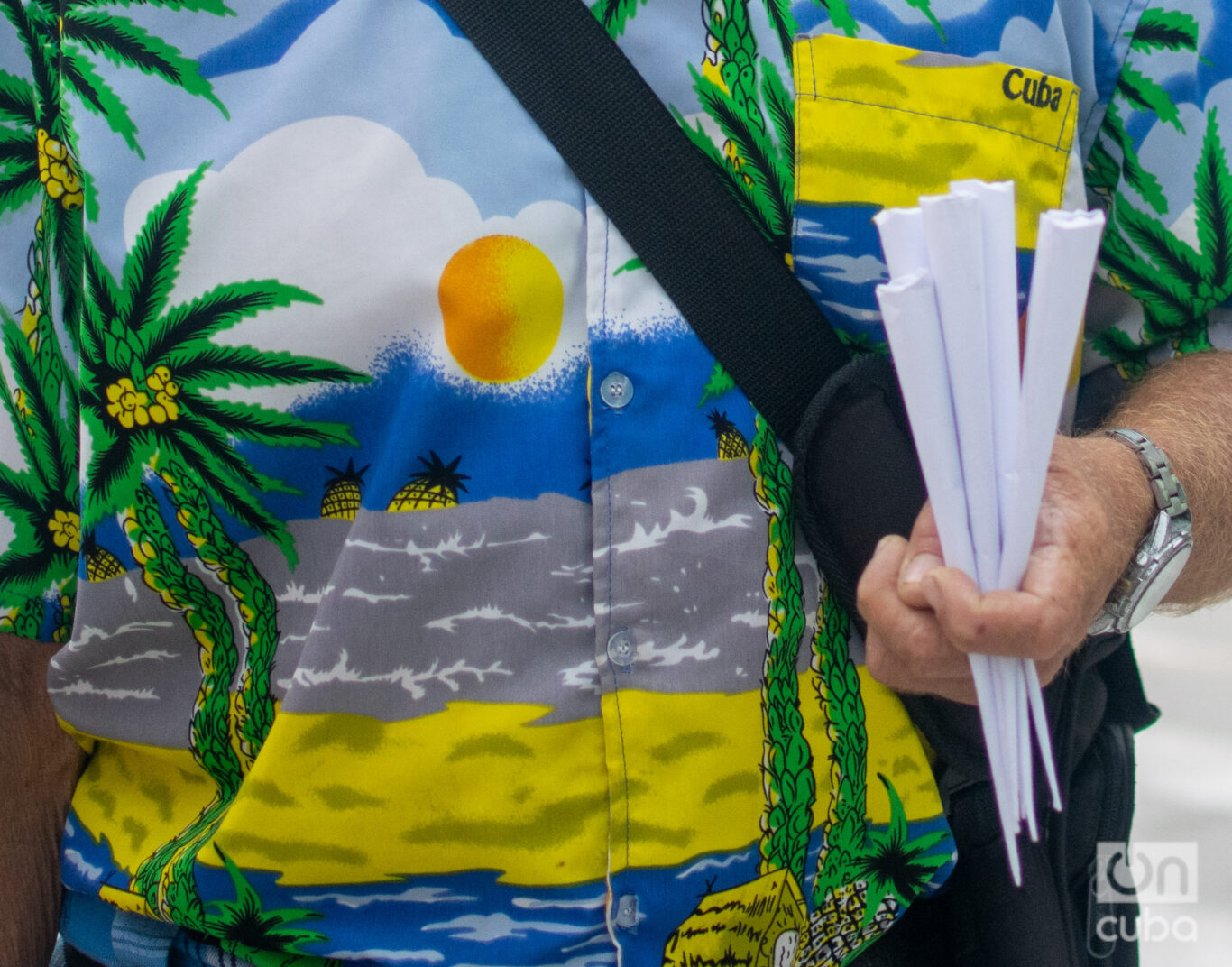
It was a reflex: I turned around and there he was, dressed in an unlikely combination of colors, like something out of a painting. naive. Seeing it was, in a way, seeing my own life in Holguín pass by in an instant. His voice—playful, repetitive, almost musical although raspy—is part of the soundtrack of that city to which I always return.
I stopped him, bought him some peanut cones and asked for a photo. He laughed, with that laugh of his that was also a proclamation.
—Compay, now with cell phones they stop me all the time to take a photo. Even those who have gone to the North ask me for videos saying “Without money There are no peanuts.”
We talked for a few minutes. He, affable as always; I was surprised to be talking for the first time to someone I had met hundreds of times. And I thought, as we said goodbye, how curious it all is: if it hadn’t been for the nostalgia that hearing him provoked in me, I wouldn’t have photographed him or asked him for a conversation. How many characters like that escape us by routine.
Eleuterio told me that he was born in Bayamo and that, when he was young, he moved with his family to Holguín. For years he was a bricklayer: scaffolding, morning sun, hardened hands. But the Special Period arrived and, like so many, he had to reinvent himself. At the suggestion of a neighbor he began selling peanuts. A simple job that he turned into a street show.
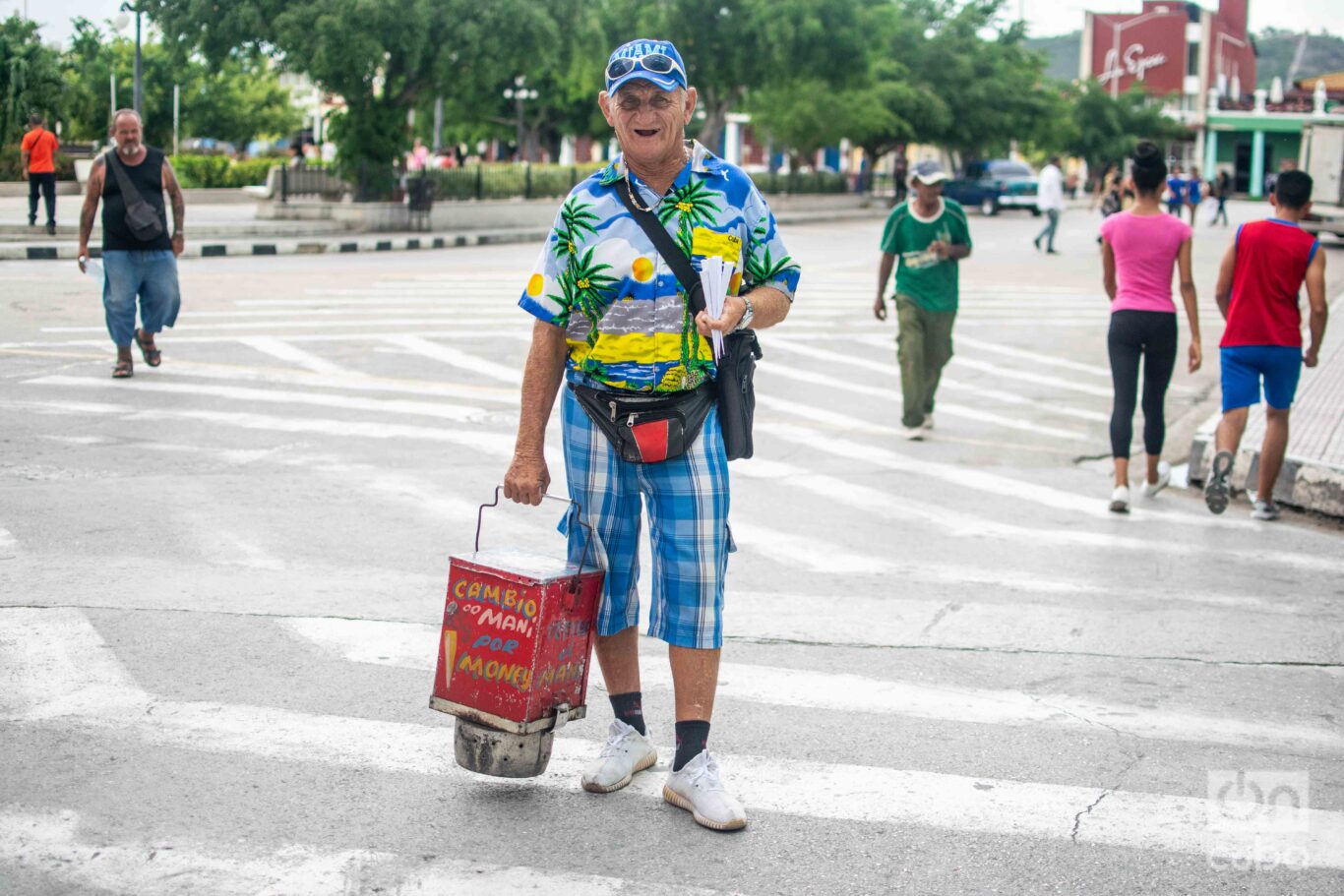
I asked him where his unique proclamations had come from. He always told it with pride.
—I went to offer a cone to a man sitting in the park. He told me he didn’t have money. I gave him the peanut and, in return, he turned on the light bulb for me. Right there it occurred to me: “I’ll trade peanuts for moneyThen came “If there is no moneythere are no peanuts”, and later the thing about “Pretty women don’t pay, but they don’t eat either.” And you know… people laughed when they heard me arrive. And of course, they bought.
Eleuterio did not need more. With a cone and a witty phrase he raised a small monument of popular affection.
The news of his death spread quickly. The groups of Holguín residents on networks were filled with messages, memories, photos and recordings of their voices. Local media—and even a couple in Miami—also reported it. Something unusual for a street vendor, but natural for a symbol of the city.
“Holguín is in mourning,” wrote a community page. “We lost Eleuterio, the manisero. He was not just another salesman: he was an institution. His unique proclamation became the soundtrack of our daily lives.”
Another message summed up what many felt: “It is incredible how such a simple and humble person achieved so much praise from his people.”
Among the sadness, a comment made more than one smile: “Up there he must be selling and hawking peanuts all over the place.” money to the saints.”
It is not difficult to imagine him like this: walking among clouds, with his can, his cap and that mixture of malice and tenderness in his eyes. Surely it already made Saint Peter laugh.
Eleuterio will not have a statue in the park. At least for now. But his figure—his voice, above all—will continue to resonate in the memories of those of us who grew up listening to him. That is the invisible sculpture that we have left: the one that is activated every time someone says money in his own way, or when a street proclamation stops us because it reminds us of him.
Holguín, like so many cities, is also made up of anonymous people who maintain their identity without appearing in the books: vendors, town criers, drivers, troubadours, ladies who watch the street from the doorway, old men who smoke tobacco on a park bench; characters that give color without knowing it. The city would be different without them.
Maybe that’s why that proclamation threw me off: it was like returning to a fragment of my childhood. Memory is not only written with great events, but also with everyday voices, like the proclamations that accompany us. Like that of Eleuterio: “I exchange peanuts for “money”.