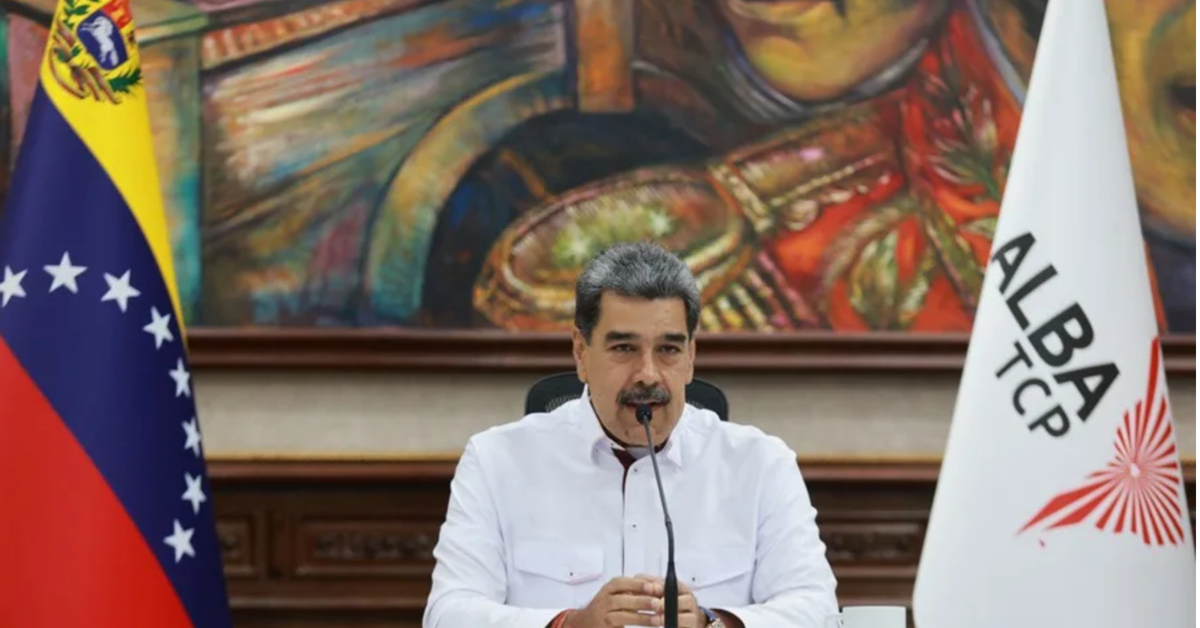
Madrid/Gathered at their XXV meeting (in virtual format), the member countries of the Bolivarian Alliance of the People for Our America agreed to create an international mission to support Cuba in its energy crisis. The proposal was made by the Venezuelan president, Nicolás Maduro, who affirmed in his speech the need to combine “the united, popular, prolonged resistance of the peoples of Alba with the permanent offensive of building solid bases in a joint, common, cooperative, mutually beneficial economy.”
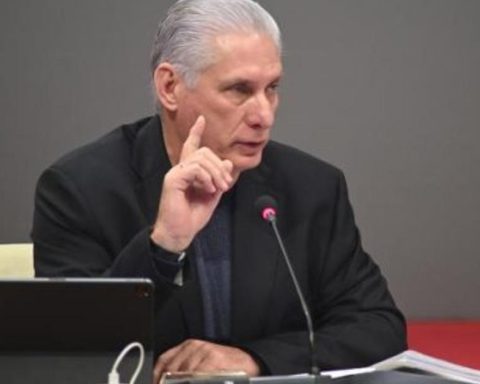
The plan already has a name, International Energy and Electricity Mission of Special Support for the People of Cuba, but if it has content, it is unknown, beyond being a declaration of intent on the importance of supporting the island’s regime. “I have communicated to the delegations of our nine countries, a proposal that we have been working on to, in the spirit of the Milagro Mission, fellow president (Miguel) Díaz-Canel, create a special energy and electricity mission of Alba,” said Maduro.
The gauntlet was picked up, of course, by Bruno Rodríguez, who said on social networks that it constitutes a new demonstration of “the essence of the Alliance as a mechanism that puts solidarity and cooperation between brother peoples at the center of its work.”
Although the pompous name of the plan does not lack the tagline about the “people of Cuba”, the seizure of the oil tanker Skipper Last week has served to provide some clarity about the way in which the Island manages part of the crude oil it receives from Venezuela, destined largely for resale to obtain foreign currency. The New York Times gave some details based on the documentation that has been collected from that event and according to which the number of barrels that were transferred to the tanker Neptune 6 bound for Matanzas there were 50,000 and not the 200,000 counted by Reuters.
Although the pompous name of the plan does not lack the tagline about the “people of Cuba”, the seizure of the oil tanker Skipper last week has served to provide some clarity about the way in which the Island manages part of the crude oil it receives from Venezuela.
The rest of the cargo, 1.9 million barrels according to the Venezuelan state-owned PDVSA, went to Asia. Ramón Carretero, the Panamanian businessman sanctioned by Washington last week, is the one who manages, according to the NYTthe flow of oil between Havana and Caracas. He Skipper On Wednesday, when it was intercepted, it was transporting fuel partially contracted by a Carretero company and the state-owned Cubametales, sanctioned in 2019 by the US State Department, but which this year has obtained contracts to buy about 65,000 barrels per day of Venezuelan oil, 29% more than in 2024 and seven times more than the previous year. In turn, Carretero’s companies manage at least a quarter of the crude oil that Venezuela exports.
He Skipper He was detained on Wednesday between the islands of Grenada and Trinidad when he was going towards China, which reaffirms the thesis that, instead of using it to produce electricity and reduce the endless blackouts, Cuba resells to the Asian giant the crude oil that Venezuela gives it in exchange for medical and military personnel, above all. “The money has provided the Cuban government with much-needed foreign currency,” they told the NYT Venezuelan Government sources. According to the report, the amount is spent on buying “basic goods, although the opacity of the country’s economy makes it difficult to estimate where that money goes, or how it is spent, or how much goes to commercial intermediaries linked to both Governments.”
The report also highlights the links between Venezuela, Russia, Cuba and Iran, all sanctioned by the United States and united more than anything else – the text highlights – by necessity, although sometimes their interests clash. “It’s like the Opec of sanctions: these countries have common interests, but also some opposing interests,” said Francisco Monaldi, from Rice University in Houston, who explained to the New York media that they are all competing to sell to China.
This Thursday, however, everyone agreed to reject the US seizure, which they described as piracy.
This Thursday, however, everyone agreed to reject the US seizure, which they described as piracy.
He Skipper He had already been part of Iran’s covert fleet for four years, from where he transported oil to Syria and China, according to data from the transport company Kpler and a high-ranking official from the Iranian Oil Ministry cited, on condition of anonymity, by the NYT. Tehran’s Foreign Ministry on Friday referred to the US operation as “state-sponsored piracy.” Iran also cooperates, through contractors, in the repair of the Venezuelan refineries of El Palito and Amuay, the text indicates.
In addition, Russia is also involved in the matter. Or, even, within, through a majority of the 30 sailors who made up the crew of the Skipper. Moscow sells gasoline to Venezuela to dilute heavy oil, something essential for its commercialization, although the United States also sells gasoline to Venezuela, through Chevron and for authorized companies. On November 13, the tanker Seahorse was intercepted by the American destroyer USS Stockdalewhich was placed in his path, preventing him from reaching Venezuela, where he was heading with Russian gasoline, precisely.
All these turbulences are complicating the oil situation for Venezuela. This same Monday, the British agency Reuters reported that there are at least a dozen oil tankers sanctioned within Venezuela’s exclusive maritime economic zone, many of which are now at risk of being seized and that there are “indications” that Asian buyers are asking for greater discounts for Venezuelan crude to address the growing commercial risk.
The country’s crude oil exports will fall in December, according to Kpler forecasts, which estimates them at about 702,000 bpd, the lowest amount since May, after reaching more than 1 million in September. The cause is related to production, which has also decreased after months exceeding one million, to 860,000 bpd in November, mainly due to the problem with gasoline and other diluents. These imports will fall to 39,000 bpd in December, down from 54,000 bpd in November and 89,000 bpd in October, according to Kpler.
The agency believes that PDVSA’s oil production may fall between 300,000 and 500,000 bpd, although it considers that there will be no problems at the international level.
The agency believes that although this is noticeable in production, it will not stop it either, mainly due to the Chevron license, which produces about 250,000 bpd and exports approximately 150,000 bpd to the US coast of the Gulf of Mexico, where there are refineries to process heavy crude oil from Mexico, Canada and Venezuela.
The agency believes that PDVSA’s oil production may fall between 300,000 and 500,000 bpd, although it believes that there will be no problems internationally, since Canada is greatly increasing its crude oil generation. In addition, Reuters points out, “the establishment of a government favorable to the United States that leads to the elimination of sanctions on Caracas could cause a rapid reactivation of oil production in Venezuela, which has the largest oil reserves in the world, of about 303 billion barrels.”