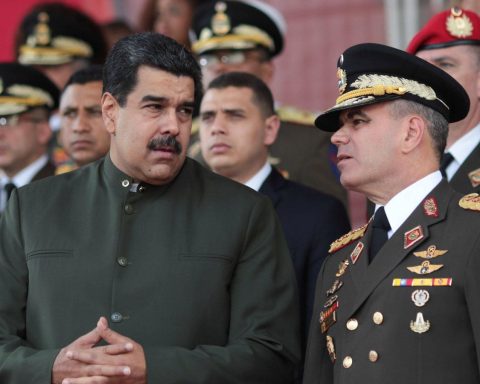
Nicolás Maduro said that a “super network” must be created so that US students and universities know that Venezuela is a country of “good, cool people, with strong and consolidated universities,” amid tensions with the Donald Trump administration over the US military deployment in the Caribbean.
Nicolás Maduro urged the country’s students to “connect” with student movements in the United States to ask them to “stop the war,” amid tensions with Donald Trump’s administration over the US military deployment in the Caribbean Sea.
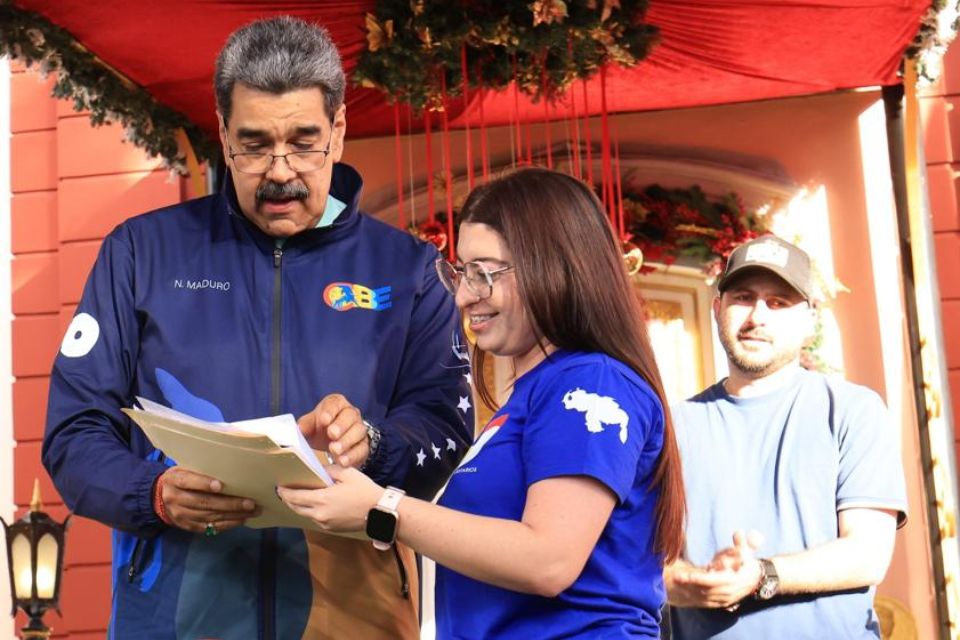
“The second mission that I give to the student peace brigades of Venezuela is to connect with the student movements and students of the United States of America and tell them ‘stop the war, not the war, Venezuela wants peace,'” Maduro said this Friday the 21st from the Miraflores palace, after a march for Venezuelan Student Day.
Maduro said that a “super network” must be created so that US students and universities know that Venezuela is a country of “good, cool people, with strong and consolidated universities.”
Tension between both countries has escalated after the mobilization ordered by Trump starting in August to combat drug trafficking, an argument that the Maduro administration has refuted by pointing out that it is a “threat” and “attempt” to appropriate Venezuelan natural resources.
*Read also: US warns about risks in Maiquetía airspace due to increase in military activity
This Friday, President Donald Trump assured that he will speak with Maduro soon to tell him “something very specific,” after showing his intention to establish a dialogue with the Chavista authorities.
“I will talk to him in the not-too-distant future, but I can’t tell you what I’m going to tell him,” declared the American president in an interview with Fox Radio.
The United States Department of State is also expected to declare the Cartel of the Suns a foreign terrorist organization next Monday, a group that – they have assured – is linked to Maduro, his close circle and military officials.
Mature with students
After receiving various student movements linked to the ruling party, Maduro received a series of proposals arising from the last National Student Congress.
Ariana Llanos, president of the Venezuelan Federation of University Students, raised the need to strengthen and “deepen academic quality”, as well as the creation of laws for the “Promotion of Productive Employability” and community service, “reorganize” the University Law and promote legal regulations for economic, technical and productive education.
The students also asked to “resignify” the university scholarship program. According to Llanos, the priority of many of the federations, in order to guarantee the improvement of academic quality, is the renovation of laboratories and facilities within colleges and universities instead of increasing stipends to students.
Likewise, projects related to the political sphere were included, a “University Popular Consultation”, the formation of “Student Peace Brigades” or the implementation of a “high-level” plan to train “cadres with political responsibility.”
Maduro asked the Minister of Education, Héctor Rodríguez, to work on the issues “because nothing can go unanswered.”
*Journalism in Venezuela is carried out in a hostile environment for the press with dozens of legal instruments in place to punish the word, especially the laws “against hate”, “against fascism” and “against the blockade.” This content was written taking into consideration the threats and limits that, consequently, have been imposed on the dissemination of information from within the country.
Post Views: 602