President Luiz Inácio Lula da Silva announced this Monday (8) that he intends to call a meeting with representatives of the Powers of the Republic and social segments to promote what he called an “educational effort” to combat violence against women. Amid a wave of feminicide cases that have shocked the country, thousands of people in several cities took to the streets this weekend to denounce the violence and ask for freedom, respect and security for Brazilian women. 
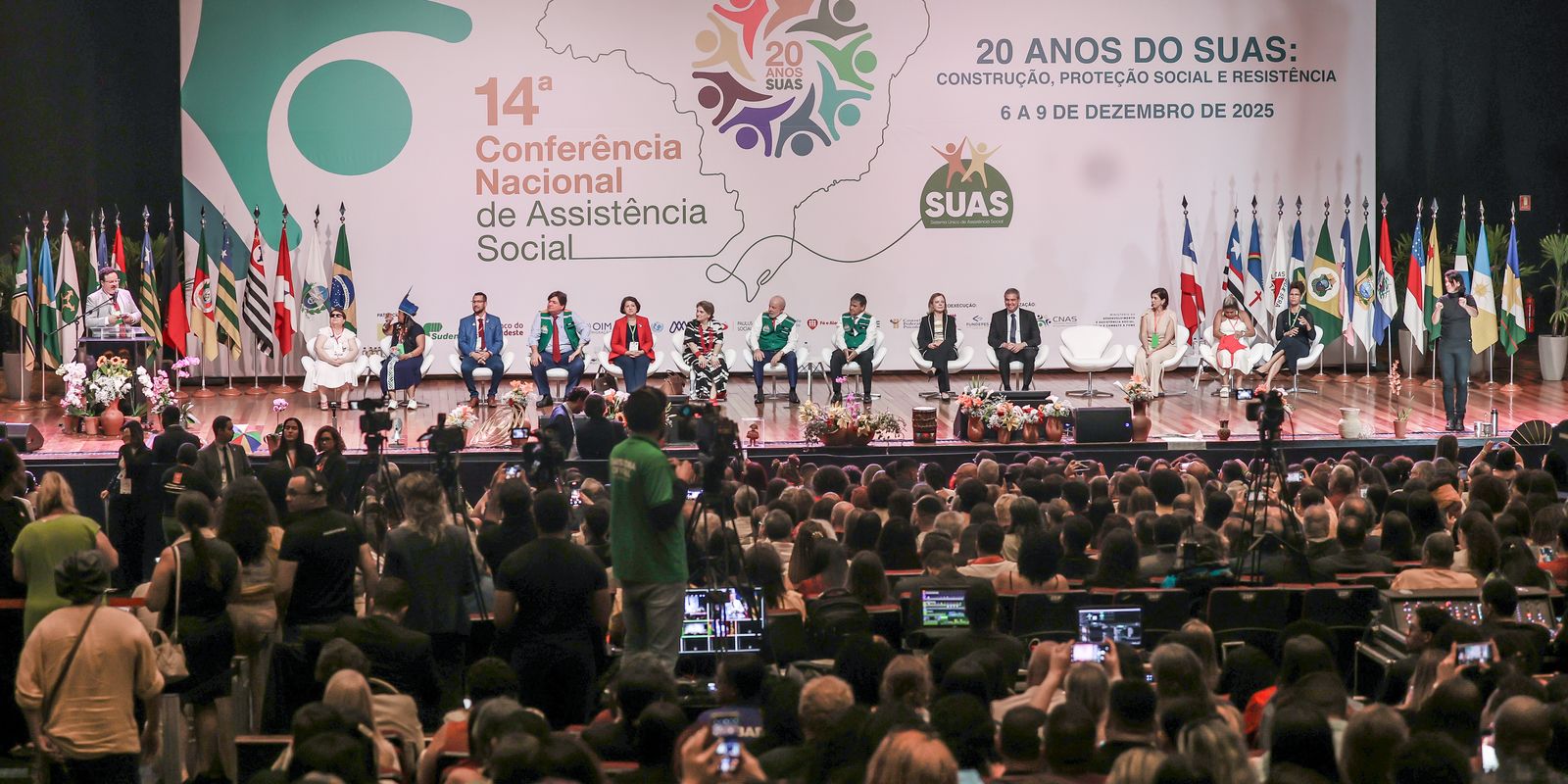
“It is important to involve the National Congress – Senate and Chamber -, the Supreme Court, the Superior Court of Justice, the state courts of justice, trade unionists, evangelicals, everyone is needed for us to carry out an educational effort”, stated Lula in a speech during the 14th National Social Assistance Conference, taking place in Brasília.
The president did not specify a possible date, but that he would try to hold the meeting by the end of this year.
“We have to be outraged by violence against women”, highlighted the president, who once again mentioned recent cases, such as the episode in São Paulo involving Douglas Alves da Silva, 26 years old, who ran over and dragged Tainara Souza Santos, 31 years old. The crime occurred on November 29th. She had her legs amputated after being dragged under the vehicle for around 1 kilometer, and remains hospitalized in a hospital in the city.
Lula also cited the case of the 39-year-old man, arrested red-handed in Recife, also at the end of November, accused of causing a fire that killed his pregnant wife and the couple’s four children.
“Fighting feminicide, combating violence, is it a women’s task? Forgive me, my dear men, it is our responsibility,” said Lula, who once again demanded male involvement in the fight.
“The naked truth is that violence only has one side. It’s not women who have to change their behavior, it’s men,” he said.
The president said he will make combating violence against women his political fight from now on. “Here in Brazil we are going to have to create a movement. It is an eminently educational problem, we are going to have to learn at school, educate our children”, he added.
For a week now, Lula has been addressing the topic of gender violence at official events he participates in. Around 3.7 million Brazilian women experienced one or more episodes of domestic violence in the last 12 months, according to the National Map of Gender Violence.
In 2024, 1,459 women were victims of femicide. On average, around four women were murdered per day in 2024 due to gender, in contexts of domestic and family violence or due to contempt and discrimination related to the status of women.
This year, Brazil has already recorded more than 1,180 femicides and almost 3,000 daily calls via Ligue 180, according to the Ministry of Women.
PEC of Suas
During the conference, the president commented on the Proposed Amendment to the Constitution 383/17 (PEC 383/17), which establishes the minimum application of 1% of the Net Current Revenue of the Union, the States, the Federal District and the Municipalities in the Unified Social Assistance System (Suas). Approved by the Constitution and Justice Committee and the special committee created to analyze the topic, the text is ready to be voted on in the plenary Chamber of Deputies.
“I wanted to tell you that Suas is possibly one of the most important things we created. And if there is now the PEC to be voted on, I can’t promise because I’m President of the Republic, but we need to study the economic viability of fixed money so we don’t have to fight over the budget every year,” said Lula.
In the same vein, the Minister of Development and Social Assistance, Family and Combating Hunger, Wellington Dias, defended that there be a federative agreement around the proposal.
“PEC 383 has to generate co-financing the way it was born in education and health, tripartite, municipality, states and federal government, and that is what we have to work on”, he defended.
During the event, Dias signed the act of creation of the Suas National Permanent Negotiation Table, a joint forum for dialogue and deliberation with social assistance workers.