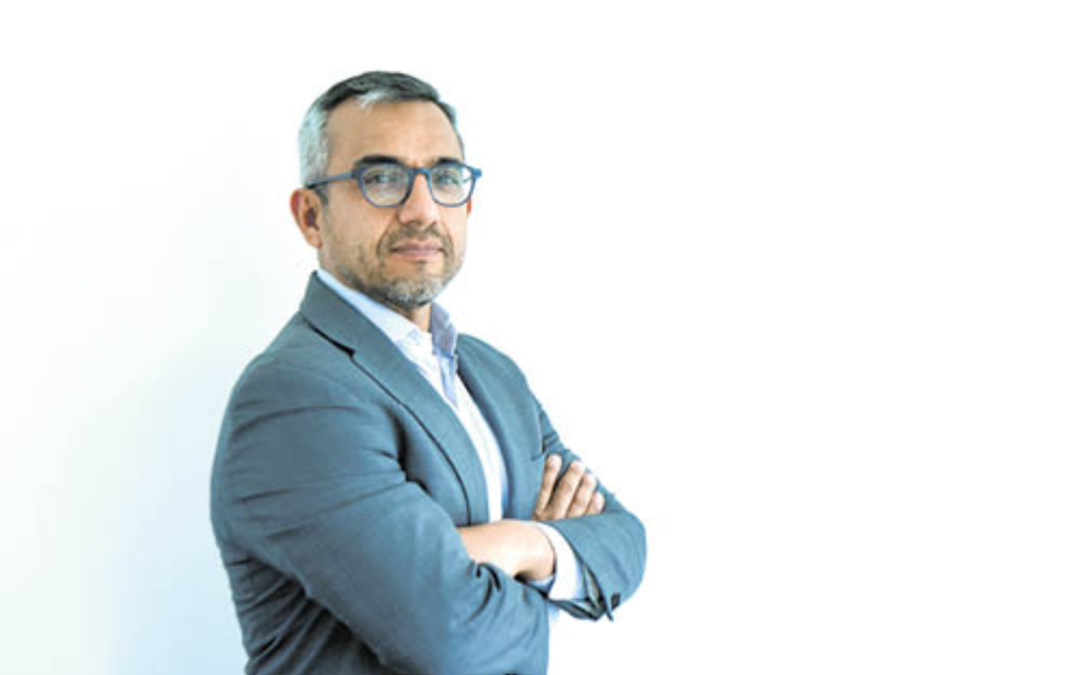
Entrepreneurship is part of Peruvian DNA, but needs guidance, training and financing. In this regard, Luis Vázquez Madueño, Director of Communication and Institutional Relations of Repsol, arrived at the Set of Peru21 to talk about promoting, the social, sustainable and full -approach project that the company manages.
What is driving?
It is a project that is aimed at promoting the economic development of the districts of Lima Norte. We talk about the districts ranging from Ventanilla to Chancay. The project consists in promoting ventures of people who are part of the community. There is both technical plan and entrepreneurship management tools. We also give them financing and then 12 months accompaniment for the business to be sustainable. What we want is not to focus on assistance aid to communities, but on a project that is sustainable over time. To date we have 52 collective ventures already constituted and formalized. We estimate that these ventures have benefited 10,000 people. We want it to be totally independent of Repsol. We are promoting it, but the idea is that it becomes our own life and begins to generate automatic, sustainable growth and extend to other areas of Lima or the country.
Why in Lima Norte? Is there a lot of entrepreneurship potential?
Basically, because it is the area of influence of our refinery. We have the La Pampilla refinery, which is the largest in Peru and is in the window, there began our social projects.
In which sectors are these more than 50 ventures occur?
We have four lines of action: food and nutrition, sustainable tourism, fishing and manufacturing of textiles or other domestic tools. We want these ventures to have a concept of circular economy and what we are promoting and we have achieved is that some of them can take advantage of waste from industries or other businesses and can reuse them, have a second life and give added value. There is an entrepreneurship that makes clothing soaps from used kitchen oil. Another makes wallets, backpacks, cartridges from companies. The uniforms that are no longer used in Repsol are raw material to generate products that can sell these ventures.
And that is part of sustainable innovation.
Exact. We wanted to promote that vision of sustainability in the 52 ventures we have. Some do not do it directly. There is one that is very passionate about, it is an entrepreneurship that collects garbage from the Chillón River, which is in northern Lima, and collects the technopor. This technopor is food of worms, whose undone becomes natural fertilizer for plants.
What impact has generated on the families of these entrepreneurs?
The approach and intention is that the ventures arise from people’s collective effort. We are a tool, a channel, an instrument that provides training and financing, but success is the result of entrepreneurs’ effort. And when those small companies begin to market their products generates optimism in families, friends and all those around. It is a not only motivational impact, but the secondary economies that are created around these ventures are generating other jobs. That is why we calculate that the total benefit reaches about 10,000 people in five districts of the North Lima.
What is the differentiating effect of promoting other social programs?
We believe that the project is quite powerful because what it provides is that accompaniment after the creation of entrepreneurship. In the country we have a statistic that we want to break, the one that estimates that 70% of the ventures in Peru fail.
What is the key to sustainable development in communities?
The key is always cooperating and collaborating with them. We are faithful believers of shared development. We do not visualize a company that wants to develop or be successful in the medium or long term if the community that is around does not develop. The contribution with populations and communities is part of one of the six axes of our sustainability strategy, which in turn is part of our business strategy.
What have you learned in this particular case?
We intended that this project be mainly destined for women. In fact, we set a goal that at least 70% are and we have turned it in these two years. But we have many single mothers, then, so they can attend the training classes that are made at Pachacútec University, we had to put a nurse because they had nowhere to leave the boys.
How do you contribute to the Repsol to meet its goals?
It contributes to having a good neighbor’s relationship, that we can advance jointly, to not have social conflicts. Projects such as promoting help dialogue and trust, which is one of the things that costs the most.