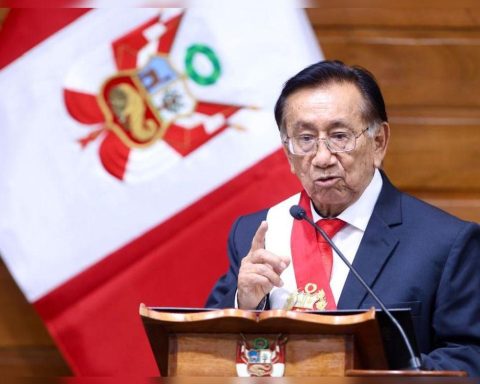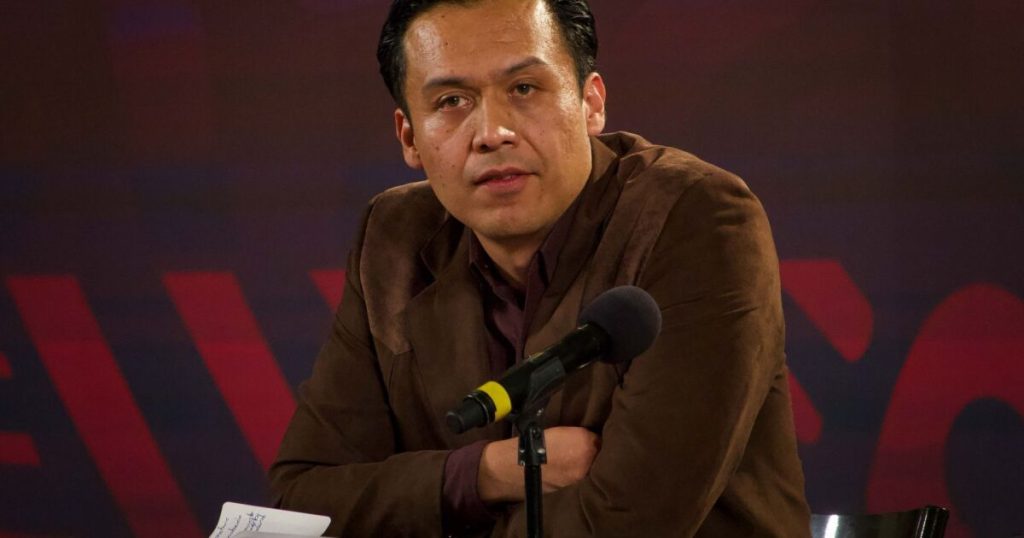
Luis Miguel Castillaexecutive director of Videnza Instituto, explains the results of the comparative evaluation of the government plans of the political parties.
What does the report that Videnza Instituto has prepared evaluate?
What we strive for is that this evaluation is as objective and transparent as possible. Only the plan is evaluated, not the coherence with the political trajectory of the parties. Nor is it taken into account whether these parties have seats in Parliament and how they have voted during the legislature. Something that is also not considered is the behavior of the candidates.
In addition to the five thematic axes, certain criteria are taken into account. What are they based on?
There are four technical criteria that have to do with clarity, specificity, feasibility and technical coherence. Clarity evaluates whether the problems and proposals are explained in an understandable way and without contradictions. Specificity measures the degree of specificity, assessing the inclusion of defined goals, deadlines, indicators or instruments versus general statements. Feasibility analyzes whether the proposals are realistic within the legal, institutional and fiscal framework of the country, including references to financing or budget restrictions. Finally, technical coherence examines alignment with diagnoses, official data or previous experiences, penalizing obvious technical inconsistencies.
How has artificial intelligence been applied to make this evaluation?
Due to the immensity of the data we had, AI was used to avoid any type of bias. For this, ChatGPT and Copilot were used. In both cases the same prompt has been used and in each case one plan has been evaluated at a time. What is done at the end is to report the simple average of each evaluation. This does not replace the technical and rigorous evaluation that must be done. We are going to break everything down, but the evaluation now is to have a certain notion of the technical quality of the government plans that have been posted to the National Elections Jury, in compliance with the electoral schedule.
What are the common denominators that contribute to some parties being at the top of the ranking and others at the bottom?
It is the mixture of the four criteria. There are no value judgments here, nor any other input that has been used. There is no ideological position, no favoritism, or anything. For example, in economic growth, what we see is that the best evaluated plans are not those that promise the most, but rather those that best connect macro stability, investment and productivity with viable instruments. Those that are worse off show that in terms of economic growth they promise to change the model, but they do not explain how it can be done without fiscal disorder, inflation or a fall in investment. There are parties like Perú Libre and Together for Peru that propose constitutional rupture changes, but they also make no mention of fiscal sustainability plans, which is why the AI places parties like Renovación with the other two that I have mentioned.
Are those at the bottom of the ranking those who have proposals that would affect the economy?
That is making a value judgment and I would not like to have to do it because this is an analysis that has to be complemented by seeing the application of the quality of the proposals. If you ask me if the plans of those at the bottom are the most populist, well, if there is no mention in them of financing works, for me that is already populism. The viability criterion is the one that best measures populism. I would have expected to see other parties that I consider, based on my own information, to be populist, but that are not reflected there and are in an intermediate position. For example, one may think that there are parties that raise proposals of this type, but when it comes to reviewing the document they have presented to the JNE, they do not appear to be the most populist, as is the case of Podemos Peru. However, there is a gap between their trajectory and what they put in their plan if they reach the Government.
Why does Alliance for Progress occupy first place in economic growth proposals?
It surprised me, but this answer is already my value judgment. I could explain this result by pointing out that they have a former Minister of Economy (José Salardi) who made their government plan. It is a plan that is framed in the multi-year macroeconomic framework, it talks about public-private partnerships, works for taxes, and this demonstrates the technical credentials of whoever did it. In the case of Fuerza Popular it is a fairly standard plan and very attached to what the usual Ministry of Economy is, it also has explicit goals such as reducing the fiscal deficit to 1%, reducing procedures by 40%, they propose realistic financing, among others. For example, Peru Primero caught my attention because it has internal coherence, but it has a high macrofiscal risk that is not developed. This group has narrative clarity,
but not technical solidity.
In the case of the Purple Party, how is it explained?
Its greatest strength is that it has the most technically consistent plan. It has greater literature and evidence based on productivity, informality and long-term growth. Once again, all the parties at the top are even and none of them propose a break in the economic model. They have goals, clarity regarding viability and that is why they are the ones with the best evaluation. Those who come out worst evaluated are those who forget about the budget reduction, do not specify how to achieve the greatest growth, and propose a new Constitution. Renewal tells you about growth, but it doesn’t tell you how. They propose support for private enterprise, fiscal discipline, but without specific goals.
How do we summarize, then, what the report has revealed in view of the next elections? How does the ranking help us?
We must vote in an informed manner and not fall prey to promises that may sound good, but are not viable for implementation. Promising more does not mean ensuring greater economic growth with macro stability and addressing the problems of informality, low productivity or the failures of the State. This is an initial, referential evaluation that requires much more in-depth analysis of each candidate’s career. For some who have a political career, we already know that they promise one thing, but in government they can do something else. The campaign has just begun, so voters must be given a battery of information that allows them to distinguish between empty promises and those that present more serious proposals.
Receive your Perú21 by email or WhatsApp. Subscribe to our enriched digital newspaper. Take advantage of the discounts here.
RECOMMENDED VIDEO