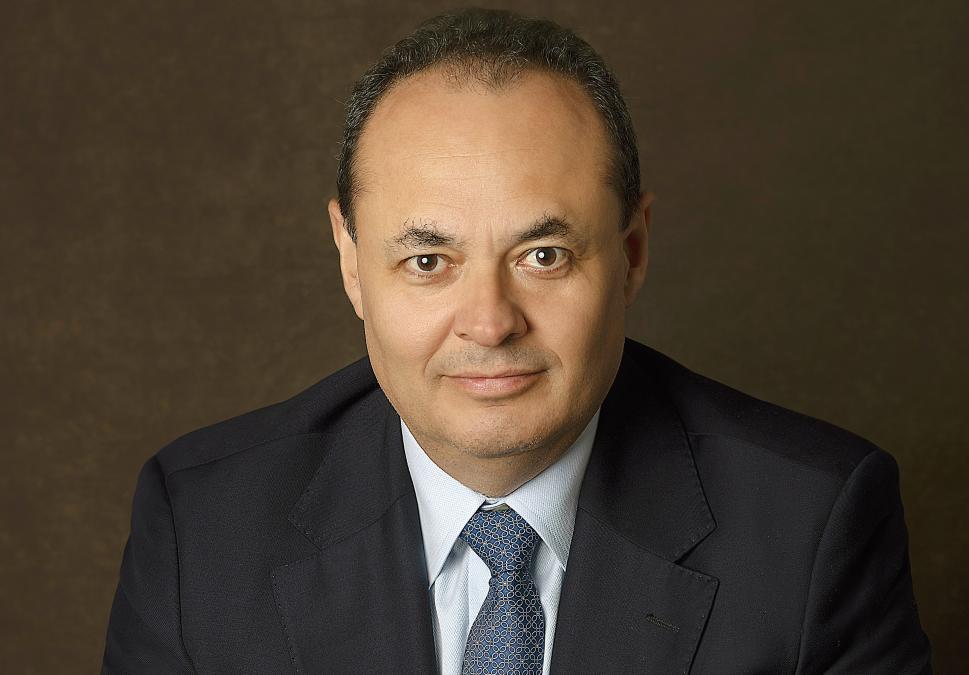
The economist Luis Carranza confesses his concern about the direction of the country, a concern that he has been expressing since 2013 in his columns, although without losing the conviction that Peru can rise. He has just published the book Peru does have a future. How to recover the compass, with the Editorial Fund of the University of San Martín de Porres. In this he maintains that this future depends on a civil society willing to assume prominence, demand its authorities and rebuild the institutions and policies that previously gave results. In the following interview he provides the arguments that, from his point of view, can help us recover
the compass
The book quotes a few lines from Basadre’s essay in which he says that “Peru is not lost due to the work and inaction of Peruvians.” Are we living in a stage of inaction?
The following decade (in the 90s), Peru became the star of Latin America. We had the highest growth rates, the greatest poverty reduction, and institutions began to consolidate. Unfortunately, we have lost that compass and have begun to excessively increase regulations; we began to destroy that institutionality; We began to increase public spending exorbitantly on some issues, especially payroll. Meritocracy in the public sector began to disappear and all of this has an impact on the growth of our country and, above all, on living conditions and the reduction of poverty.
How can we get back on track?
It does not depend only on the politicians who participate in elections every four years for subnational governments, every five years for the central government; It depends on Peruvian society. Peruvian society has to stand up, not to protest, but to guide on that route that we all know, that route to prosperity.
If Peru was already in a better situation after the inflationary crisis of the 1980s, due to wrong policies, why did we begin to fail?
Because it is very easy to fall into the traps of populism, given that it works for you in the short term. You can increase spending excessively, you enter into issues of political clientelism by hiring supporters and everyone is happy. But then you start to see how the public sector no longer fulfills that role; how the coverage and quality of health, education, and sanitation services begin to deteriorate even though you spend billions of soles. So, it is very easy to fall into populism.
What do we have to do to avoid falling into populism?
There are two things: either we light candles so that we get a good leader, or society stands up and tells our political leaders where the path has to go and begin to teach them a lesson. Not letting them be emperors for five years, or four years in the case of governors, but telling them: “Hey, this is the route, this is what we need in Cajamarca, this is what we need in Loreto, this is the route for Piura and, in general, what the country needs.”
Countries require a minimum organization, but our governments are inefficient. How do we demand from them what we need and should do?
We have to build institutionality and that implies, on the one hand, processes. There has to be regulation, and we need it to be efficient to prevent it from destroying the market. Each sector: education, health, sanitation has its own operating logic. So the processes cannot be replicated; They must be adapted for specific cases. Then we require meritocracy. The best have to be in charge of these institutions; It cannot be the typical political clientelism of putting a supporter or a person close to the current political leader there. And then, obviously, have mechanisms of coordination or functional independence. There are very good examples.
Like what are those examples?
All results-based budgeting programs, especially the one that combats child malnutrition, worked very well. The independence system of our central bank, which has processes and has meritocracy, and that is why we have the most stable currency in Latin America in the last 25 years. So, we have to head on that route.
What do you propose to recover the compass?
On the macro side we see fiscal rules being reinstated, simplifying all issues on the tax side, especially giving greater incentive to investment. We propose a little bit to go towards the Chilean model, which worked very well for them, where you lower the income tax and raise the tax on dividends, in such a way as to promote private investment. I put a lot of emphasis on the whole issue of public spending efficiency (…).
We need our three systems: the political, economic and social systems to evolve. We cannot have growth and not improve the middle classes and the living conditions of the population. We cannot have growth and have our political institutions deteriorate; That has taken its toll on us. Therefore, our civil society has to mobilize. You have to set the agenda for our political leaders. That’s why I quote Basadre.
The book is called “Peru does have a future.” Are you optimistic about the future of the country?
I am a worried optimist. I am very concerned about what is happening to our country. I see how we have lost the compass and I noticed in each of these articles that I have written, more or less from 2013 to date, with some cuts, how we have been losing capabilities, destroying institutions, for different reasons.
Receive your Perú21 by email or WhatsApp. Subscribe to our enriched digital newspaper. Take advantage of the discounts here.
RECOMMENDED VIDEO