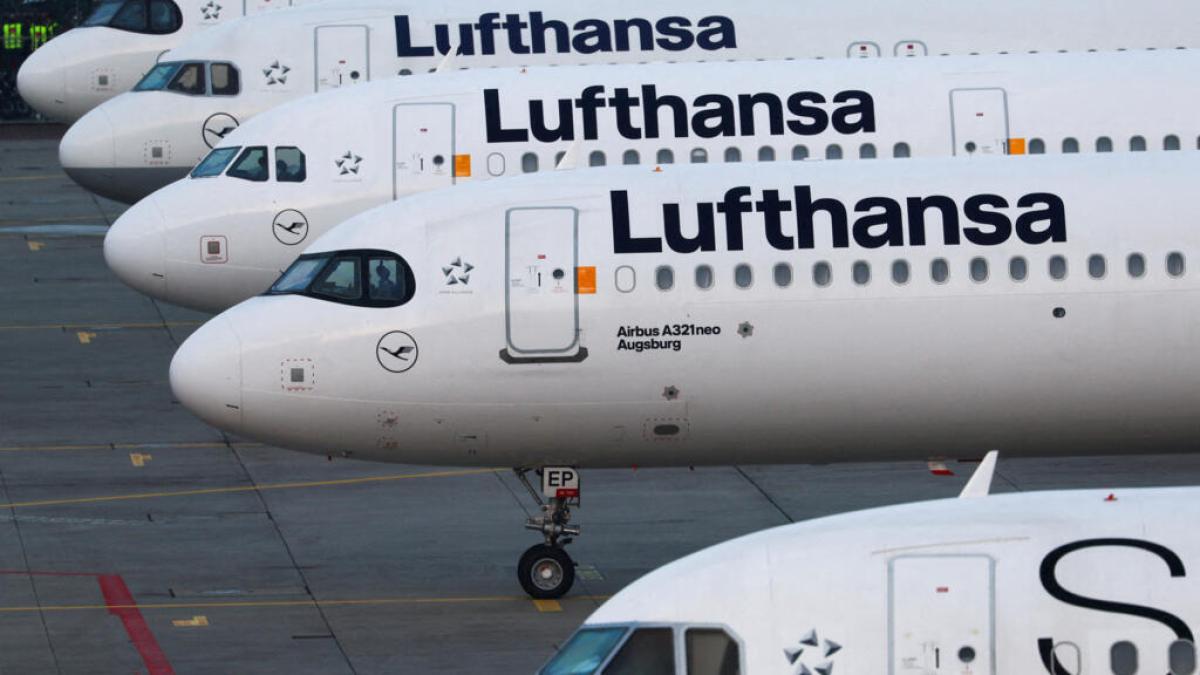
Lufthansa, the largest air group in Europe, announced on Monday that it will suppress 4,000 jobs by 2030, mainly in Germany, as part of a plan to increase its profitability at a time when the main European economy is going through a crisis. With information from our correspondent in Berlin, Sergio Correa.
This template reduction is the most important since pandemia. The German company said in a statement that will be carried out “in consultation with the social interlocutors” and “will focus on administrative positions rather than operating functions.”
“Despite record figures in the transport of passengers during this year, Lufhansa continues to have red numbers. Executives believe that the high administrative costs of the company wear the finances of the hitherto largest air navigation group in Europe and that is why they want to fire about 4,000 employees, almost all of them in Germany,” reports our correspondent in Berlin, Sergio Correa.
“The layoffs will be carried out over the next 5 years and the company expects to transfer another 1500 land personnel jobs from Frankfurt to other countries, in addition to automating much of its services. Lufthans For the 2030s, “adds Correa.
“The three unions within Lufthansa, that of the pilots, of the on -board personnel and the land staff, who usually defend their interests separately, have decided to fight together this time because they believe it will be the first step to move Lufthansa to the close working conditions of low -cost airlines,” concludes Sergio Correa.
The group uses 103,000 people in Lufthansa Airlines, Austrian, Swiss, Eurowing, Brussels Airlines, and which the Italian company Ita Airways was integrated in 2025. It also has transport and maintenance transport divisions.
The company – which closed 2024 with losses – indicated that it will reduce its template through digitalization, automation and processes rationalization.
Germany is going through a crisis with two years in a row of recession, in 2023 and 2024, with weak perspectives for this year and the highest unemployment rate in a decade.
In this crisis different factors converge, first the increase in energy prices after the Russian invasion of Ukraine, China’s competition, the delay of the implementation of new technologies and now looms the threat of the tariffs of the United States.
This contraction of the economy has also hit other giants of the German industry such as Bosch, the main car manufacturer of car equipment, which announced on Thursday the suppression of 13,000 positions from here to 2030 in Germany.