The Aragua Train and crime organized in Latin America (Editorial Fund of the Universidad del Pacífico), from José Luis Pérez Guadalupe, Lucia Nuñovero Cisneros and Guillermo Coronado Sialeris a book that was published during the second half of 2025. Testimonies, data and analysis to understand the origin and nefarious scope of one of the criminal organizations that is claiming the lives of many Peruvians. On this occasion, La República spoke with criminology specialist Nuñovero about the factors that allowed this organization to enter almost all strata of Peruvian society. What does it take to get out of this burden?
-Many talk about solutions to the criminal wave that we are suffering with criminal organizations like El tren de Aragua. Is there any plausible solution?
-Yes, I see that there is a short-term and medium-term solution. There is the issue of specialized units. That is, the technical work of criminal investigation, prosecution, financial and patrimonial intelligence and special operations. They are units that are strengthened with technical leadership as well, which is a bit of what is being done. The serious problem is that there has been a deinstitutionalization in the Interior sector, above all. And right now the government does not want to see it, it does not want to touch it, it is distracted with the issue of reforming the INPE. But here the issue of the Interior sector is key; We need a police force that works.
-Criminal organizations handle a lot of money. Do we have enough budget to be able to combat them?
-The specialized units require investment, without a doubt, technological, a lot of software, a lot of analytical work and in coordination with the private sector, which is the one that often has information of all kinds, contracting, banking, telephone. It is undoubtedly an investment, but it is not something that is outside our possibilities with a specification that is 13,000 million soles annually since 2017, which is considerable. But due to a management problem, progress is not being made. Criminal prosecution, the prosecution, the judiciary and the police need strong internal control bodies. Do not allow the generation of schemes and these internal connivances that have been increasingly undermining the institution. So, in recent years, we see that police stations and Depincri are already captured by organized crime. They end up giving in somehow. They end up making agreements with organizations, being part of them, in an increasingly shameless and impudent manner. Before there were some cases, it was known, but in the end now it is a very massive issue.
-There is a lot of discussion about the origin of this criminal wave, which began, they point out, in 2017 during the PPK government.
-Of the external factors, migration is the main one. Not only the transnationalization of The Aragua trainbut from the Choneros, the Red Command in the Amazon. Our bands like Los Pulpos, who are already in Chile. It is a growth of criminal gangs and we have been generating them due to the institutional weakness of the police. We had a project called Perú Seguro, which was an investment package from the Inter-American Development Bank. I myself have seen, because I have had to be in the Interior in some stalls, very poorly directed purchases, always with rings. This institutional weakness and control of acquisitions and investment in the Interior sector has caused us to lose several years while crime was precisely increasing. It is a great cultural tolerance for criminal economies.
-What do you mean by cultural tolerance to criminal economies?
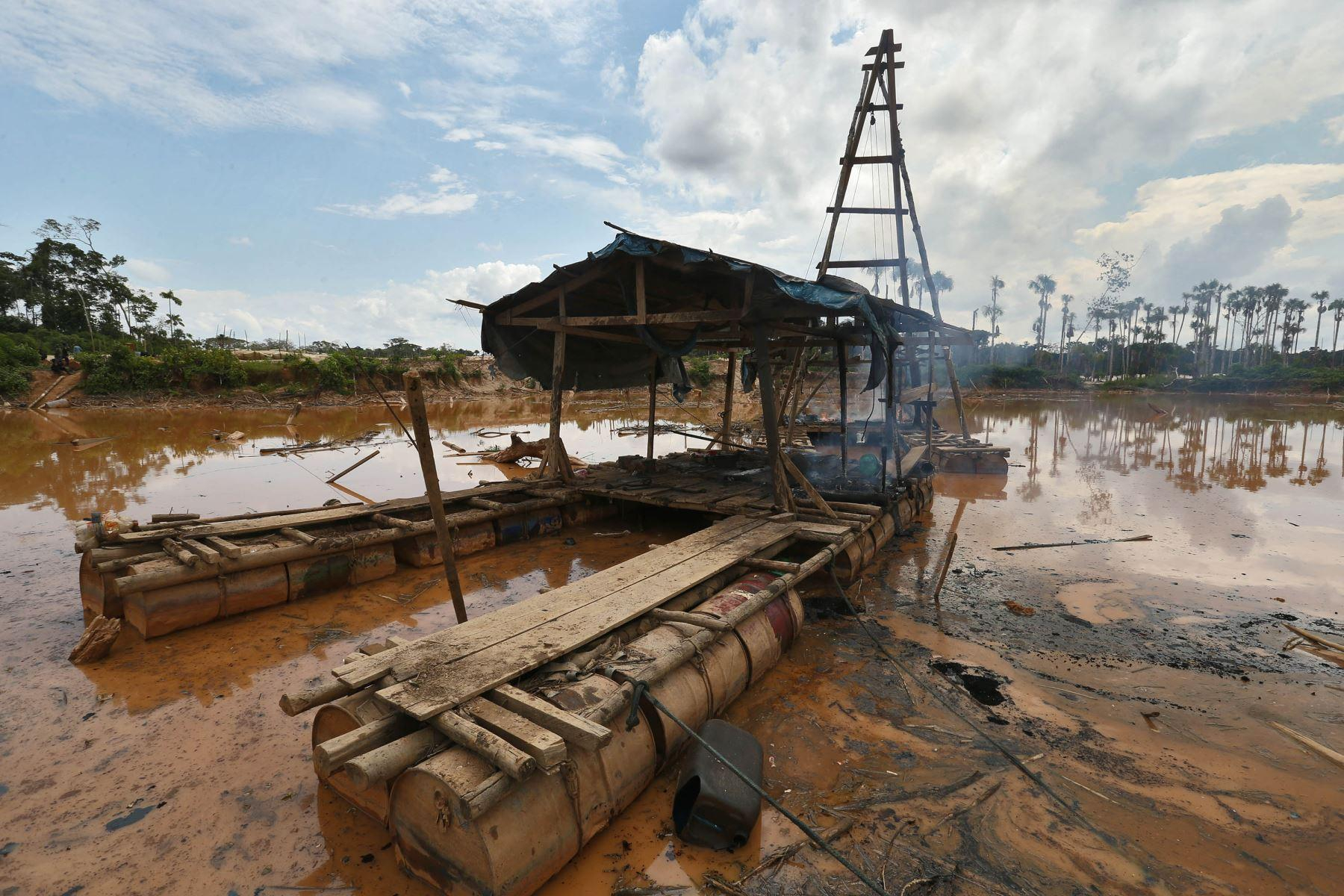
-We know, for example, that there are companies that launder drug assets, that illegal mining has existed for more than 20 years in Patazwhich is not from now; and also in the political classes, we know that there has been financing of illegal mining since the time of Ollanta Humala. The laws that favor illegal mining in your government are very clear.
-The Aragua Train leaves a prison. The same as other criminal organizations. Are we far from a Peruvian criminal gang being born from a prison?
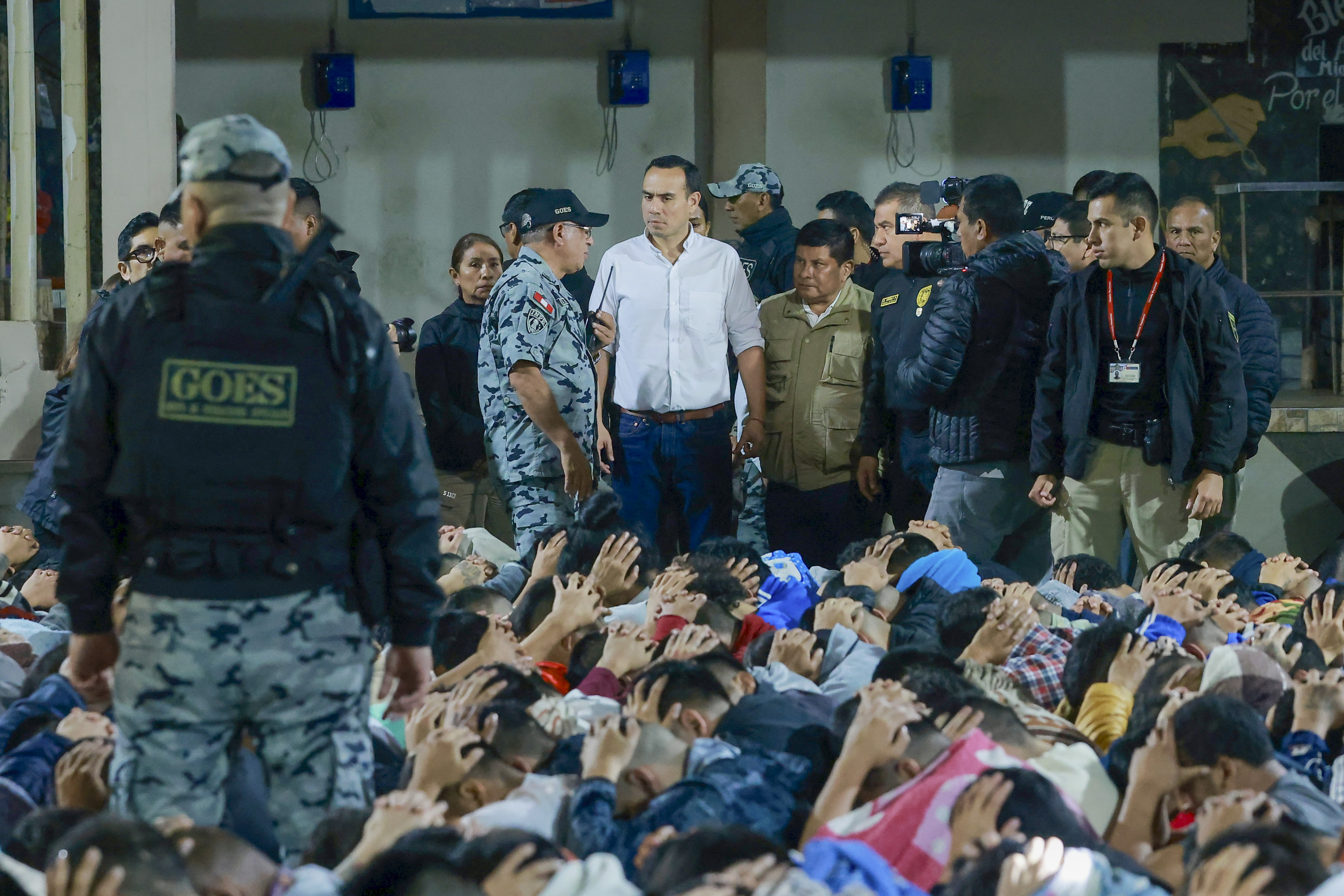
-To have that level of criminal governance, as we call it, to stagnate and control a prison from prison, you have to have a considerable criminal economy as well. The Aragua train, as we also explain in the book, has access to drug trafficking, illegal mining, and crypto laundering enclaves. Their extortions allowed them to even extort cars. They kidnap you and ask you for a spot in exchange. That generates considerable criminal assets. We have never seen that in Peru. The expression, the manifestation of these structural issues of organized crime is violence as well. There is a book by Marcelo Bergman and Gustavo Fondevila called Prisons and Crime in Latin Americapublished a couple of years ago. They speak of Peruvian prisons as the least violent despite having the major factors of overpopulation, lack of services, and security. So, part of that explanation is how you understand governance within prisons. Do organizations end up governing? Are there organizations that govern them? The INPE has that margin of management and control of violence. That is a big difference that distances us a lot from the model, until now, of the Aragua Train.
-From what you say and, despite all the blood we are seeing, this issue of criminal organizations is possible to combat. Do we lack political will?
-That’s what happened to Ecuador. Ecuador was not a country of great violence and organized crime either, but it had some structural factors that were advancing and moving forward. For example, they dollarized. They did not generate financial intelligence that controls all that attractiveness that the dollar generates. Then they neglected their prisons, they did not invest in more modern, safer prisons. They changed their laws, just like us. They allowed changes in criminal legislation.
-Are you referring to the procrime laws passed by Congress last year?
-Exactly. Several experts that I mention in the book and who already work in organized crime, mostly in Colombia, Mexico and Brazil, classify corruption by level. The corruption of “hey, I’ll pay you and let me work.” But the highest level is “I have a politician already financed and that politician is going to legislate and make public policies in my favor.” We are reaching that level; It arrived in Ecuador and it got out of hand and, of course, they advance where they can advance. The media are already at a level of political action, practically, of a criminal relationship if you realize; It is a political means that they are mobilizing.
-There are narratives from a certain sector of journalism that lately are indicating that the pro-crime laws of Congress are not such: pro-crime laws.
-It is a sector that can really have very superficial readings of the country. They report that way because they do not know, or do not want to know, what is happening. Let’s look at the president, who was a congressman. It is clear that with the jousts he knows the prisons; He is just discovering them. He doesn’t have a plan, he never had one. Well, he was elected to Congress, but he may still have an idea of what a prison is. The political actor has been so degraded that practically 80% have links to direct or indirect criminal economies.
-What is the main characteristic of the Aragua Train in Peru?
-They look for a market that they can prey on. They have seen the character of the entrepreneurial and informal Peruvian. They see hard-working people without much education who handle money. We speak with the Argentine prison administration, who are bankrupt, and they tell us: “there is no Aragua Train because there is no need to prey here.” On the other hand, Peruvians already have some capital. Furthermore, they are often not protected by the police; They know that he is quickly bribed and that he will not respond to their complaint. It is perfect for them and they begin to prey on the transporters, the warehousemen and then they see people who are dedicated to another type of market and they start entering there as well.
-When she was in the presidency, Dina Boluarte announced the reopening of the Frontón.
-It’s smoke. We have become accustomed to talking a lot about these topics. It is very expensive; no isolation needed on an island. What is needed are good penitentiary centers. Cochamarca, for example, is also at more than 4,000 meters.
-Is a new Challapalca necessary?
-Yes, without a doubt, one or two more. There needs to be more penalties.
-Is Jeri’s Bukele attitude of any use?
-Precisely because President Jeri comes from an ambivalent political class, which flirts with and favors these large criminal interests, and which have been filtered through the political parties that do not deal with illegal mining, he brands himself as the very tough one, like Bukele, but in truth he does not do so.
-And what would Jerí have to do to look like Bukele?
-If you want to do what Bukele did, and I have spoken with his Minister of Security, the first thing that has to be done is to purge the police of bad elements and once again generate highly paid elite units dedicated to criminal prosecution. The justice system must be improved with efficient, expeditious sentences for organized crime and not with preventive prisons of 5 or 6 years. 40 percent of our prisoners are in preventive detention, 50 percent of that 40 percent are released. There you realize that there is a great deficiency in the justice system.