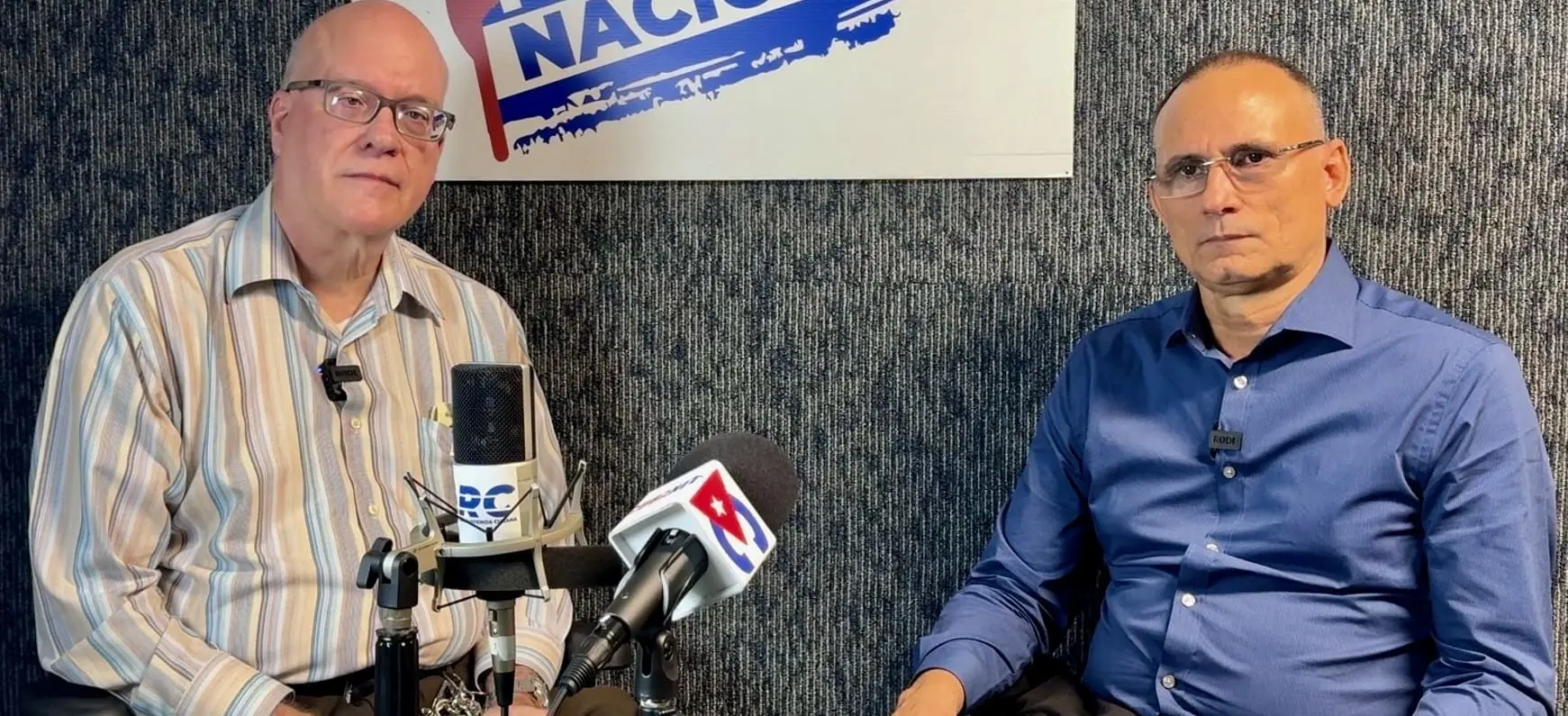
MIAMI.- With the purpose of reflecting on how to rebuild the nation and move towards the democratic Cuba that millions of citizens demand, CubaNet brought together in the same space two of the most recognized opponents inside and outside the island: Orlando Gutierrez-Boronat and José Daniel Ferrer.
From the headquarters of the Democratic Directorate, both shared visions, proposals and experiences about unity, justice, transition and the civic strategies necessary to achieve the country we need.
The unity of Cubans fighting for democracy is an idea often repeated but little achieved. What has prevented it and how can it be built from the reunion between you?
Orlando Gutiérrez-Boronat:
I want to welcome José Daniel to this exile camp, from where we continue the fight. As he recalled, figures such as Máximo Gómez, Antonio Maceo, José Martí and Calixto García had to leave Cuba and then return. We are in that same function. In this headquarters of the Directorate of the Assembly of the Cuban Resistance we have been working for years in a functional unit of more than 50 organizations inside and outside the country. That unity always has to be expanded.
We have been collaborating with José Daniel for decades since that historic meeting in Havana with Lorenzo de Toro, vice president of the Board of Directors. We have admiration, respect and affection for him. We are here to serve Cuba and the Republic. As soon as he can we start conversations.
José Daniel Ferrer:
For me it is very positive and gratifying to meet again personally with Orlando Gutiérrez and with the brothers of the Democratic Directorate and the Assembly of the Cuban Resistance. I had already been here nine years ago, in 2016.
I have been in exile for 11 days and this meeting was one of the moments I was looking forward to: a fraternal hug with a Cuban valuable for the work he has carried out for so many years in favor of the freedom of Cuba. Our country today is enslaved and greatly suffered.
We know of the work they have done to strengthen the unity and effectiveness of the fight, and they deserve recognition. But, as Orlando said, that unity must be constantly reinforced. Tomorrow we must be more united and stronger than today.
We are convinced that less than 3% of Cubans really benefit from tyranny. More than 95% want to live in freedom and aspire to a democratic, fair and prosperous Cuba. The small group that holds power seeks to keep the nation ruined and the people enslaved. It’s a sick mentality. Only effective unity and strategic action will allow liberation first and reconstruction later.
What do you propose, from the UNPACU militancy and from the Assembly, to advance this unity? What must be given up to achieve it?
Orlando Gutierrez-Boronat:
The starting point is in the “Agreement for Democracy”, one of the first documents that José Daniel signed years ago. There it is clearly established that we seek real and profound change in Cuba.
I want to take this opportunity to give José Daniel, an example for the people of Cuba, a rosary. It is a symbol of faith and spiritual strength, also essential for the fight.
José Daniel Ferrer:
Thank you. It has enormous value to me. I am a man of faith, and without spiritual strength there is no strength to face a struggle like this.
¿For the democratic transition, there must be justice, forgiveness or both?
José Daniel Ferrer:
Both can exist, but justice is essential. Forgiveness must be earned. He who represses until the last moment cannot expect forgiveness. And there are crimes that cannot be forgiven because the victims will demand justice. Whoever killed, tortured or committed serious crimes will have to face independent courts.
Now, there are people who, without staining their hands with blood, have served the regime, but today they discreetly collaborate with the opposition. I’ve seen them in prisons. Jailers who passed messages to families, who helped introduce shortwave radios, who avoided beating political prisoners. That type of collaboration is a way to begin to earn forgiveness.
But whoever beats, tortures or executes criminal orders must be judged.
Orlando Gutierrez-Boronat:
This is a man with a reputation that I admire or respect, I can contribute little more than what he has said. I just want to add that crimes against humanity cannot be forgiven. They do not prescribe either nationally or internationally. Those who commit them or execute criminal orders will have to answer. In every successful transition, those responsible for serious crimes have been punished.
The Armed Forces must stop being an ideological instrument and become forces at the service of the nation, with a professional and subordinate role to civil power. We want a republic with the rule of law, division of powers, alternacy. Neither the army nor the police can continue to be tools of repression. Its function is to protect the people.
How can the national mobilization strategy of UNPACU and the national strike strategy promoted by the Assembly be united?
Orlando Gutierrez-Boronat:
Few know that the call for a national strike and non-cooperation did not arise in exile, but within Cuba, from the prisons. José Daniel, Antúnez, Juan Carlos Herrera and other political prisoners made that call simultaneously and without prior coordination. Since then we have worked in that direction: a decentralized, non-violent, multi-level strike. With a little more strategy, July 11 could have been the end of the dictatorship.
José Daniel Ferrer:
Totally agree. To strengthen this strategy we have to work, communicate more, create the necessary dynamics so that we are all aligned. For years we have suffered from a paralyzing lack of communication. Everyone is absorbed by the struggle—inside and outside of Cuba—and sometimes there is no time even for family.
But you always have to find the space to coordinate, as we did today. Five-minute conversations can clarify visions and strengthen common work.
With training, coordination and constant communication, the call for a national strike can become a popular tool throughout the island. The vast majority of Cubans — including police officers, jailers and many members of the FAR — want change. The current situation is unsustainable for the majority of the population.
Final messages to the people of Cuba
Orlando Gutierrez-Boronat:
We are closer than ever to liberation. But it will only be possible if the Castro family and the Communist Party completely leave power. Our mandate is to return all freedoms to the people without filters, to reorganize and refound the Republic.
Cuba can rise quickly: because of the talent of Cubans, because of the contribution of the diaspora, because of international goodwill. But first we must remove those who are killing the country from power.
José Daniel Ferrer:
I saw it clearly in the Museum of the Diaspora: what Cuba was before 1959, the destruction that communism has caused and what the future Cuba could be. Our town has enormous potential. With freedom and rights guaranteed, Cuba will be reborn.
But first you have to free it. We must end Cuba where almost everyone suffers and a small group lives like millionaires. That situation must end now.
Orlando Gutierrez-Boronat:
We must unite in principles, values and purpose to refound the Republic, based on the rights and freedoms of all to be able to enjoy that beautiful island. Cuba must be taken out of the pit that Communism has thrown it into.
Jose Daniel Ferrer
Allow me to close with some verses from Martí, from his letter to Néstor Ponce de León:
“If honor is one, the ways will have to come together; it must be founded with all for the well-being of all.”