The region of Mexico, Canada and the United States produces more than 112% of the production requirements of its food chain, one of the strengths of regional integration through the T-MEC. Mexico is also the main food supplier in the United States in the last 30 years, explains Fernando Cruz, who directs the agricultural market consulting group.
On November 5, Donald Trump won the elections to become the president of the United States. And although the markets reacted positively, mainly the technological actions, some sectors did not look at their tariff proposal, revealed at the end of November: 25% tax on all products in Mexico and Canada.
The fluctuations, executive orders, exemptions, tariff pauses and the exclusion of Mexico in reciprocal tariffs only bitterly season a dish that nobody wants to eat: commercial uncertainty.
“Many producers did not know how some tariff payments were left out there and trying to recover by importers, also by Mexican exporters,” Fernando Cruz explained.
The specialist points out that although the tariffs have not been completed, the damages are perceived in the markets. And, in the absence of certainty, Mexican exporters are looking to diversify their markets to reduce the risk, mainly to Europe, Canada and Japan, which is the second largest food buyer in Mexico.
Read also: Water becomes the new Trump tariff tool
The change to a defensive attitude may seem insufficient, but understandable, since the imposition of 25% tariffs will generate a 11% contraction in the agricultural production of Mexico, Cruz explains.
Diversify, however, raises various logistics and regulatory challenges. Cruz highlights the lack of renewal of the Free Trade Agreement with the European Union, which puts Mexico at a disadvantage against other Central and South America exporters.
Tex-Mex franchises already take measure
The Mexican ingredients are crucial in the United States restaurant industry, since 1 in 10 restaurants serve Mexican food, according to Pew Research Center. 78% of American adults ate in a Mexican restaurant in the last year, according to the National Restaurant Association.
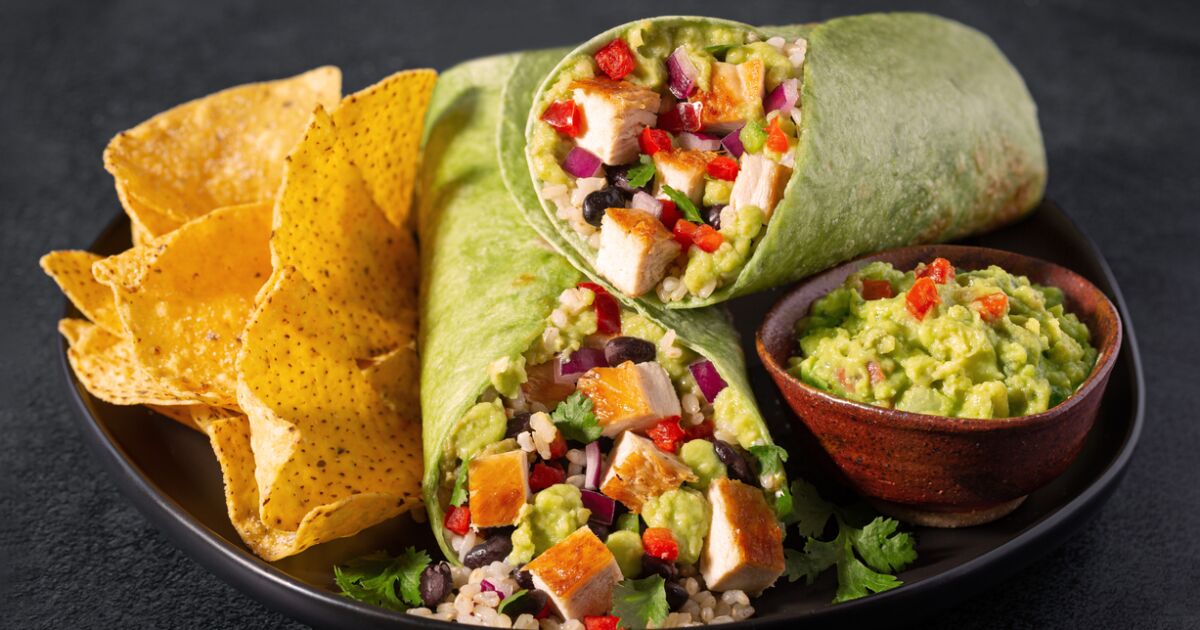
Five out of 10 fruits imported by the United States are Mexican and avocado shines in all Tex-Mex kitchen franchises, such as Taco Bell or Chipotle. Therefore, the single threat of tariffs caused the actions of importing companies and avocado distributors to fall due to tariff uncertainty. Calavo and Mission, two of the greatest importers and distributors of avocado are an example of this.
The effects on large chains such as Taco Bell and Chipotle Mexican Grill cannot be ruled out, explained Héctor Alcázar, CEO of Latam in the USEXIC.
To reduce their dependence on fresh Mexican products, they can choose to replace suppliers and change of ingredients, something that will be challenging for franchises, since they are usually recipes valued by the consumer by their standardization itself, which they know the same everywhere.
Given this challenge, at the beginning of March, the CEO of Chipotle Mexican Grill, Scott Boatwright, ruled out a new price increase and added that the company is already supplied with avocados different from Mexico.
“Franchises could look for new suppliers in other countries to obtain better prices, which could complicate logistics,” says Alcázar.
But before reaching those instances, small and medium -sized entrepreneurs in the United States are presenting lobbying proposals to ask the government to guarantee the exemption of tariff products, in a joint effort between the International Franchise and Concamin association.
In addition, on the binational plane, entrepreneurs in the United States are dealing with suppliers to maintain the value chain. They are even encouraging entrepreneurs to strengthen their presence in Mexico, to help local producers.
Small restaurant, the most vulnerable
But for Eduardo Mercado, Director of Gastronomic and Hotel Consulting Integral, not only large chains suffer, but also small and medium entrepreneurs who depend on Mexican supplies will be affected. Mainly due to its lowest maneuvering margin to face additional logistics costs, changes in the supply of food and control over final consumer prices.
In the case of tariffs, “additional costs would be partly transferred to the final consumer, which could result in a price increase between 15% and 18%,” Mercado explained.
The specialist indicated that a suggestion for restaurants is to be creative and innovate in their menus to reduce the dependence of Mexican products, in addition to the standardization of recipes.
In 2024, Mexico exported more than 50,306 million dollars in food and drinks to the United States, according to the United States Department of Agriculture (USDA). This not only includes fruits, vegetables or even meats, but also drinks such as tequila or beer, important in Mexican food restaurants menus.