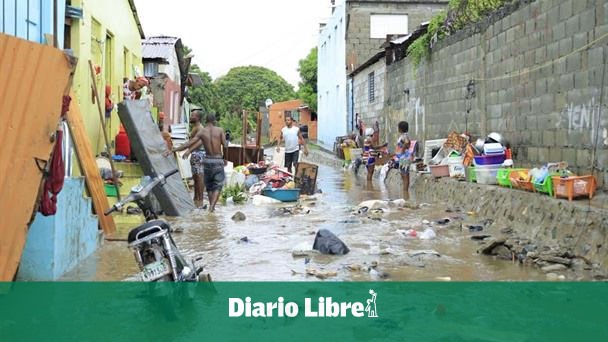
The Dominican Republic faces a new health threat after the passage of the Storm Melissa. The extensive floods that persist due to the rains in the south of the country and the Greater Santo Domingo have created conditions conducive to the spread of leptospirosisa disease that, according to the Pan American Health Organization (PAHO), usually emerges after episodes of intense rain and accumulation of water contaminated by the urine of animals, mainly rodents.
The OPS alert that this type of scenario increases the risk of outbreaks “of epidemic potential”, due to prolonged exposure to stagnant water and saturated soils. Infection occurs when Leptospira bacteria It penetrates the organism through wounds in the skin or mucous membranes, and its incubation period varies between 5 and 14 days, so cases could manifest even when the weather has improved.
“The floods They not only destroy infrastructure, they also open the door to serious illnesses“, recalled the organization in their regional reports.
According to the epidemiological bulletins reviewed by Free Diaryin 2024 the country closed with 561 suspected cases35 confirmed by laboratory and two deaths. This year, before Melissa, there had been 83 confirmed cases and at least three deaths.
The southern provincesalong with sectors of the Greater Santo Domingoconcentrate the greatest risks due to recent river flooding and the exposure of populations that still remain in flooded areas.
The symptoms
Specialists warn that the symptoms of leptospirosis They can be easily confused with those of dengue or influenza: high fever, muscle pain —especially in the calves—, intense headache and eye redness.
The most severe forms can lead to jaundicehemorrhages or kidney failurewith a fatality rate that can exceed 10% if not treated in time.
“The early detection and the medical attention Immediate treatment is key to avoiding fatal complications,” PAHO reiterated in its most recent health alert.
The health authorities Dominicans urge to avoid contact with stagnant wateruse boots and gloves during cleaning tasks, cover wounds, boil water for consumption and reinforce the pest control.
He Ministry of Public Health maintains epidemiological surveillance in the areas most affected by Melissa, while rapid response teams carry out fumigation operations and disinfection in vulnerable communities.
In the cloudy waters and the mud that persists in the neighborhoods and ravines, hides the dangerous shadow of the leptospirosis: a reminder that, after the rain, we still have to protect life.