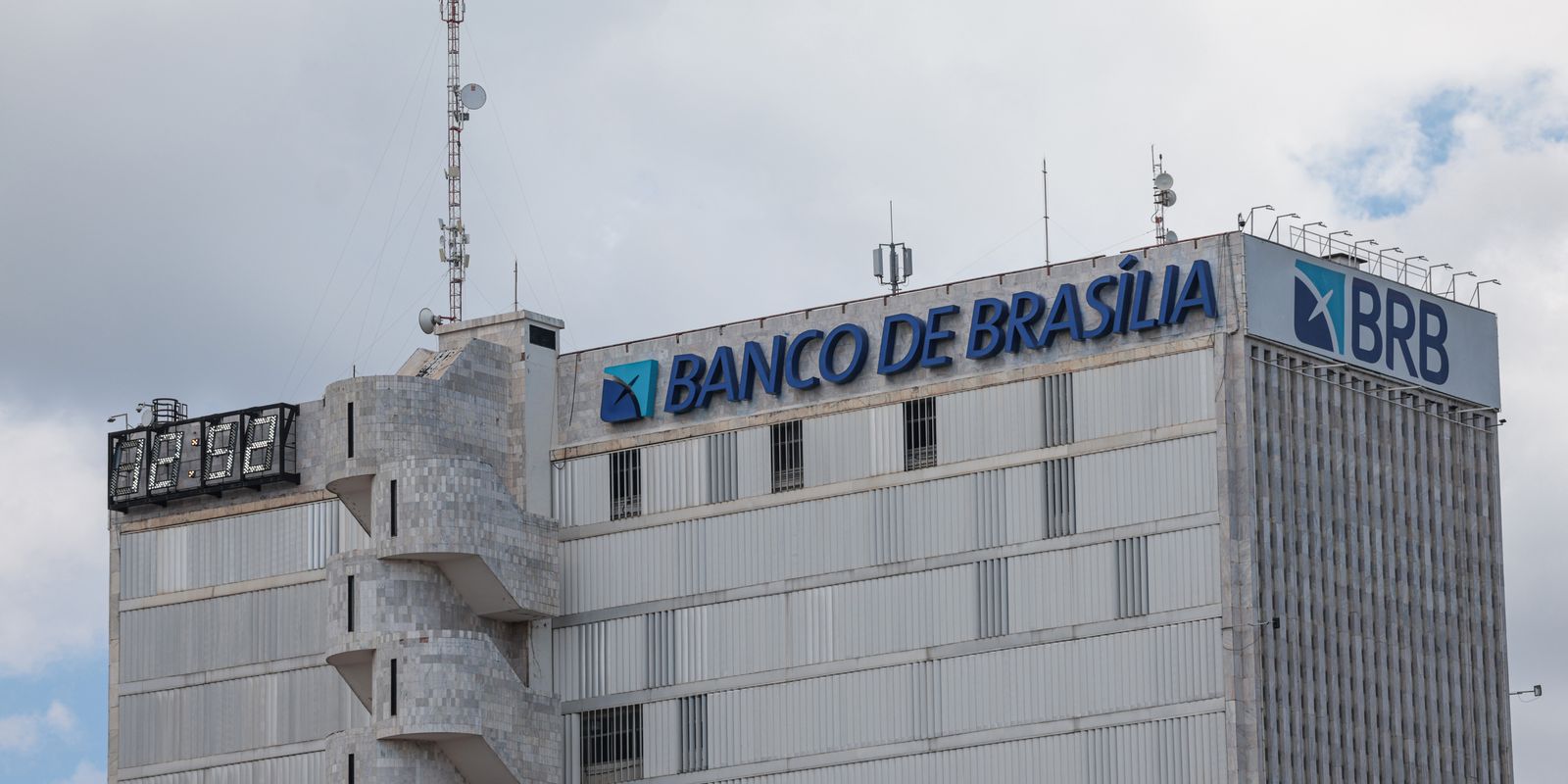
The Legislative Consultancy of the Legislative Chamber of the Federal District (CLDF) recommended the rejection of the bill that authorizes the capitalization of Banco de Brasília (BRB) by the government of the Federal District (GDF), including the possibility of selling or transferring public properties to the bank. In a 112-page technical note, the Experts point out the lack of essential information for the admissibility of the proposal and highlight fiscal, legal and patrimonial risks.
“In light of the documents presented and the transparency gaps identified, the minimum safeguards that the CLDF must adopt consist of rejecting the PL in its current wording”, states an excerpt from the document.
Among the flaws listed are the lack of an estimate of the budgetary-financial impact, the lack of proof of compatibility with the Annual Budget Law, the Multi-Year Plan and the Budgetary Guidelines Law, in addition to the lack of prior economic evaluation of public assets that could be transferred to the bank.
The consultancy also cites Article 51 of the DF Organic Law, which requires legislative authorization accompanied by proof of public interest and prior assessment of assets. According to the technicians, the lack of attached reports makes the authorization “vulnerable to popular actions and administrative improbity”.
On the merits, the study warns that the transfer of properties belonging to public companies such as Companhia Urbanizadora da Nova Capital do Brasil (Novacap), Companhia Imobiliária de Brasília (Terracap), Companhia de Saneamento Ambiental do Distrito Federal (Caesb) and Companhia Energética de Brasília (CEB) involves “significant fiscal, patrimonial and legal risks”.
Impact on real estate market
Technicians also mention the risk of “supply shock” in the real estate market, if several plots of land are put up for sale simultaneously, which could devalue public assets. They also warn about regulatory limits of the banking system, such as the Fixed Asset Index, which restricts the concentration of fixed assets in the bank’s net equity.
Another sensitive point is the possibility of capitalization through loans. The technical note cites Article 36 of the Fiscal Responsibility Law, which prohibits credit operations between a state financial institution and the controlling entity. Even though the government maintains that it is an exchange of assets, the technicians mention the understanding of the Federal Audit Court (TCU) according to which contributions intended to cover losses without a real expectation of return may constitute “illegal aid”.
Limit exceeded
Sent to the Legislative Chamber on the 21stthe project foresees the contracting of a credit operation of up to R$6.6 billion. This amount, according to the consultancy, may exceed the annual limit set by the Federal Senate for the Federal District. The study also points to the risk of “fiscal contagion”.
The note also mentions a possible impact of the loan on the DF’s payment capacity rating (Capag), currently classified as level C by the National Treasury. With this note, the DF government cannot take out loans guaranteed by the Union, in which the Treasury covers possible defaults by the Federation unit.
Warning
Amid the legislative analysis, the president of the BRB, Paulo Henrique Costa Souza, met this Monday morning (23) with district deputies. At the meeting, he stated that, without the approval of the project, “the bank will stop functioning”.
Although the meeting took place behind closed doors, Souza handed the district deputies a document with a copy of the speech. According to him, despite the reputational impact and the identification of irregularities related to the acquired portfolios, there was no interruption of activities or omission by the current management. The director stated that, of the R$12 billion in assets acquired with suspected fraud, R$10 billion have already been liquidated or replaced.
Possible consequences
Souza defended that the project “is not a blank check”, but an instrument to ensure the institution’s survival. He listed possible consequences of not approving the proposal, such as interruption of income transfers from social programs, stoppage of the public transport ticketing system, suspension of real estate, rural and credit lines for micro and small businesses, in addition to the impact on 6,800 employees.
“What is being debated here is not the past. It is the future stability of the DF”, declared the president, according to a copy of the speech, when warning that the eventual discontinuity of the bank could generate systemic risk and compromise decades of the institution’s performance in the economic development of the Federal District.
The most recent version of the project was filed by the GDF after losses resulting from the purchase of credit portfolios from the Master Bank. The proposal authorizes the DF, as controlling shareholder, to contract credit operations with the Credit Guarantee Fund (FGC) or other financial institutions. The project also foresees the increase in the bank’s capital through the transfer of movable or immovable assets and the eventual sale of public assets, to raise resources for the institution.