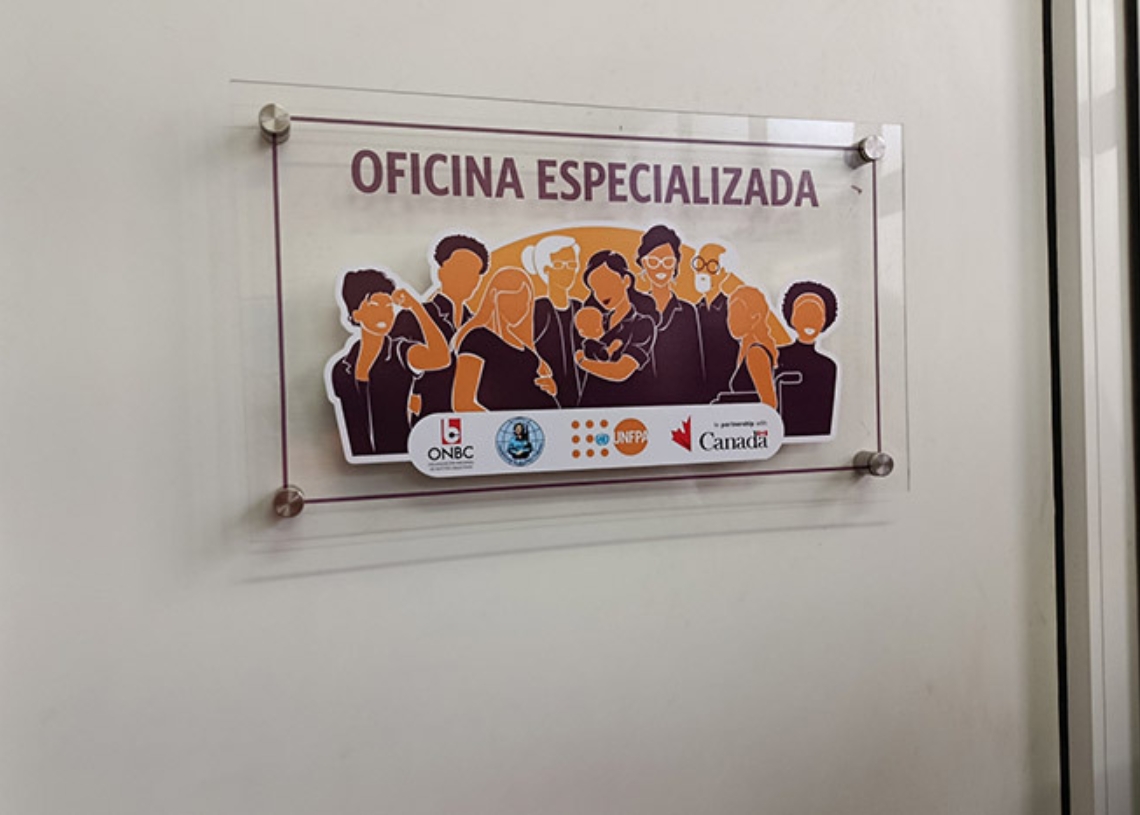
The National Organization of Collective Law Firms (ONBC) inaugurated this Wednesday, November 26 an office specialized in “comprehensive and multidisciplinary legal care” for victims of gender violencebased in a law firm in Old Havana, as reported Granma. The opening coincides with the commemoration of the International Day for the Elimination of Violence against Women, a symbolic date chosen to reaffirm Cuba’s institutional and social commitment in the fight against this scourge.
According to the president of the national board of directors of ONBC, Lilia María Hernández Doejó, the idea is that victims perceive this office as “a hope, a light and a legal instrument to defend their rights.”
The new office will not act in isolation. His role includes providing specialized, sensitive and empathetic legal advice, as well as developing methodological and guidance work for the continuous training of lawyers throughout the country. In addition, it will function as a governing body: it will supervise and standardize the care provided by selected municipal law firms, whose lawyers will receive specific training to address cases of gender violence.
Some representatives of international cooperation organizations were present at the opening ceremony. Among them, the Canadian ambassador to Cuba, Marianne Zemble, valued the initiative as an opportunity to “change lives and, therefore, society as a whole.” For her part, the head of the Cuba office of the United Nations Population Fund (UNFPA), Marisol Alfonso de Armas, celebrated the creation of “a real, physical and tangible space” for the care of victims of the phenomenon.
The opening of this service represents a concrete step within the national project – which in its design aims to expand to 40 municipalities in the country – with the aim of offering a broader and more accessible protection network. In a first phase, it is planned to set up similar offices in at least 20 municipalities, which would allow attention to be decentralized and brought closer to territories further away from the capital.
This initiative is inserted in a broader context of State policies aimed at eradicating gender violence, a problem recognized as structural and systemic in nature. Despite advances in legislation and in the institutionalization of protection mechanisms—such as legal protocols, an administrative registry of cases, and the creation of reporting channels—many experts agree that the challenge remains to transform daily practices, social norms, and power structures that sustain inequalities and violence.
Teresa Amarelle Boué, member of the Political Bureau and general secretary of the Federation of Cuban Women (FMC), stressed within the framework of the inauguration that the opening of this office responds to a demand sustained for years by women, especially those who do not have the financial means to access legal representation. He also reaffirmed the institutional commitment to advance in the creation of integrated care spaces in a first phase of 20 municipalities.
Although the creation of specialized offices like this will not by itself resolve the causes and consequences of gender violence in Cuba, it constitutes an important advance by offering a mechanism for legal, psychological and social support, with the potential to offer real support for women victims of violence, as well as prevent future attacks. However, it will be key to ensure that these services effectively reach all provinces and municipalities, that they are equipped with the necessary resources, and that they operate under criteria of quality, sensitivity and respect for human rights.
The opening of this office marks a milestone and calls for maintaining surveillance, support and the demand that these spaces become real tools of protection and justice for victims.