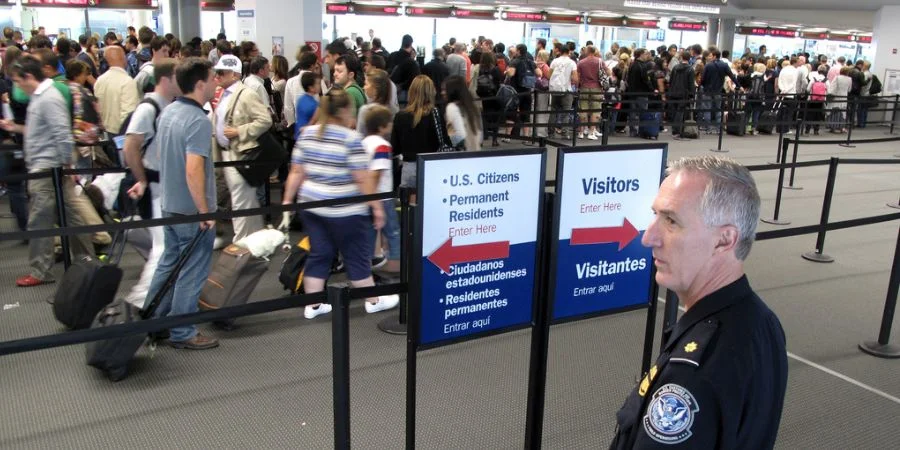
To those who entered border and said they are afraid of returning to their country, traveling to Cuba can generate questions.
Miami, United States. – Immigration lawyer Laura Jiménez warned that Cubans with permanent residence in the United States who entered by border and expressed fear of returning to Cuba could be questioned on her return from a trip to the island and even taken before a judge for alleged lie to an immigration officer. “The reality is that yes, this has been happening,” Jiménez said in Interview with Cubanet This Wednesday.
In addition, the lawyer explained that those who entered by border and said they were afraid of returning to their country, traveling to Cuba can generate questions to the return: the officer can interpret that “they lied to obtain a migratory benefit” and “they will put them in front of a judge accusing them of having lied to an immigration officer to obtain that benefit”.
According to the lawyer, this situation derives from the filter interview they usually do on the border, where the migrant responds if he fears returning and if he intends to ask for asylum. If he then travels to Cuba after having obtained residence linked to that process, he could be summoned (the so -called “quarter”) and face a procedure before judge.
The lawyer also described more strict criteria of good moral character by USCIS and confirmed that CBP can review cell phones and bank accounts at airports.
American citizens: without penalty for traveling
Jiménez distinguished that naturalized citizens are not subject to that consequence by the mere fact of traveling to Cuba: “No, Cubans with citizenship are not going to penalize them, they are citizens, citizens free to travel to the country who want, obviously.”
On the other hand, he specified that whoever leaves the US without travel permission (I-131) while his residence is in process “will be considered that he abandoned the residence process,” he warned.
Airport controls: cell phones and bank accounts
Before a consultation on a resident to which they reviewed telephone and bank accounts when they arrived in the US, the lawyer replied: “Yes, it is legal, they have the right to make a reasonable review of this type of information, to the information that is on the cell phone.”
More strict criteria of “good moral character” and ideological scrutiny
Jiménez pointed out “a large number of new measures and modifications” in the manuals of practice and adjudication of USCIS that affect eligibility for residence, citizenship and asylum. He said that the practice manual for benefits that require good moral character pays “special attention to anti -American elements and links with terrorist organizations or [al] Support language to terrorist organizations ”.
He warned that public expressions (included in social networks) supporting terrorist organizations “can be used against him”, so he asked for “much, very careful.”
On memberships in communist or totalitarian organizations – voluntary or forced – (such as Union of young communistsfor example), he remarked that they can hinder benefits, although he said that involuntary membership can be defended: “ICU has historically understood that it is not a voluntary membership but involuntary to be able to obtain access to a better income or a career.”
Recommendations of the lawyer
- Tell the truth. “My recommendation has always been to tell the truth, that they do not hide, because it is easier to explain the truth than justify a lie.”
- Prepare and take documentation. “It is important that you go with a lawyer so that this lawyer can go as well as possible and can defend the case in the most successful way.”
- Take care of what is published in networks. Even old or eliminated content “could[n] harm “with the” new criteria “that apply” the weight of what was done in the past. “
- Maintain data up to date and consistent. When citizens request the government retroactively review everything presented; You have to have “much eye with everything you say” and consigned in previous forms.