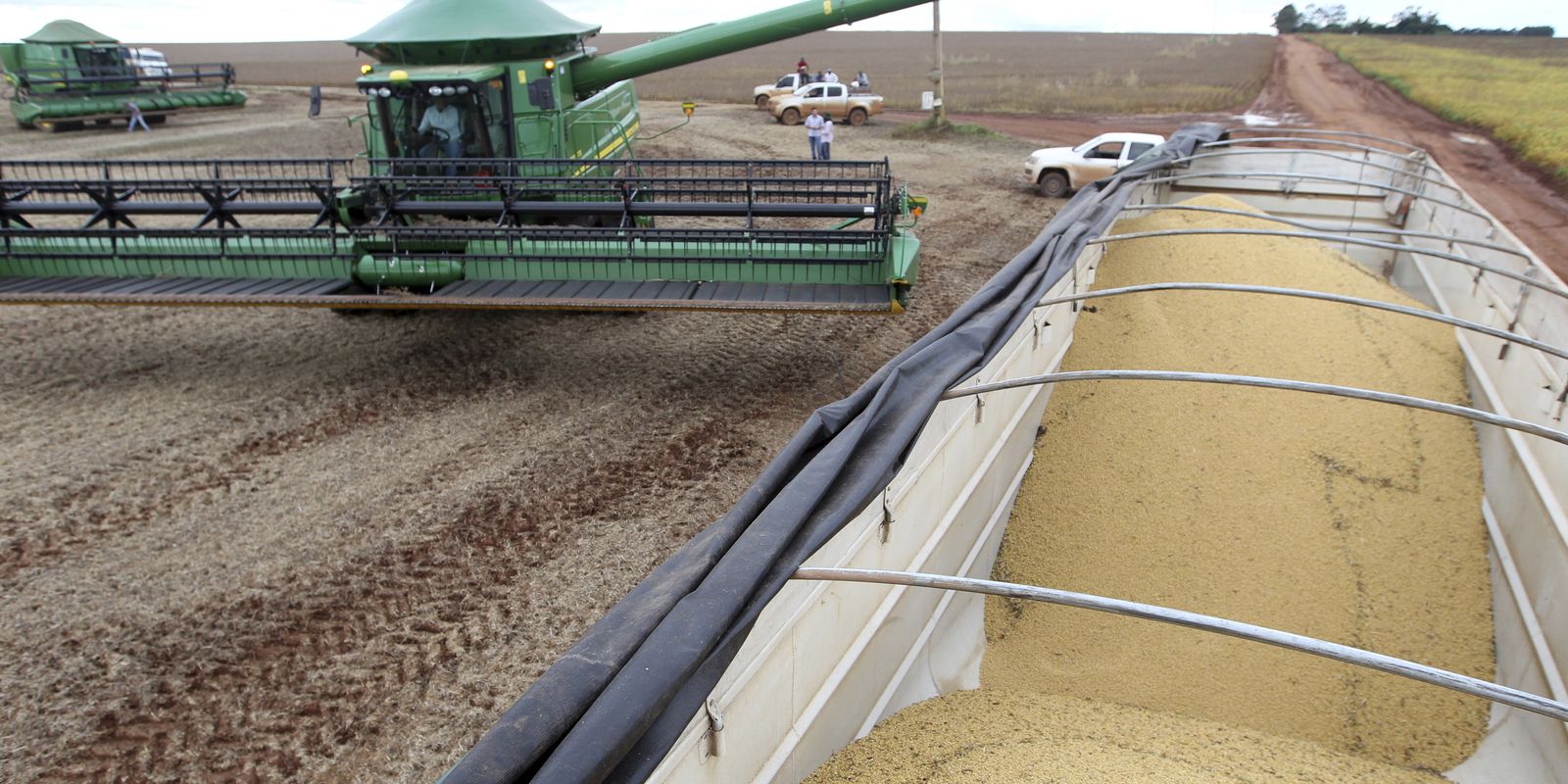
The country’s largest soybean producer, The state of Mato Grosso may begin to restrict access to tax benefits for companies that sign commercial agreements to limit agricultural expansion, such as the Soy Moratorium. This is what the provision of a state law, approved in 2024, provides, but which was suspended by preliminary decision of the Federal Supreme Court (STF), within the scope of a direct action of unconstitutionality (ADI) brought by political parties. The suspension ended precisely on the last day of 2025, and the section of the Mato Grosso law came back into effect on January 1st, while the merits of the action are pending judgment in the Constitutional Court.
The Soy Moratorium is known as the voluntary agreement signed in 2006 by companies in the sector with support from the federal government and civil society organizations, not to sell soy from areas of the Amazon that had been deforested since 2008. The objective was precisely to stop the deforestation of the biome due to soy pressure. The initiative involves large soy exporting companies affiliated with the Brazilian Association of Vegetable Oil Industries (Abiove) and the National Association of Cereal Exporters (Anec), with support from organizations such as Greenpeace and the Amazon Environmental Research Institute (Ipam).
Since it was signed, compliance with the agreement has been closely monitored by environmental entities, through satellite monitoring. Data presented by Greenpeace Brazil, for example, show a 344% increase in soybean production in the Amazon between 2009 and 2022, while in the same period there was a 69% drop in deforestation in the biome, indicating an increase in productivity without territorial expansion.
“Only 3.4% of soy produced today in the biome is outside the rules of the agreement, a key figure for access to demanding markets such as the European Union”, says the NGO.
State law 12,709/2024 textually prohibits access to “tax benefits and the concession of public land to companies that participate in agreements, treaties or any other forms of commitments, national or international, that impose restrictions on the expansion of agricultural activity in areas not protected by specific environmental legislation, under any form of organization or alleged purpose”. This is precisely the section that was suspended and is now back in effect. Because of this, the Federal Attorney General’s Office (AGU) asked the STF to extend, for at least another 120 days, the suspension of the state rule.
In manifestationthe AGU argues that the withdrawal of tax incentives could lead companies in the sector to abandon the environmental agreement. According to the AGU, citing a technical note from the Ministry of Environment and Climate Change (MMA), the emptying of the Soy Moratorium without, in parallel, there being an adequate and ecologically responsible institutional design to replace it, could result in immediate damage to the environment and the sustainable development of soy and vegetable oil producing regions, especially in the Amazon biome.
One preliminary study by Ipam indicates that the end of the Soy Moratorium could increase deforestation in the Amazon by up to 30% by 2045with a direct impact on Brazilian climate goals, known as NDCs, and deforestation targets.
“The entry into force of article 2 of the Law of Mato Grosso sends a negative signal to companies that do more for environmental conservation and that act in strict compliance with the constitutional duty to protect an ecologically balanced environment. Just as the STF has already recognized the legality of the Soy Moratorium, we trust that, in judging the merits of this action, the Court will affirm that the tax system cannot be used to punish those who adopt responsible environmental practices, as guaranteed by articles 225 and 145 of the Federal Constitution, and will declare the law unconstitutional”, argues Greenpeace Brazil lawyer, Daniela Jerez.
The Soy Moratorium has been the target of rural sectors in the country, who have articulated the approval of similar measures in Maranhão and Rondônia. The agreement was also temporarily suspended in August last year, administratively, after the Administrative Council for Economic Defense (Cade) alleged an investigation into alleged anti-competitive practices. In November, minister Flávio Dino, rapporteur of the case at the STF, determined the national suspension of all processes that deal with the Soy Moratorium, including this one at Cade and other actions, including legal proceedings, until there is a final decision from the court on the unconstitutionality or not of the restrictions applied against companies that wish to expand environmental requirements in agriculture.
The report from Brazil Agency contacted the government of Mato Grosso for a statement on the entry into force of the state law provision and is awaiting a position, which will be included in the text.