“The forecast for 2025 is revised upward by 0.4 percentage points compared to April due to lower than expected tariffs for most countries and more robust than expected data,” the text indicated.
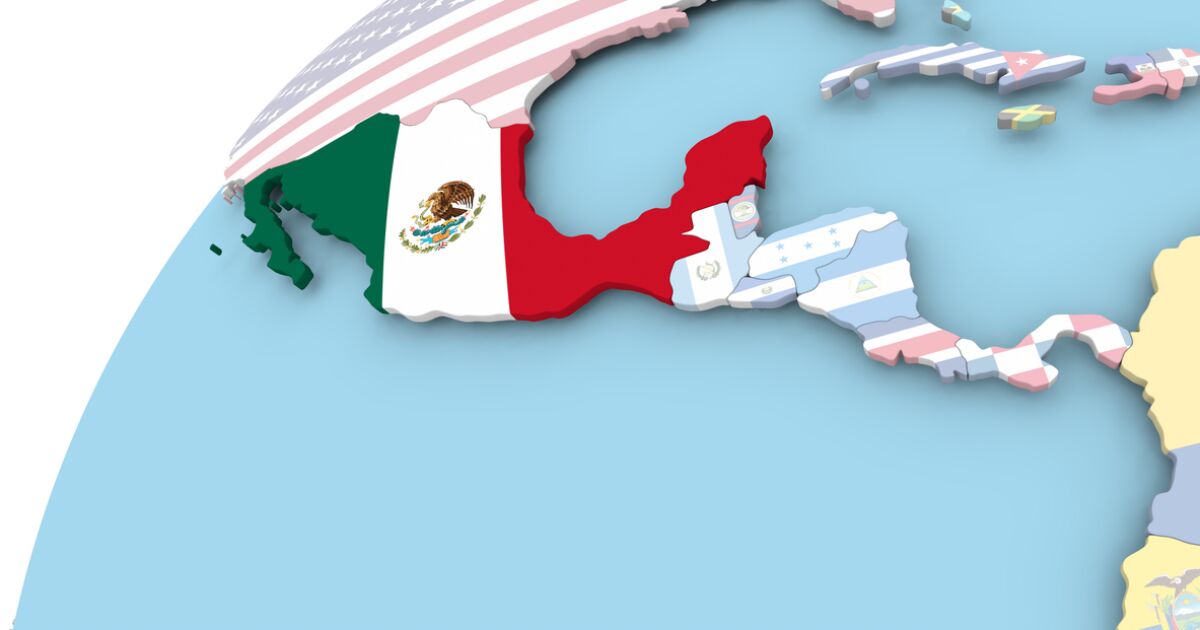
The upward revision “is largely due to Mexicowhich should grow 1% in 20251.3 percentage points more” than what had been projected in April.
Brazil will also grow a little more than expected, at 2.4%, although it is a drop compared to the 3.4% it registered in 2024.
At the global level, the Fund also raises its outlook, to 3.2%, instead of the 3% it expected in July.
Fears of great global uncertainty due to the tariffs announced by Republican Donald Trump at the beginning of his presidency have been dissipating, although not completely.
The Fund raised its growth forecast for the United States by 0.1 percentage point this year and next, to 2% in 2025 and 2.1% in 2026.
“Modest” impact
“The impact on growth due to the trade shock is modest so far,” IMF chief economist Pierre-Olivier Gourinchas told reporters ahead of the release of the flagship World Economic Outlook report.
For the region, the most notable growth is that of Argentina, despite its current financial difficulties, an impressive +4.5% compared to the -1.3% drop it registered in 2024.
Colombia will grow 2.5%, Chile 2.5%, Peru 2.9%.
Ecuador will register 3.2%, Bolivia 0.6%, Uruguay 2.5%, Paraguay 4.2%. Venezuela 0.5%.
“The year 2025 has been fluid and volatile, with much of the dynamic driven by a reorganization of policy priorities in the United States and the adaptation of policies in other economies to new realities,” the report explained.
“Trade has dominated the headlines, and along with that, the perceived outlook for the global economy has fluctuated,” he added.
Inflation in Mexico
The Fund, and the vast majority of specialists, were alarmed when Trump announced upon assuming the presidency that he was going to use customs tariffs as a negotiating weapon to confront the large trade deficit that the United States had with practically all of its partners.
But the imposition of these tariffs starting in April has been accompanied by a negotiation of bilateral trade agreements, and continued technological investment in advanced countries that keeps the economic engine running.
In any case, there are dark clouds, such as inflation, whose records “surprised upwards in Mexico and the United Kingdom.”