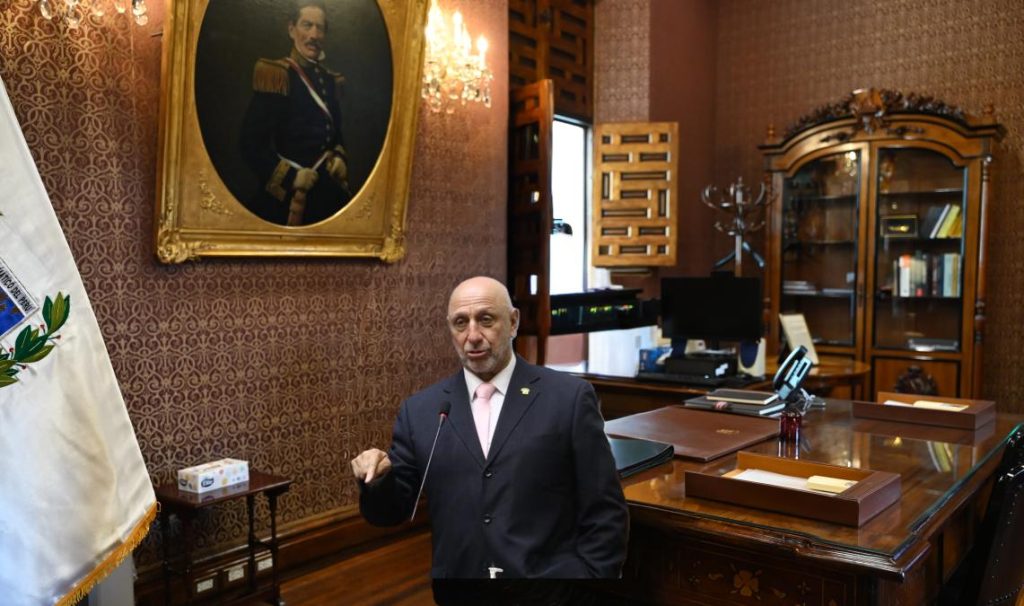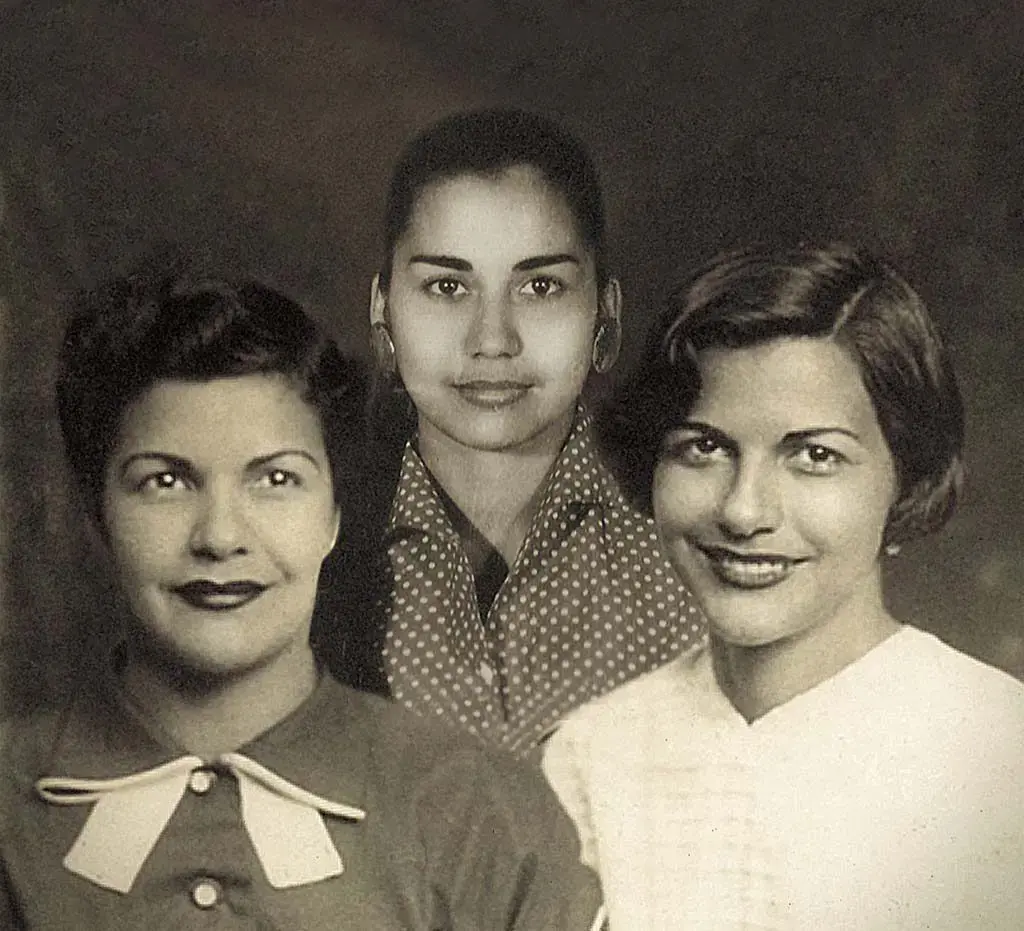
Santo Domingo.- They have passed 65 years of that tragic night in which, with his blood, Homeland, Minerva and Maria Theresa Mirabal They left traces of the path that would lead to Dominican freedom.
Martyrs of the dictatorship Rafael Leónidas Trujillo Molinathe Mirabal They were born in Ojo de Agua, Salcedoin the north of the country, a town where even today, in every corner, their anti-Trujillista slogans resonate. Daughters of a family with no ties to politics, they ended up becoming, due to their critical conscience and social commitment, one of the main challenges for the regime’s repressive machinery.
The gloomy night of November 25, 1960the sisters, already known as “The Butterflies”, were vilely murdered by men sent by Trujillo. They were returning from visiting their husbands in the San Felipe prison, Puerto Plata, where they remained imprisoned for being part of the June 14 Movementwhich sought to overthrow the dictatorship.
Background
On January 10, 1960, young middle class students, seminarians, workers, farmers, professionals and students held a National Assembly on a farm owned by Charlie Bogaert, in Mao, where they formed the so-called June 14 Revolutionary Movement, inspired by the example and program of the guerrillas of 1959. Under the leadership of the Montecristo lawyer Manuel Aurelio Tavárez Justo (Manolo), Minerva Mirabal’s husbandthe Catorcistas aim to overthrow tyranny through armed struggle.
But very soon they were detected by the calieses at the service of tyranny, as Rafael Chaljub Mejía explains very well in his book “La Guerrilla del Decoro”, when he points out that the movement could not even test its operational capacity.
“…ten days after Mao’s assembly, the mass arrests began, with their tragic and inevitable consequences of torture, murders and disappearances to which the regime usually resorted in the face of events like that,” says the author.
The prisons were filled with political prisoners from various parts of the country.
However, “the discovery of the plot served to demonstrate how widespread anti-Trujillo sentiment was,” says Chaljub Mejía.
Among the first arrested were, in addition to Manolo and Minerva, the husbands of María Teresa and Patria, the engineer Leandro Guzmán and the landowner Pedro González.
María Teresa was also arrested, whom officers stripped naked in front of everyone, as a way to humiliate her. A veteran of that time, Rafael -Fafa- Taveras, relates how the youngest of the “butterflies” remained unharmed despite the insults and physical torture, “the electric shocks on the breasts of that virgin made her body move, but her lips did not open with a complaint.”
Weeks after that orgy of blood and pain, the women were released, but their husbands were sentenced to 30 years in prison.
From La 40, Manolo, Leandro and Pedro were transferred to La Victoria, then to the Salcedo prison and from there to Puerto Plata. He was allowed one visit a week. On Fridays.
Despite the warning of several friends to be careful, Patria, Minerva and María Teresa made the trip to Puerto Plata every week to see their husbands and other fellow soldiers imprisoned there. The danger was evident, but they preferred to defy it rather than let themselves be overcome by fear.
The day of the crime
The order to kill the Mirabal sisters was expressly given by Trujillo on November 4, but it was not until the 25th that the conditions for their execution were met. In addition to political reasons, Trujillo felt a visceral hatred towards the sisters, especially against Minerva for the rudeness she did to him eleven years ago at a party held in San Cristóbal and to which the young women were invited along with their parents.
That November 25, shortly after four in the afternoon, Mirabal and Rufino de la Cruz were returning from Puerto Plata to see their husbands in the San Felipe prison in Puerto Plata.
«Less than two kilometers from the city (of Puerto Plata) there was a car stopped with apparent passengers outside, while another person pretended to be checking the engine… Rufino de la Cruz stopped when he saw that the car was almost in the middle of the road. When it arrived parallel to the vehicle, the jeep was attacked; the women thrown out violently and introduced into the calieses’ vehicle.
Patria managed to flee in the direction of a Social Security truck that was coming that way, but she was overtaken and dragged by her hair and put into the car along with her sisters, but before she managed to shout at those in the truck: “Tell the Mirabal family, from Salcedo, that the Caliés are going to kill us.”
Fafa Taveras says that the car left with the three sisters inside and Rufino was kept in the jeep accompanied by two calieses.
And he explains that before reaching the Summit of Puerto Plata they turned to the right, along an unpaved road, between a cane field, and stopped more than a hundred meters from the road.
A group of henchmen led by Lieutenant Alicinio Peña Rivera was in charge of executing the Mirabals. They were beaten and stabbed to death. Before, the calieses had hanged Rufino.
Subsequently, they put the four bodies into the vehicles and went to the place where they would launch the jeep with them inside. They stopped for a moment when they saw that one of the victims was alive and complaining. It was Minerva, they finished her off.
With the four bodies inside, the murderers drove the jeep towards a cliff. The next day a newspaper headlined: “Three women and a driver die in a rollover.” Very few believed that information. The news of the multiple murder spread like wildfire, provoking indignation in broad sectors of Dominican society.
After murdering the Mirabal sisters, Trujillo ordered the confiscation of all their assets and those of their husbands.
The Mirabals represented figures of great social prestige
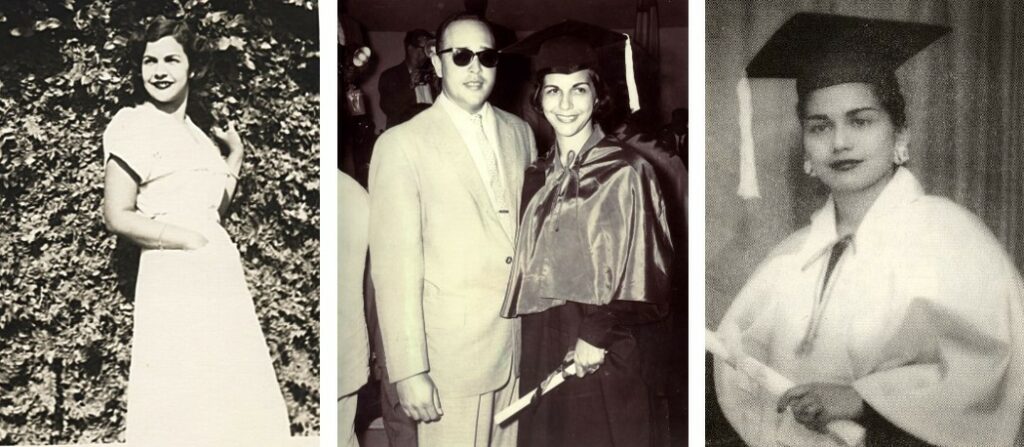
Despite the oppressive climate, the Mirabals were not passive figures. Minervathe most political of the three, challenged Trujillo from a young age, even rejecting his advances, which led to direct retaliation against her family.
She was also one of the first women in the country to obtain a degree in Rightalthough he was prevented from exercising it. The three sisters actively participated in clandestine groups and became leaders within the opposition movement.
The sociologist Celedonio Jimenez argues that the Mirabals represented figures of great social prestige, not only due to their middle-class origins and Minerva’s professional training, but also due to their marital ties with prominent opponents of the regime, such as Manolo Tavarez Justo and Leandro Guzman. His position, Jiménez affirms, turned his voice and his political action into a real threat to the dictatorship.
For the scholar, the sisters were fully aware of their struggle and the sacrifice it involved. They represented a tall symbol of dominicanityof resistance and popular commitment to freedom. His murder, he claims, was a decisive driving force for the massive awakening of anti-Trujillism in the country, a rejection so broad that it even reached sectors that had previously reconciled with the dictator, such as the Catholic Church.
That crime, far from silencing dissent, outraged the nation and significantly increased pressure against the dictatorship. Trujillo fell less than a year later, the May 30, 1961.
The executioners and their fate
In an information published in El Día digital on November 25, 2013, the former member of the June 14 Movement, Rafael Francisco Taveras Rosario “Fafa”maintains that the Mirabal executioners survived protected by later Dominican governments, especially those led by Joaquin Balaguersome even receiving jobs with different identities.
“An example of this is that in 1971, when I was a prisoner, they took me to the Marion hospital for an illness, and there I met Rojas Lora, who was working at the cement factory at that time,” Taveras said.
He added that Ciriaco de la Rosa, as well as Alicinio Peña Rivera, died abroad, while others involved “surely have camouflaged themselves and have other identities.”
The writer and poet Tony Rafulin his work June 14 Movement: History and Documents, provides additional information: Allicinium of the Rosewho was ordered to kill the Mirabals, lived in Puerto Rico and was an evangelical pastor.
It states that Emilio Estrada Malleta, María Teresa’s executioner, died in Haiti along with Johnny Abbes Garciawhen his involvement in a plot to assassinate President Duvalier was discovered.
However, Ramon Emilio Rojasresponsible for the death of Patria, resided in the capital.
While Ciriaco de la Rosa, who clubbed Minerva to death, resided in Yamasá as a healer.
On the other hand, Alfonso Cruz Valerio and Nelson Pérez Terrero, the driver’s killers Rufino de la Cruzalso remained in the Dominican Republic, although in a low profile.
And Rafael Viterbo Álvarez Corporán (Pechito) was shot in San Cristóbal in front of a gas station.
Leaders
The death of the Mirabals became a symbol of patriotism, resistance and empowerment. Moved by the grievances of the regime, they became political leaders exemplary, and although borders and censorship limited the dissemination of information, his voice rose strongly against the tyrannyconsolidating them as an archetype of leadership and women’s fight that transcends his time.
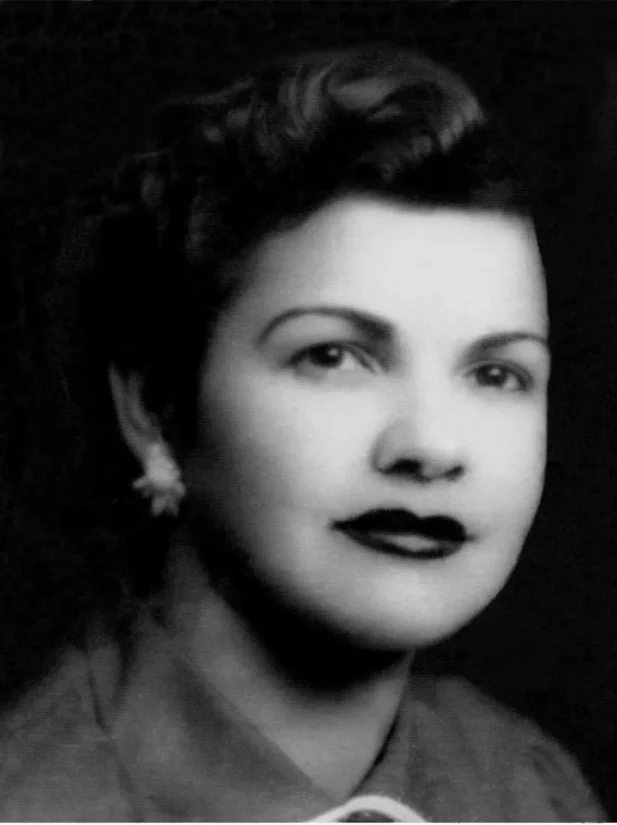
In the words of Juan Pablo Uribepresident of the Permanent Commission of National Ephemerides:
“The fight against the disgraceful and extensive tyranny of Trujillo was tinged with the blood of a woman. The challenge to fear, terror and dictatorial arrogance has a woman’s character. The revolutionary commitment to the liberating cause of a people has a woman’s temper. Dignity, decorum and bravery have a woman’s face: Minerva Mirabal, Patria Mirabal and María Teresa Mirabal.”
A legacy that transcended borders
The Mirabals not only changed Dominican history: They transformed the history of the world.
In 1981at the First Latin American and Caribbean Feminist Meeting, it was proposed that the November 25 was the International Day for the Elimination of Violence against Women in honor of his sacrifice.
In 1999, the United Nations General Assembly made that date official, recognizing the Mirabal sisters as a universal symbol of the fight against gender violence and tyranny.
Some verses…
The night of his death he was unable to silence his name.
He failed to overshadow his story.
He failed to break his example.
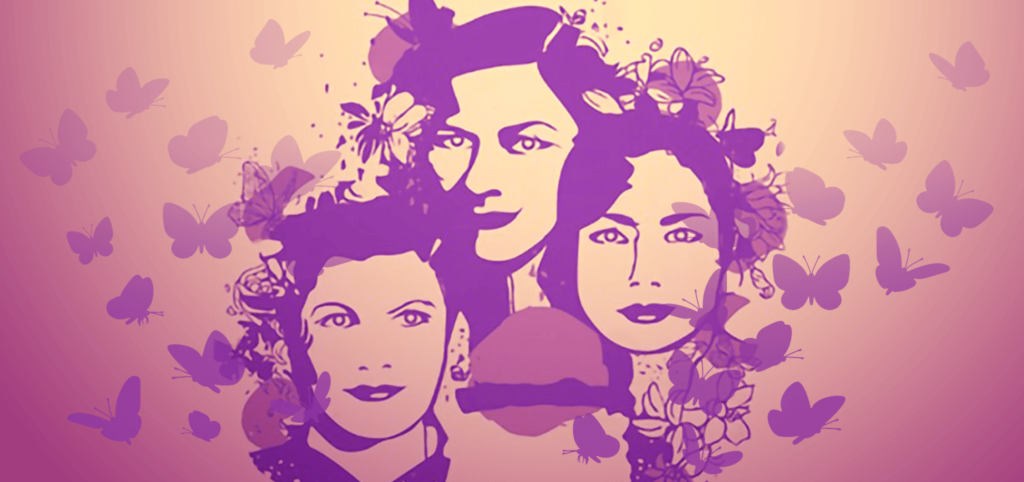
The three women that the regime tried to erase became an eternal symbol of freedom.
The Butterflies flew again, this time, forever.