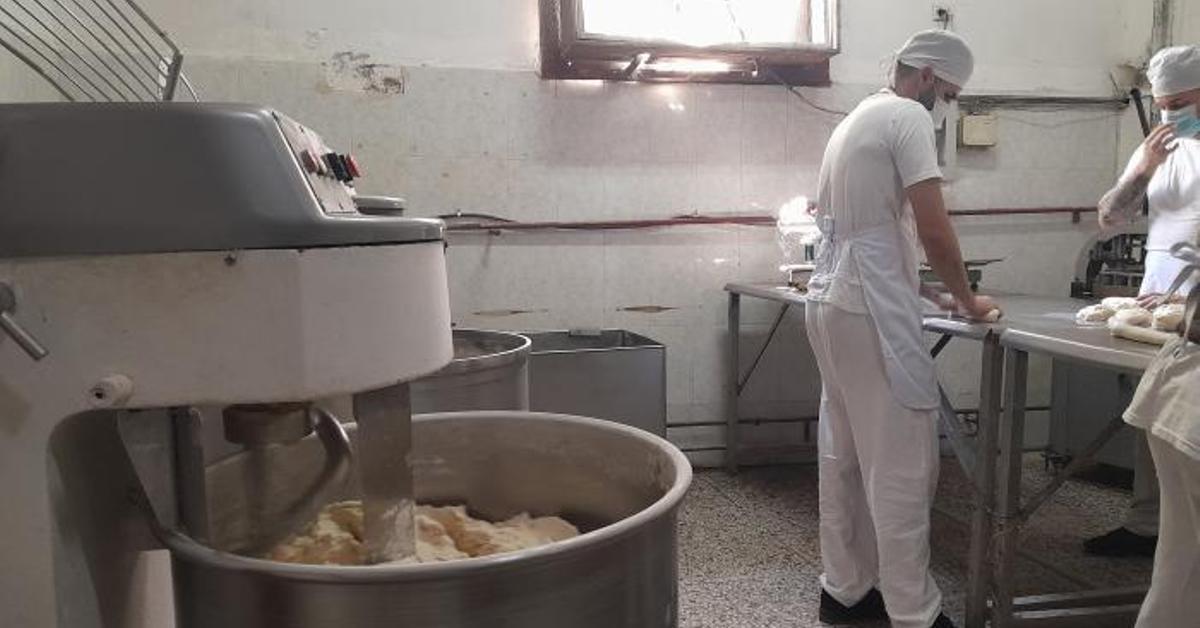
Havana/Another sector that suffers in the country from the oil siege and fuel shortage is bread production in Havana. To try to cope, the Cuban Bread Chain announced that it was “reinventing” itself with an option that was used until the middle of the last century: manufactured gas.
According to a note published this Sunday in Granmathe company, whose production is 90% private, has along the way begun to change the diesel consumption ovens in bakeries in municipalities such as “Playa, Plaza, Centro Habana, Habana Vieja, Marianao, among others”, for manufactured gas, which is produced from the distillation or gasification of solid raw materials, such as coal, or liquid raw materials (petroleum), and which was widely used from the end of the 18th century.
“It is a national product. This way we eliminate the import of diesel and with this we can provide a greater service to the population, without interruption,” said Rigoberto Hernández de la Rosa, director of Production-Marketing of the company.
This measure will allow, according to the text, “to maintain production 24 hours a day, partially making baking independent of the availability of electricity, since other equipment, such as fryers or stoves, are electric.”
“This issue of the total blockage of fuels has been very hard, since our furnaces run on oil”
“This issue of the total fuel blockade has been very hard, since our ovens run on oil,” says Maruan Fee Fernández, general director of the Cuban Bread Chain in Havana, referring to “the complex scenario” that the entity faces to guarantee that bread reaches the population, although also “the blackouts have put the bakery network” in the capital to the test.
However, for now everything is up in the air. The assembly of burners that operate with this gas is barely analyzed. “A survey has been carried out in the company and so far we have 17 units where this experience can be implemented,” says Hernández de la Rosa, who foresees that it can be completed in March.
Other measures that the company also outlines are to use Spanish technology of pelletswhich uses processed wood sawdust as fuel. At the same time, the installation of solar panels is being evaluated in 50% of the bakeries to replace electricity consumption in equipment that does not depend on fossil fuels.
However, that is only part of the problems they face for bread production. The other great challenge is the transfer of raw materials. To do this, they have eliminated the use of automobiles on short distances. “We have had to create lung warehouses and rent tricycles from self-employed workers to take the flour from the mills to the bakeries,” explained Fee Fernández. However, he commented, the entity’s trucks continue to reach the peripheral municipalities.
The Cuban Bread Chain – created in 2003 by Fidel Castro – began a decentralization process starting last year, due to the shortage of inputs such as wheat flour, vegetable oil and sugar. Today, it has 51 stores in the capitalof which 47 are operating. The rest “are paralyzed for maintenance and renovation work.”
The rest “are paralyzed for maintenance and renovation work”
Regarding prices, the general director of the chain assured that they have remained unchanged for a year, but “it all depends.” The 200 gram bread, the one in greatest demand, is sold at 120 pesos. “We try not to reach a price increase, although everything also depends on the fluctuation of prices in the market,” he admits.
Granma highlights that the measures “guarantee that bread continues to reach homes every day.” However, in provinces like Matanzas They are suffering from a shortage of standardized bread in the warehouses and bakeries of the municipal capital, as well as the products of the Cuban Bread Chain, which recently stopped producing.
Although the speech from the authorities tries to convey calm, the ruling party itself admits that the country is experiencing “logistical and financial complexities” that affect bread production. On February 12, Cubadebate He assured that Industria Molinera SA “continues working to ensure flour destined for the national market,” although he acknowledged that there are problems “from production to transportation and logistics.”