A recent study prepared by consultant Enrique Darwin Caraballo for the Association of Industries and Companies of Haina and the Southern Region (AIEHaina y el Sur), with the support of the Ministry of Industry, Commerce and Mipymes (MICM), shows a deep gap between the available job skills and the real needs of the productive apparatus of the Haina–Nigua Industrial District (DIHN).
The diagnosis shows that More than 70% of the district’s workforce has low formal qualificationswhile only 1.28% of workers have completed technical studies.
In contrast, the industry of the area —which concentrates manufacturing, energy, logistics and services sectors— demand personnel with high technical, digital and socio-emotional skillsin addition to functional command of English and skills in reading and logical-mathematical reasoning.
The study highlights that 58.9% of those employed only reached the general secondary level and 11.3% completed only primary school. This, combined with the lack of certified technical traininglimits productivity, innovation and the possibility of responding to the demands of an increasingly technical labor market.
“The talent offer of Haina–Nigua is conditioned by an unequal educational trajectory and by the persistence of training gaps that affect the most vulnerable sectors of the population,” the study states.
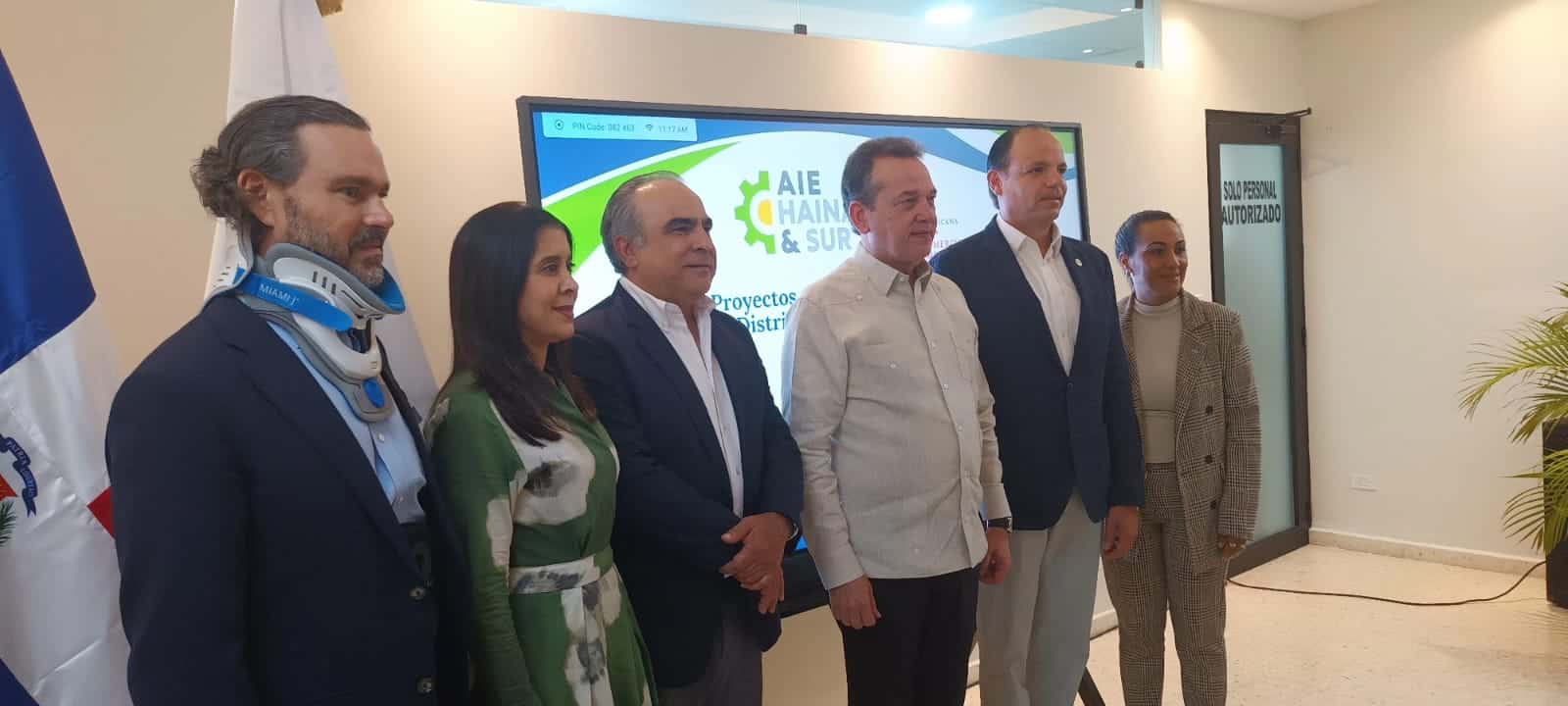
The Minister of Industry, Commerce and MSMEs, Victor -Ito- Bisonóvalued the document as “a strategic contribution to strengthen the articulation between training, industry and local development”, aligned with the objectives of the Goal 2036 Projectwhich seeks to increase national competitiveness by strengthening human capital.
“When we assume management, we analyze what the productive niches of the country and how to strengthen them. Haina and Nigua are two municipalities with a high concentration of activities industrial, commercial and maquila. Here are the port, the refinery, technological free zones, companies like Nestlé and many other highly dynamic local industries,” he assumed.
He explained that for some time they have been observing where globalization is moving. In a country like the Dominican Republic, open, that receives so much foreign investment and that it must be competitive, it is essential to understand the phenomenon of nearshoring.
“He nearshoring It means that the United States is looking for nearby countries to outsource part of its production and complement its manufacturing. This implies opportunities in sectors such as technology, semiconductorsmedical devices, electronics, services and logistics. All of this requires preparing our human resources in those areas, known as STEMthat is, technical and specialized professions,” Bisonó highlighted.
There is an action plan
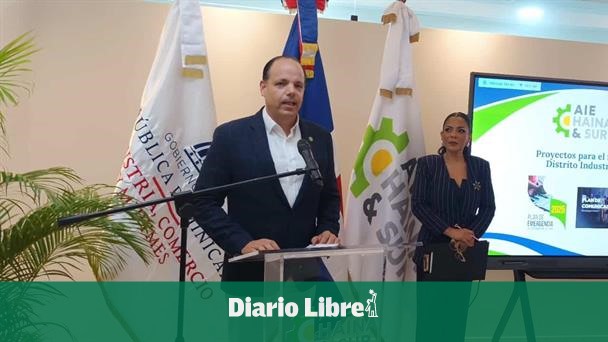
The president of IEAHaina and the South, Luis Napoleon Rodríguezpointed out that the availability of qualified technical personnel It is one of the biggest challenges in the industrial zone.
“Although we know it will take time, today we have an accurate diagnosis and an action plan that will allow us to face this challenge in a sustained manner,” he stated.
Napoleon Rodriguez He pointed out that, in the Haina-Nigua Industrial District, there are more than 44,000 formal jobs.
“A study was conducted to identify what the industry currently needs in technical and training matters, and develop a comprehensive plan together with the corresponding institutions,” he indicated.
He said that a new center was recently inaugurated InfotepJosé Francisco Peña Gómez, with the purpose of responding to these training needs and bringing to the classrooms what really industry demands.
He highlighted that technical careers They are essential for the development of the area. The demand for human capital is constant, because the area continues to grow and the free zones continue to expand. What is really required is the qualification and technical training of personnel.
- Among the most in-demand areas are mechatronicsthe metalworking and the refrigerationsectors that require specialized technical knowledge.
Proposals
The report proposes a comprehensive model of technical-professional trainingbased on a modular, flexible and inclusive scheme, which promotes dual educationthe creation of a Skills Observatory and one territorial governance led by AIEHainain coordination with Infotep, the Ministry of Education and local authorities.
He also recommends a mixed public-private financing to promote training and training infrastructure.
The research warns that the disconnection between education and the productive structure It is one of the main obstacles to the development of Haina-Nigua.
Although this industrial zone provides up to 18% of national exports, the majority of its workers lack the skills necessary to take advantage of their economic potential.
If the recommendations are implemented, the study concludes that the Haina–Nigua Industrial District could become a national innovation laboratory in technical-vocational trainingreplicable in other productive centers of the country, strengthening the link between education, employment and territorial development.