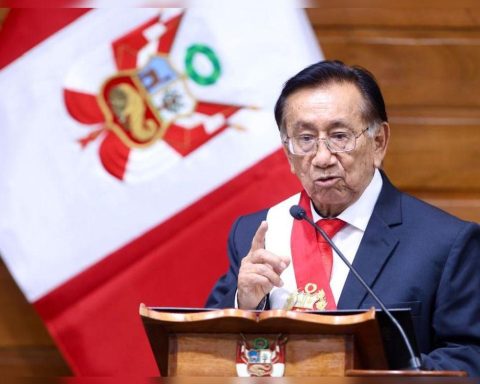
In his speech of July 28the president Dina Boluarte He assured that they will approve a national strategy that aims to reach a rate of 50% of formality (today does not reach 30%).
“Addressing the work problem is a challenge that we have been facing with commitment,” said the president in her speech of more than four hours.
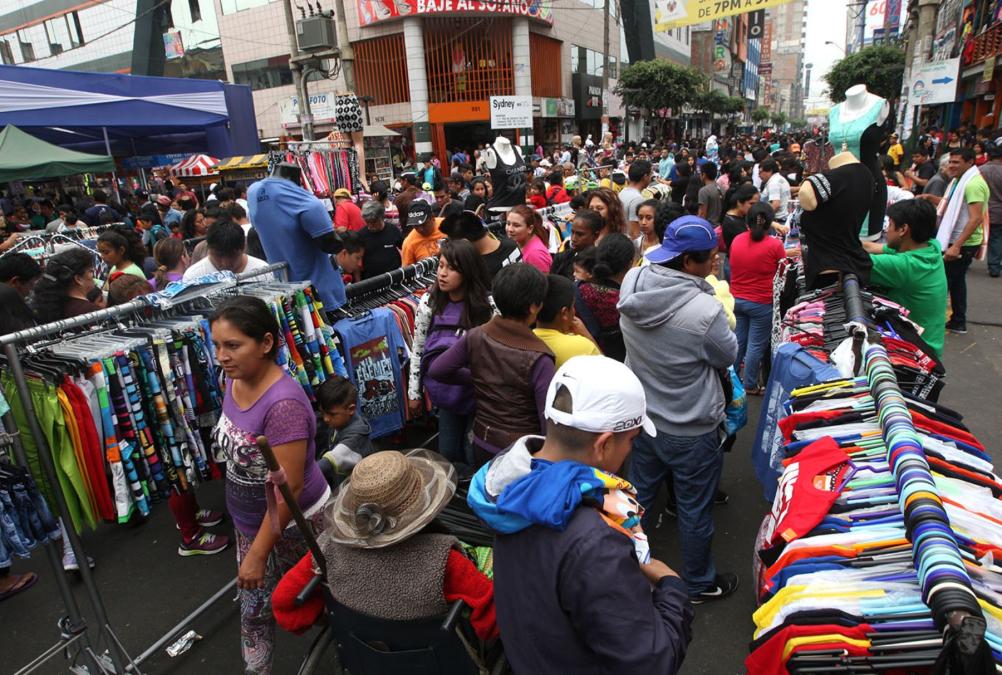
It is that Peru is one of the countries in Latin America with more labor informality, with a rate of 71.9%, according to data from the National Institute of Statistics and Informatics (INEI) to 2024.
After the words of the Head of State, the Minister of Labor and Employment Promotion, Daniel Maurate, said that the established goal is by 2040. To achieve this objective, he said that they prepare the relaunch of the Mi career portal, the presentation of the Capacit-T Program and the creation of an informal workers’ record that aims to implement key instruments to develop state policies.
“Labor formality is not limited to the companies of companies. Self -employment, which involves more than 5 million workers in Peru, can also and should be considered formal employment,” he told the Andean agency.
But can this goal really meet in 15 years? The laborist Ricardo Herrera and Germán Lora agreed that, for that, an urgent change in labor legislation is needed.
“There is talk of a record, but do informal workers really want to register and admit that they work in those conditions? It seems to me that the strategy does not go on that side,” said Herrera.
He also said that the country needs to promote adequate employment creation, boost the arrival of private investment and seek the highest economic growth, so that these desired positions can be generated.
Similarly, he recalled that informality mainly affects young people (with more than 80% who work in this condition), but questioned that no new measures have been issued to meet this demand, which was beaten by the health crisis and so far continues with that problem.
Excess load
For Germán Lora, it is necessary for labor legislation to be more “simple” for employers. “Here it is not a issue of labor costs and benefits when we see that we have difficult labor legislation for hiring, when a person is going to leave the company and, in general, at all stages of work,” he added.
Although he pointed out that there are a number of factors that hit the labor market, excess holidays do not contribute to the productivity of companies and, on the contrary, generates a problem for them.
In addition, he considered that, for the goal established by the Executive to be fulfilled, it is necessary that there be an injection of money, which will allow Peru to make Peru a more attractive country for investments and, therefore, to generate more jobs.
Receive your Peru21 by email or by WhatsApp. Subscribe to our enriched digital newspaper. Take advantage of discounts.
Recommended video