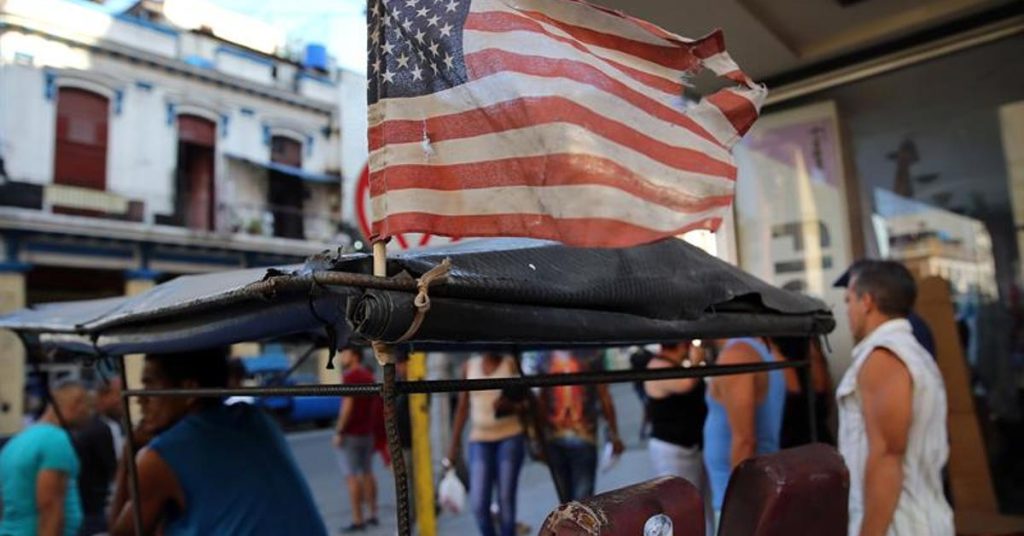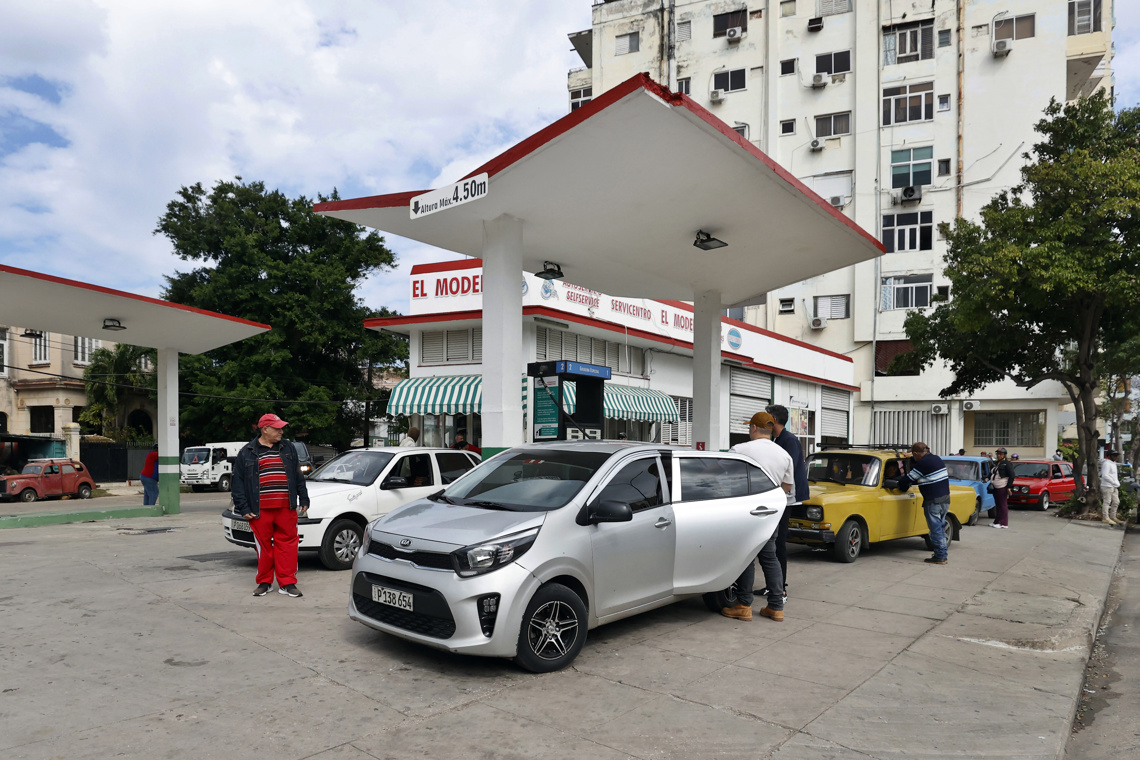
The worsening of the shortage of fuel in Cuba as a consequence of the Trump Administration’s oil blockade is already having its first visible effects on the island.
Just hours after the president Miguel Díaz-Canel will ensure this Thursday that his Government will implement a contingency plan in the face of the scenario generated by the capture of Nicolás Maduro by the US and the growing pressures from Washington, measures taken by various entities and at the local level to confront the crisis have begun to transcend.
While waiting for the approved government plan to be publicly detailed – something that should happen in the “next few days,” according to Díaz-Canel – what has already been reported means more impacts on the economy and life of the country, with measures ranging from adjustments in work schedules and teaching to suspensions in transportation and paralysis of activities and investments.
One of the first institutions to report on its actions in the face of the crisis was the University of Havana. The main house of higher education in the country circulated a set of provisions that must be adopted “to guarantee the continuity of its academic and administrative processes,” according to the review Cuban News Agency (ACN).
The plan includes the postponement of the 2026 University Congress and the extension of the blended modality, starting this Friday and for a month, to all Higher University Technician (TSU) careers and programs.
The adjustment of study programs is also planned, based on the design of activities that can be carried out from homes or territories, as well as differentiated attention to scholarship students until their transfer to their homes can be completed.
Cuba revives its survival plan from the 90s in the face of the “zero fuel” scenario
On the Isle of Youth
For its part, the station Caribbean Radio He published from his Facebook profile that in the special municipality of Isla de la Juventud a rationing scheme for the electricity supply was adopted that can vary depending on the availability of fuel for generation.
In turn, the plan of the local authorities contemplates the closure of administrative buildings during the weekends, the permanent disconnection of electric ovens and air conditioning equipment and the paralysis of investments in the pine territory, including those related to the electrical, agricultural and fishing sectors, among others.
The measures also involve the reorganization of work schedules, with the expansion of teleworking, the temporary closure of internal education centers and the relocation of students to schools close to their places of residence.
The transport impacts focus on the decrease in frequencies on the main routes, and the ferry that connects the island with the Batabanó municipality to once or twice a week.
It is also planned to limit recreational activities in the territory until the fuel supply is restored, and in the case of non-state management forms, it is indicated that they will be able to work “guaranteeing conditions without electrical service.”
Other indications
Given the worsening of the complex energy situation facing the country, it is expected that the emergency measures will reach other sectors of economic life, including tourism.
Some publications on social networks have echoed the closure of hotels in the northern keys of the center of the island and the regrouping of clients in one of the main facilities in that area, although so far no official information has been reported about it.
Adjustments and restrictions in transportation have also been reported unofficially on the networks. The total cancellation of urban transportation operations in the country’s capital was even handled due to the fuel deficit, something that was denied by the Government of Havana on its Facebook profile.
On the other hand, it was confirmed that in Las Tunas the bus routes that connect that province with the territories of Camagüey, Holguín and Santiago de Cuba were suspended.
The alternate route to Matanzas was also cancelled, and in the case of the connection with Havana, the authorities of the sector reported that a single departure of the express service would be maintained at night.
Regarding the railway system, it was announced that “other measures that are being studied” would be reported in the coming days.
Settings in progress
During an appearance before the media this Thursday, Díaz-Canel announced that the island’s Government had approved a group of measures to address the lack of fuel in the country, and he advanced that their application would demand “effort” and “sacrifice” from Cubans.
The president confirmed that, due to pressure from the United States Government, since last December Cuba had not received oil supplies from abroad.
The effects of this situation have already been felt and are on their way to getting worse, driven by the presidential order with which the Trump Administration, among other things, instructs the imposition of tariffs on countries that continue to supply fuel to the island.
The first signs of the adjustment plan were given days ago by Vice Chancellor Carlos Fernández de Cossío, when in statements to the agency EFE He advanced the design and imminent implementation of a “reorganization process” that would be “very difficult for the population as a whole.”
Without providing further details, Díaz-Canel explained hours later that the government plan takes as a reference the one designed by former President Fidel Castro during the so-called Special Period, known as “zero option”, which implied extreme rationing, food self-sufficiency and the use of non-motorized transportation, among other measures.
“They are contemplated (some of these measures), also updated because there are different situations in these directives,” said the president.