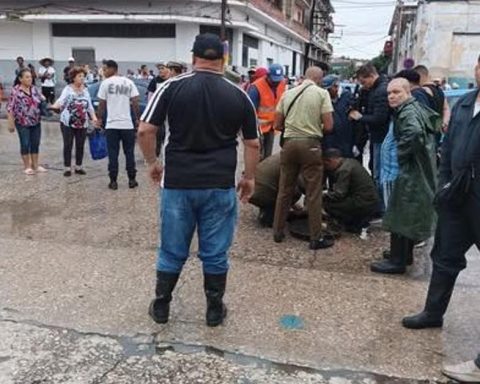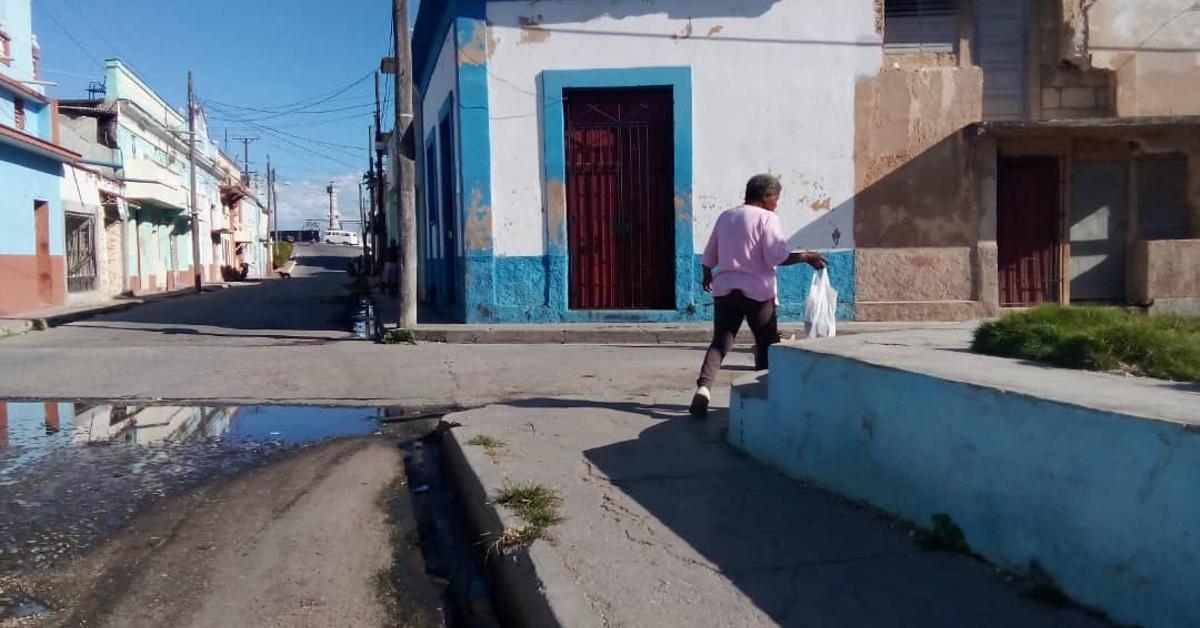
Matanzas/Two blocks from the historic center of Matanzasthe La Marina neighborhood extends. You don’t have to go too far for the smell to say it all: stagnant sewer water, garbage accumulated in the corners, a persistent odor that sticks to clothes and accompanies every step. Here, daily life passes between greenish puddles, cracked walls and the feeling that time is stranded in an unfulfilled promise.
Xiomara walks slowly along the edge of the sidewalk, avoiding the dirty water that runs down the street as if it were a stream parallel to the San Juan. He is 58 years old and has learned to measure words with the same care with which he measures steps. “I’m tired of explaining the same thing,” she says. He lives with his father, bedridden for more than a year, in a house that threatens to collapse.
They need a Fowler bed, a minimal solution for an immobile old age. “The president of the Popular Council knows it, the Delegate too. They come, look at the tiled roof, ask two things and leave. They always leave.” The only pension that comes into the house is 3,000 pesos. When it rains, water invades the room. When it doesn’t rain, the humidity stays the same.
“We continue to eat only one meal a day, poorly cooked and at the wrong time”
After several official visits, Xiomara and her father were included in the so-called Family Care System. On paper, that meant improvements: a bathroom fix, donated clothes, an electric stove. In practice, nothing changed. “We continue to eat only one meal a day, poorly cooked and at the wrong time,” he says. The word “vulnerable” appears again and again in reports, but is never translated into a concrete solution. “At bad times, no one shows up.”
La Marina was declared by the government as a “neighborhood in transformation,” a label that fails to disguise the persistence of the most basic problems. On Jovellanos Street, Alberto points out a leak that has been preventing passage for years. Dirty water accumulates and becomes a breeding ground for mosquitoes. “When I moved here in 2006 it already existed,” he says. He has complained to Acueducto y Alcantarillado more times than he remembers. Last year, several neighbors fell ill with dengue and chikungunya. “It seems like they are going to cover the gap when one of us dies,” he says ironically, without a trace of laughter.
The so-called transformative actions are barely perceived. In the interior hallways, where tiny rooms are packed together, humidity rises up the walls and cracks the ceilings. In the oldest homes, the cracks advance like maps of abandonment. “Social workers come, do surveys, fill out paperwork,” says an employee at a private cafeteria. He has been ordering building materials for years. “Numbers don’t hold up walls.”
/ 14ymedio
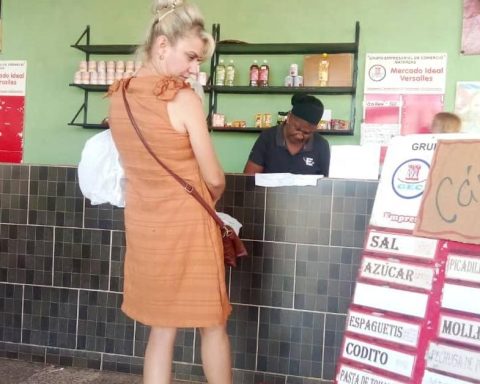
The informal economy is an inseparable part of the landscape. In a house painted green and red, Marlene, a single mother, sells cigarettes and other products from the window. It is not a secret nor is it intended to be hidden. “I don’t need talks from the FMC [Federación de Mujeres de Cuba]”I need money to raise my daughter,” she says. She has two unpaid fines. The inspectors pass by frequently. “Let them take me to prison if they want. This is an abuse against the defenseless people.” In La Marina you can get almost anything, as long as you know who to ask and how much to pay.
The so-called preventive work with minors and vulnerable people feels more like control mechanisms than real help. Poverty is still there, sitting on the sidewalks, waiting for the power to return to light the stove or for something to appear to add to the pot. “Those from outside talk about the marginal environment,” says Marlene with a mixture of tiredness and pride. “I say that if it weren’t for the support between neighbors, this would no longer exist.”

/ 14ymedio
In a corner, two men sort through a pile of trash, looking for anything that still works. Further on, a woman crosses the street with a bag, hurriedly, as if there was not enough day. On another block, a man leans against a worm-eaten door frame, looking into a dark house. They are scenes that are repeated, that build the identity of the neighborhood beyond any official diagnosis.
The Navy survives by force of habit, solidarity and resistance. It is not a place defined only by poverty, but by the obstinacy of its people to remain. Between the stench of the sewage water and the promises that do not arrive, the neighborhood continues to beat. And in that harsh and uneven beat, a good part of Matanzas is condensed that does not appear in the investment plans or in the official press.