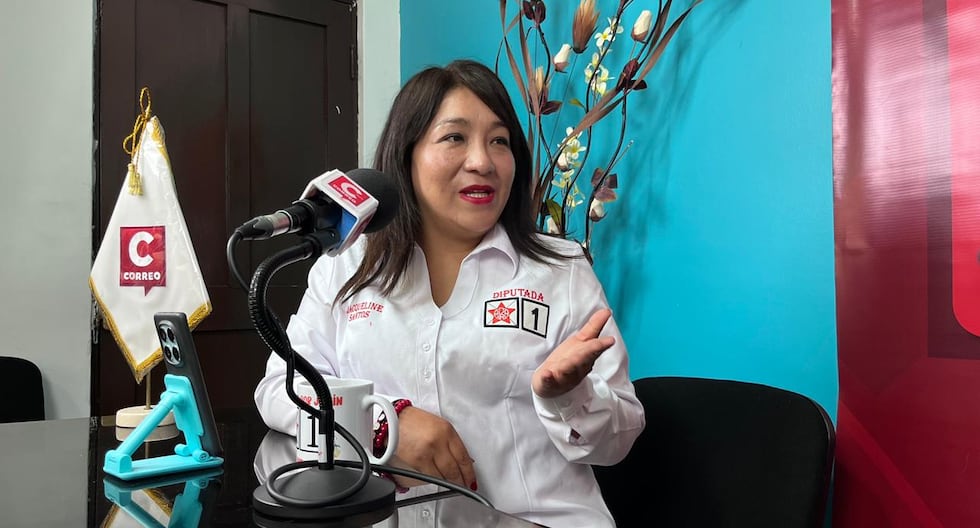
In a new edition of the podcast ‘Meet your candidate’ from the newspaper Correo Huancayo, we spoke with Jacqueline Santos Julca, candidate for the Chamber of Deputies for the Peruvian Aprista Party, with number one, who is committed to an agenda focused on education, youth employment and mental health.
Jacqueline, this is your third run for public office. What motivates you to insist on politics?
The vocation of service. I am a mathematics teacher trained at the National University of Central Peru, also a psychologist, with master’s studies in learning problems and social policies. My professional life has always been linked to education and mental health, and from there my political commitment was born.
You have been active in APRA since you were very young. Why choose this match?
I came to the party at the age of 17 and found in the thoughts of Víctor Raúl Haya de la Torre a reference for social justice. Her fight for labor rights and women’s suffrage marked a clear line. APRA allowed me to train myself with discipline and social vocation.
Has it been difficult to combine professional, personal and political life?
No, when you do what you love, time is ordered. Politics is not a limit if it is exercised with vocation. I continue working as a teacher and psychologist, and at the same time I provide free social support to families affected by violence and children in vulnerable situations.
What are your main proposals from the Chamber of Deputies?
Youth employment is key. It cannot be that young people graduate and end up in jobs unrelated to their training. We need laws that strengthen employability. A real mental health policy is also urgent: psychologists in schools, an effective budget and coordination with municipalities and regional governments. This is already a time bomb.
The strength of APRA and the risk of not passing the electoral fence are questioned. What does he answer?
We are respectful of democratic rules, but also clear in pointing out irregularities. The loss of registration was not fortuitous. Even so, today we have solid candidates like Enrique Valderrama and cadres with track records. We are convinced that APRA will not only pass the fence, but will also have representation in both chambers.
Some criticize the history of the party, how do you respond to that?
The historical context cannot be denied. The first APRA government had difficulties, but the second government, from 2006 to 2011, achieved economic growth, poverty reduction and a decrease in anemia. That’s also part of the story.
Finally, what message do you leave to the population of Junín?
That the country needs representatives with training, principles and conviction. This April 12 I ask for your support by dialing number one. We will continue working for social justice and bread with freedom.